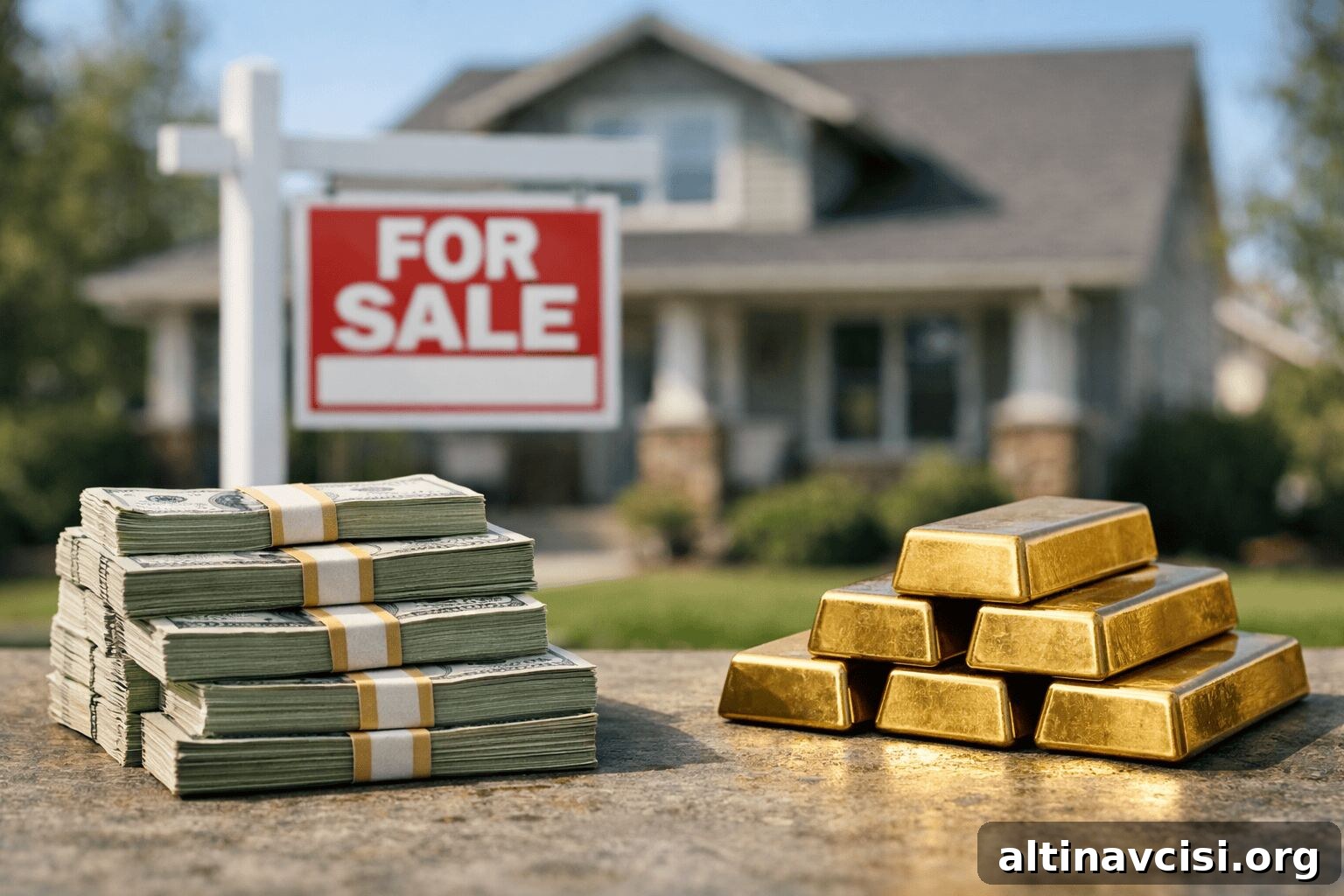
Home prices are near historic highs. College tuition keeps rising. The average new car now costs more than many Americans once paid for their first home.
Measured in dollars, these increases look dramatic.
There is another useful way to evaluate long-term affordability: price those same assets in ounces of gold instead of dollars.
When we do that, a very different picture emerges.
Gold as a Measuring Stick for Real Value
For most of history, gold served as money or as the anchor behind money. Even after the United States left the gold standard in 1971, gold continued to serve as a benchmark for purchasing power.
Unlike fiat currency, the supply of gold cannot be expanded at will. Global mine production increases the above-ground stock by roughly 1–2% per year on average. By contrast, fiat money supplies can grow rapidly during periods of fiscal stress or aggressive monetary policy.
Since 1971:
- The U.S. dollar has lost a large portion of its purchasing power according to CPI data.
- U.S. federal debt has grown from roughly $370 billion in 1970 to nearly $37 trillion today — a rise measured in the thousands of percent.
- Broad money supply (M2) has expanded many times over, with an unprecedented surge during 2020–2022 when it increased by trillions of dollars in just two years.
Pricing assets in gold instead of dollars helps filter out much of that monetary distortion.
The Financial System Isn’t Safer — And You Know It
As risks rise, gold and silver are expected to remain central to portfolios in 2026 and beyond.
How Much Gold to Buy a House in 1970 vs. Today?
In 1970, a modest California home cost about $25,000. Gold traded around $35 per ounce, so it took roughly 714 ounces of gold to buy that home.
Today, a comparable California home might cost around $800,000. Using a round gold price of $5,000 per ounce for clarity, that same home would require about 160 ounces of gold.
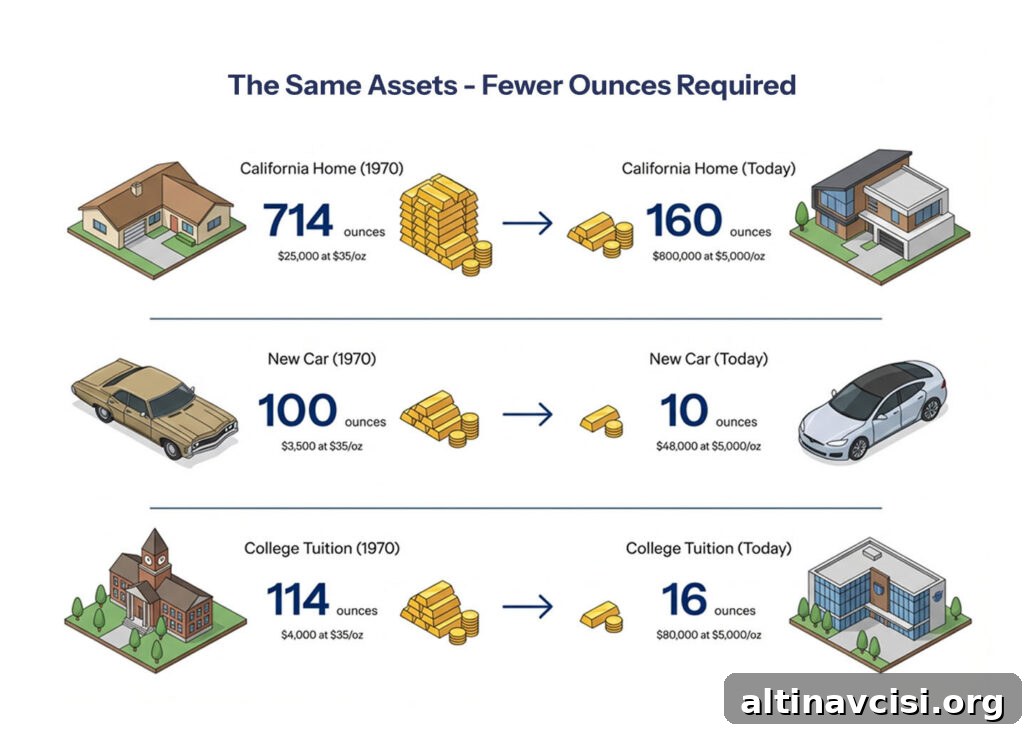
Measured in dollars, home prices have risen more than 30-fold. Measured in gold, the number of ounces required has declined by nearly 80%.
Comparing house prices in ounces of gold across decades provides a clearer measure of purchasing power than nominal dollar prices alone. This comparison does not claim homes became “cheap”; it shows how the purchasing power of the dollar has fallen relative to a hard asset like gold.
Over multiple decades, the evidence suggests gold has preserved — and in many cases increased — purchasing power relative to real assets. The dollar did not.
Cars and College Tell a Similar Story
The same pattern appears across other major expenses.
In 1970, a new car averaged about $3,500 — roughly 100 ounces of gold at the time. Today, with new vehicles averaging around $48,000, that translates to approximately 10 ounces of gold using the same $5,000 benchmark.
Four years of college in 1970 averaged roughly $4,000, or about 114 ounces of gold. Today, an $80,000 degree equates to about 16 ounces of gold at $5,000 per ounce, and even fewer ounces at current spot prices.
Note: With gold trading above $5,300 at the time of writing, the number of ounces required would be even lower — strengthening the comparison.
Measured in dollars, these costs appear to have exploded. Measured in gold, they have declined significantly. Over long spans, gold has tended to preserve purchasing power while fiat currencies erode.
What This Means for Long-Term Investors
For investors focused on retirement or generational wealth, the key question is not just whether asset prices rise, but whether savings will preserve purchasing power over time.
Since the early 1970s:
- The U.S. money supply has expanded substantially.
- Federal debt has increased dramatically.
- Inflation has compounded year after year.
Gold sits largely outside that system. It does not depend on corporate earnings, government policy, or debt issuance and carries no counterparty risk. While its price can be volatile in the short term, gold’s long-term role has often been as a store of value.
Central banks continue to hold and add to gold reserves. In recent years, official purchases have reached multi-decade highs, reflecting gold’s role during periods of elevated inflation, monetary uncertainty, or financial stress.
Examining how many ounces of gold buy a house across decades is effectively a way to test gold’s ability to retain real purchasing power.
The Dollar Illusion
When people say homes are unaffordable or college is out of control, they usually refer to nominal dollar prices. Nominal prices can obscure what’s happening beneath the surface.
If the unit of measurement itself is losing value, rising prices do not always mean rising real costs; they often reflect currency depreciation.
Gold offers an alternative lens. Pricing assets in ounces rather than dollars helps show whether real value has changed or whether the currency has.
Over the past five decades, much of what looks like explosive price growth reflects dollar weakness rather than pure increases in real asset value.
Is Gold a Perfect Hedge?
No asset is perfect. Gold does not generate income, dividends, or interest, and it can be volatile in the short term.
Over long periods—especially during inflationary cycles—gold has shown an ability to maintain purchasing power relative to tangible assets. That makes it less of a speculative play and more of a strategic allocation for wealth preservation.
For investors worried about inflation, fiscal instability, or long-term currency erosion, gold can serve as a monetary anchor within a diversified portfolio.
A Broader Perspective on Wealth Preservation
The question of how much gold to buy a house is not about predicting real estate markets. It’s about understanding monetary systems and how purchasing power evolves over time.
Currencies change, policies shift, debt accumulates, and economic cycles swing. Through those shifts, gold has remained a consistent store of value for many investors.
Measuring wealth in real terms rather than nominal ones can give a clearer foundation for long-term decision-making. The numbers suggest that while dollar prices can fluctuate wildly, gold’s long-term relationship to real assets has been remarkably resilient.
That is the deeper lesson history offers.
Stay On Top of Gold & Silver Prices
Get important market alerts sent straight to your inbox.
People Also Ask
How much gold does it take to buy a house today?
At $5,000 per ounce, an $800,000 home requires about 160 ounces of gold. With gold above $5,300 at the time of writing, the ounces required would be even lower. Measuring houses in gold highlights long-term purchasing power trends rather than just nominal dollar increases.
Was it cheaper to buy a house in gold in 1970?
In 1970, a $25,000 home required roughly 714 ounces of gold at $35 per ounce. Today, a comparable home requires far fewer ounces. The gold comparison shows how purchasing power has shifted over time.
Why compare house prices in gold instead of dollars?
Most people don’t price homes in gold when buying or selling. Economists and investors use gold as a benchmark to evaluate long-term purchasing power. Comparing how many ounces buy a house over time isolates inflation and currency expansion from changes in real asset value.
Does gold really protect against inflation?
Historically, gold has tended to preserve purchasing power during inflationary periods, particularly when real interest rates are negative. While it does not produce income, it has often acted as monetary insurance during cycles of currency debasement.
Is gold a better long-term store of value than the dollar?
Over the past 50 years, the dollar has lost purchasing power due to inflation. Gold has generally maintained its ability to command real assets across monetary cycles. Many investors hold physical gold as part of a diversified strategy for long-term wealth preservation.
Disclaimer: This article is for informational purposes only and does not constitute investment advice. Past performance is not indicative of future results. Consult a qualified financial advisor before making investment decisions.
You May Also Like:
- Gold vs. Silver: Roles, Risks, and Portfolio Strategy
- Gold & Silver Prices: Short-Term Noise, Long-Term Signal
- Silver Canadian Maple Leaf: Why It’s One of the World’s Top Bullion Coins
- Gold Portfolio Allocation 2026: What Forecasts Mean for Investors
- How Government Debt Affects Gold and Silver
- Gold vs. Silver: The Liquidity Difference That Matters