Daily News Nuggets | Today’s top stories for gold and silver investors
February 3rd, 2026 | Brandon Sauerwein, Editor
Precious Metals Claw Back After Historic Crash
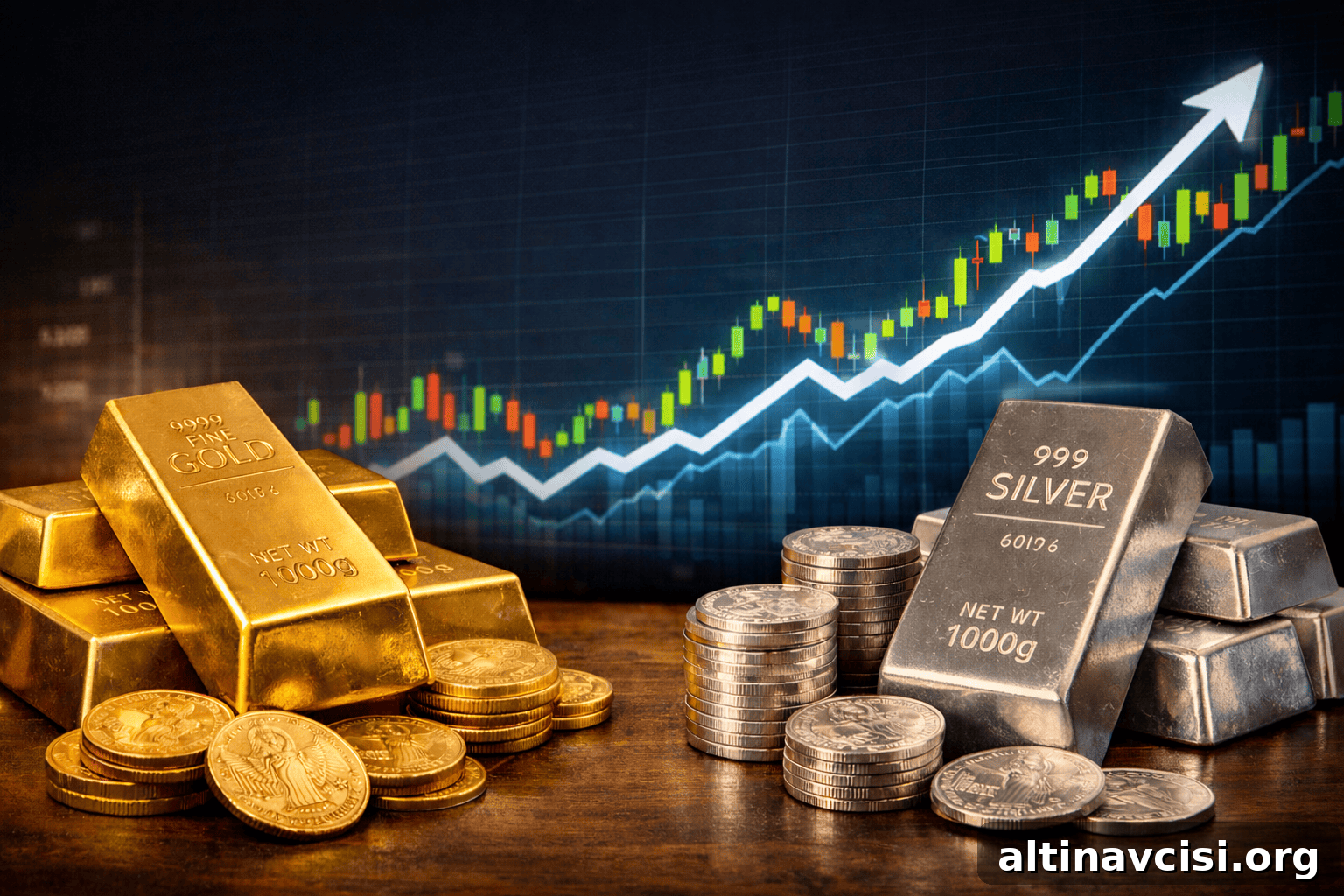
Gold and silver staged a notable comeback Tuesday after a dramatic selloff on Friday erased weeks of gains. Gold rose as much as 6.2% to approach $4,950 per ounce, while silver jumped more than 10% above $87 as the dollar softened and risk appetite returned to markets.
January’s rally had been driven by speculative momentum, geopolitical tensions, and concerns about central bank independence. Both Chinese funds and Western retail investors amassed large positions, while call-option buying and leveraged exchange-traded products amplified the move. That setup reversed in Asian trading on Friday, triggering silver’s largest single-day decline on record and gold’s worst daily loss since 2013.
Despite the turbulence, major banks remain optimistic. UBS described the selloff as a healthy reset that creates better entry points, and Deutsche Bank maintained a $6,000 gold target. The central question now is whether Chinese buyers will return after Lunar New Year, as Beijing’s state banks are tightening controls on gold investment—introducing an element of uncertainty for any sustained rebound.
The rebound in bullion also supported related markets and investor sentiment as traders digested whether last week’s event was a one-off liquidating move or the start of a longer repositioning.
The Edge Every Investor Needs
Smarter precious metals investing starts here. The Nuggets Newsletter brings essential market insights, Fed updates, global trends, educational videos, and concise analysis to help you make informed decisions.
Mining Stocks Surge After Brutal Selloff
Gold mining stocks rallied Tuesday along with bullion’s recovery. Endeavour Silver climbed about 7.5% in premarket trading, Coeur Mining added roughly 7.7%, and Hecla Mining and First Majestic Silver each rose near 8% as investors bought the dip.
Analysts broadly described the prior selloff as a positioning reset rather than a fundamental shift. Deutsche Bank emphasized that long-term drivers for precious metals remain intact despite Friday’s 10% decline in gold and silver’s roughly 30% plunge. Barclays and other firms pointed to ongoing geopolitical uncertainty and central bank demand as supportive factors for metals and miners.
The miners’ strong bounce suggests many investors see the swing as a buying opportunity rather than a prompt to exit the sector, though volatility is likely to remain elevated as the market reassesses risk and positioning.
While precious metals dominated headlines, a separate minerals policy story unfolded in Washington that could reshape supply dynamics for critical elements.
Trump Launches $12B Mineral Reserve to Break China’s Rare Earth Grip
President Trump announced “Project Vault,” a $12 billion strategic stockpile aimed at insulating U.S. manufacturers from price volatility and reducing reliance on Chinese suppliers. The plan pairs a $10 billion Export-Import Bank loan with roughly $1.67 billion in private capital to secure critical minerals such as cobalt, gallium, lithium and rare earths—materials crucial for electric vehicles, semiconductors and defense systems.
A coalition of more than a dozen firms, including major automakers and tech and industrial companies, signed on. Three commodities trading firms will oversee procurement while participating manufacturers agree to buy materials at set prices. They can draw from the reserve during disruptions and later replenish supplies, a structure intended to smooth price swings and safeguard supply chains.
The initiative is explicitly aimed at countering China’s dominance in mining and processing—widely cited as a strategic vulnerability. Beijing currently controls a large share of global mining and processing capacity, which has raised concerns about leverage in trade disputes and the security of U.S. supply chains. Shares of rare earth and related mining stocks rose on the announcement as markets priced in potential supply diversification.
President Trump also made headlines on trade policy the same day.

Trump Slashes India Tariffs to 18% — Details Still Missing
The president announced a tariff agreement with India that would reduce certain rates to 18% from as high as 50%, a move intended to boost bilateral trade and improve U.S. export competitiveness. The announcement also tied the deal to conditions such as a halt to Russian oil purchases and a commitment by India to purchase a large volume of U.S. goods over several years, though official terms have not yet been published.
Indian markets reacted positively: stocks recorded solid gains and the rupee strengthened materially, marking its best move in years. Export sectors including gems, leather and auto components welcomed the improved competitiveness versus neighboring manufacturing hubs where tariffs remain higher.
However, important questions remain. No formal treaty text has been released, Indian refiners have not received orders to cease Russian crude purchases, and Moscow says it has not been notified. Ratings agencies warned that an immediate stop to Russian oil imports could strain India’s economy and tighten global oil supplies. Officials from both countries signaled a joint statement or formal agreement would follow to clarify implementation.
Back in the United States, a Federal Reserve official weighed in on the policy backdrop and inflation outlook.
Fed Official Defends Rate Cuts as “Insurance” While Inflation Cools Slowly
Richmond Fed President Tom Barkin defended the central bank’s cumulative 1.75 percentage points of rate cuts, describing them as a form of “insurance” to support the labor market while policymakers work to bring inflation back to the 2% objective. He said the Fed’s focus remains on completing the “last mile” of disinflation, acknowledging that inflation has been above target for several years and currently sits about one percentage point higher than desired.
Barkin stressed that persistent inflation is a serious concern because today’s price levels influence future expectations. Still, he expressed confidence that the economy can remain resilient through 2026, citing deregulation, tax changes and robust corporate confidence as tailwinds. He noted signs of cooling price-setting power—consumers resisting higher prices and rising productivity helping firms absorb input-cost pressure without broad pass-through.
Having spoken with dozens of companies since the start of the year, Barkin said most are not conducting large-scale layoffs and that demand and margins remain healthy. Although he is not a voting member of the Federal Open Market Committee this year, his remarks signal a cautious stance and tolerance for a patient approach in the Fed’s current policy pause.
You May Also Like
- JP Morgan Sees $6,300 Gold After Historic Crash
- Gold’s Week: $9T Swing, Trump’s Fed Pick, and Record Premiums
- Gold Breaks $5,500 as Metals Rally Accelerates
- Gold Passes $5,300 as Fed Meets, Dollar Craters
- Why Gold Just Hit $5,100 and Where It’s Headed Next