
Daily News Nuggets | Today’s top stories for gold and silver investors
February 11th, 2026 | Brandon Sauerwein, Editor
Labor Market Surprises with 130,000 Jobs Added in January
U.S. employers added 130,000 jobs in January, a headline beat that pushed the unemployment rate down to 4.3% and briefly eased expectations for near-term Fed easing. On the surface, the report suggests a resilient labor market. Beneath that headline, though, revisions to 2025 payrolls dramatically reduced previously reported gains — leaving total job growth for the year at roughly 181,000, one of the weakest annual tallies in recent memory.
That mix of a solid monthly print and weaker annual revisions created divergent signals for markets. The dollar strengthened and Treasury yields rose, reflecting less immediate pressure on the Federal Reserve to cut rates. Gold, however, largely held its ground, underscoring the metal’s role as a hedge against uncertainty. In short, the headline points to durability while the underlying data imply a slowing momentum that could influence policy decisions down the line.
The Edge Every Investor Needs
Smarter precious metals investing starts here. The Nuggets Newsletter delivers concise market analysis, Fed updates, global trends, and educational content to help you make clearer decisions.
ETF Inflows Signal Renewed Bullion Demand
Exchange-traded funds focused on gold and silver posted strong inflows after softer U.S. data increased expectations for Fed rate cuts later this year. Large vehicles such as SPDR Gold Shares (GLD) and iShares Silver Trust (SLV) led the move as investors rotated into physically backed funds to secure exposure to bullion.
ETF buying differs from futures activity: it represents longer-term capital that typically allocates directly to physical holdings. When inflows pick up, they can create persistent upward pressure on prices because the physical metal must be sourced and held. This dynamic helps explain why rising rate-cut expectations often translate quickly into stronger demand for non-yielding assets like gold and silver.
Gold Steadies Above $5,000 as Silver Finds Its Footing
Gold has held firm above the $5,000 mark as investors seek protection while waiting for clearer policy signals. The metal’s relative stability reflects its traditional safe-haven role amid policy uncertainty and geopolitical risk.
Silver’s recent path has been more volatile. At the end of January the metal experienced an exceptionally large single-day decline, driven less by a sudden change in fundamentals and more by forced liquidations and leveraged positions being unwound in a thin market. When liquidity tightens, silver can move sharply in both directions.
Silver’s Six-Month Surge vs. the S&P 500
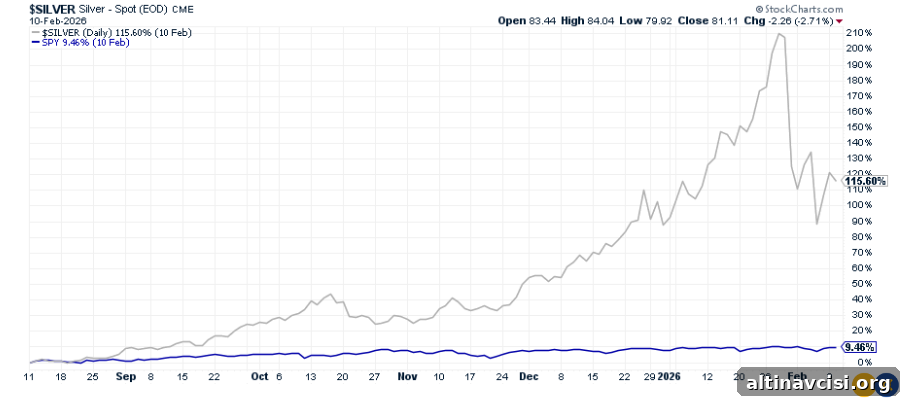
Since the liquidation episode, silver prices have largely stabilized, and the metal has shown the capacity to rebound quickly once selling pressure eases. On the day of this report, silver was trading higher by nearly 5%, illustrating how the market can recover swiftly when forced selling subsides.
Silver typically magnifies gold’s moves: it falls harder during liquidity squeezes but often offers larger recoveries afterward. That asymmetric volatility means investors must weigh temperament and time horizon—gold provides steadier downside protection while silver offers greater upside potential, accompanied by higher short-term swings.
Stay On Top of Gold & Silver Prices
Get important market alerts sent straight to your inbox.
Governments Stockpile Commodities as Risk Rises
Policymakers are increasingly treating commodities as strategic assets rather than mere inputs to production. Major economies are expanding reserves of critical goods — from energy and industrial metals to gold — as geopolitical tensions and supply-chain fragmentation elevate the importance of secure access.
This shift away from hyper-globalized trade reflects a new priority: supply security over pure market efficiency. Sanctions, trade disputes, and regional conflicts have encouraged governments to build strategic stockpiles as insurance against disruptions. When states divert material into national reserves, less supply circulates in open markets, which can tighten availability and amplify price volatility.
Gold is a standout beneficiary. Already a target of central bank purchases, bullion gains additional demand when governments view it as a strategic reserve. As nations prioritize resource security, the structural demand story for commodities — and gold in particular — grows stronger.
Lebanon’s Gold Reserves Take Center Stage Amid Banking Collapse
Lebanon’s prolonged financial crisis has focused attention on the country’s gold holdings. With local banks restricting withdrawals and the currency deeply devalued, many Lebanese view the nation’s roughly 286 tons of gold as one of the few remaining anchors of value.
Lawmakers have so far resisted tapping the reserves, treating them as a last line of defense while public trust in financial institutions remains low. The situation underscores gold’s traditional role: when banking systems fail and currencies falter, physical gold often serves as an asset of last resort for savers and policymakers alike.
You May Also Like
- Silver’s 7% Bounce Sparks Bullish Calls
- Gold Holds Above $5,000 as Hedge Funds Brace for Turbulence
- Gold and Silver Rally Through Ongoing Market Volatility
- Gold Rebounds as Fed Risk, Weak Jobs, and Crypto Stress Collide
- Gold (+6%) and Silver (+10%) Stage Dramatic Comeback
- JP Morgan Sees $6,300 Gold After Historic Crash