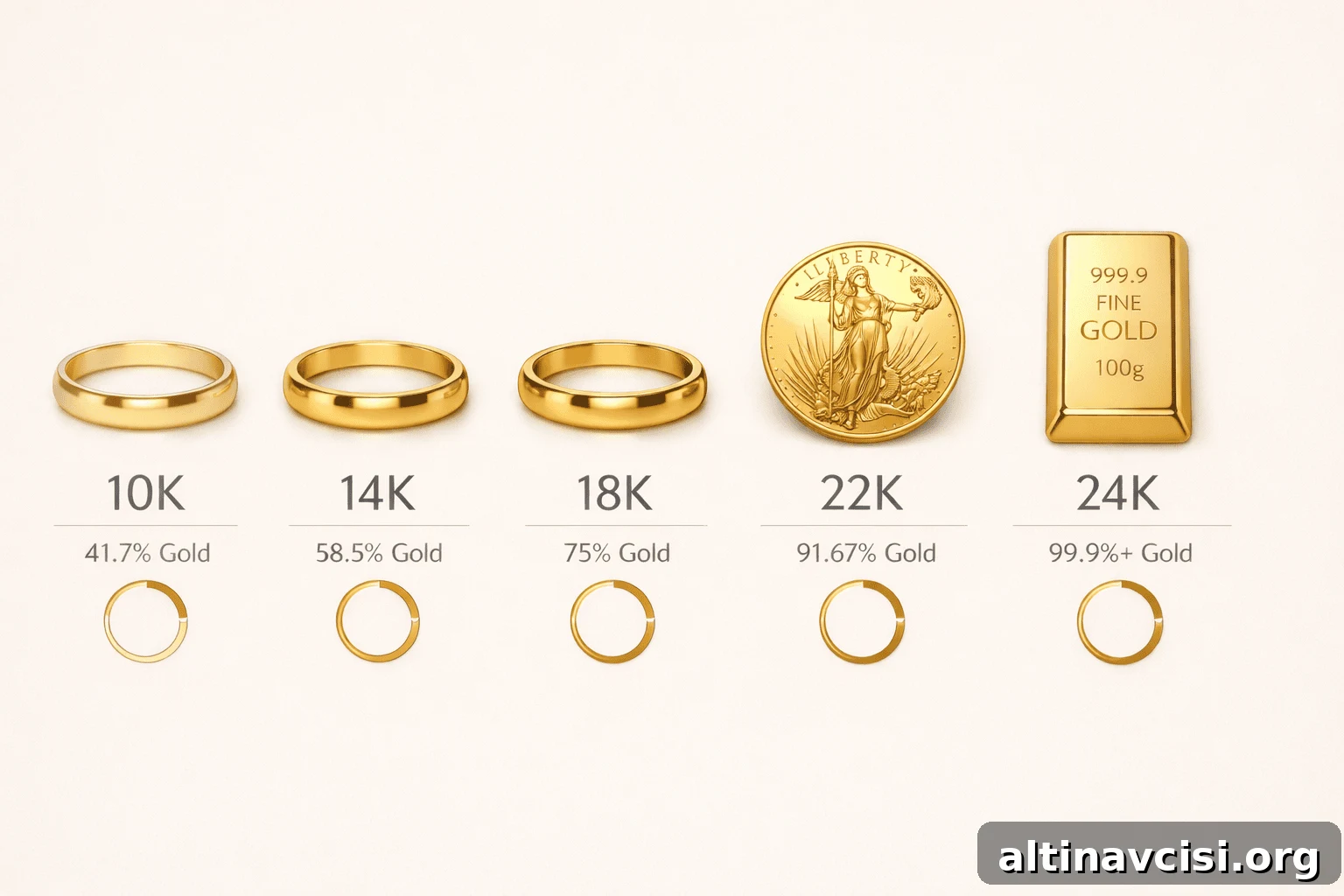
Most people first learn about gold purity at a jewelry counter: the salesperson explains karats, you nod, and you leave with a basic idea that 18K is richer than 14K. But when you begin researching gold as an investment, the language shifts dramatically.
Investment descriptions use terms like:
- .9999 fine gold
- 24 karat bullion
- 22 karat sovereign coins
- 91.67% purity
It’s the same metal, but a different conversation — and an important one for investors. Purity determines what you own, how much you pay, and how easily you can resell. Here’s how to read the numbers that matter.
Purity Explained: What Does “Karat” Mean?
Gold purity measures how much actual gold is in a piece of metal. Because pure gold is soft, it’s commonly mixed with other metals — like copper or silver — to increase strength and durability. The karat system is the standard for describing purity in jewelry.
The Karat System (Used in Jewelry)
- 24K gold = 100% gold (technically 99.9%+ pure)
- 22K gold = 91.67% gold
- 18K gold = 75% gold
- 14K gold = 58.5% gold
- 10K gold = 41.7% gold
Lower karat means less pure gold. Gold is considered “fine” when it has a purity above .900. Most investment-grade bullion — coins and bars — meets or exceeds this level, often refined to .999 or .9999 purity.
In jewelry, lower purity is practical: alloys improve scratch resistance and longevity for rings, bracelets, and daily wear. They also reduce cost and allow color variations such as white or rose gold.
But investing in gold is a different conversation.
Why Investment Gold Is Different from Jewelry Gold
When you buy jewelry, you pay for more than the metal: design, craftsmanship, branding, and retail markup are all folded into the price. The gold itself is only one component of value.
Investment-grade gold, known as bullion, is priced primarily for its metal content. Its market value closely tracks the global spot price of gold, with a relatively small premium for minting and distribution.
Because of those differences, jewelry is rarely the most efficient or liquid way to hold gold for investment purposes. Serious investors typically favor high-purity coins and bars that are widely recognized and easy to resell.
Understanding Gold Purity in Bullion Coins
Modern bullion coins generally fall into two purity categories:
- 24-karat gold (.999 or .9999 fine)
- 22-karat gold (91.67% purity)
Both types can contain exactly one troy ounce of gold; they differ in composition and history. Below are how each type is typically presented and why investors choose them.
24K Gold Coins (99.99% Pure Gold)
Twenty-four karat coins represent the standard for pure gold in the bullion market. Mints refine these coins to .999 or .9999 purity, minimizing alloy metals.
Popular 24K bullion coins include:
American Gold Buffalo
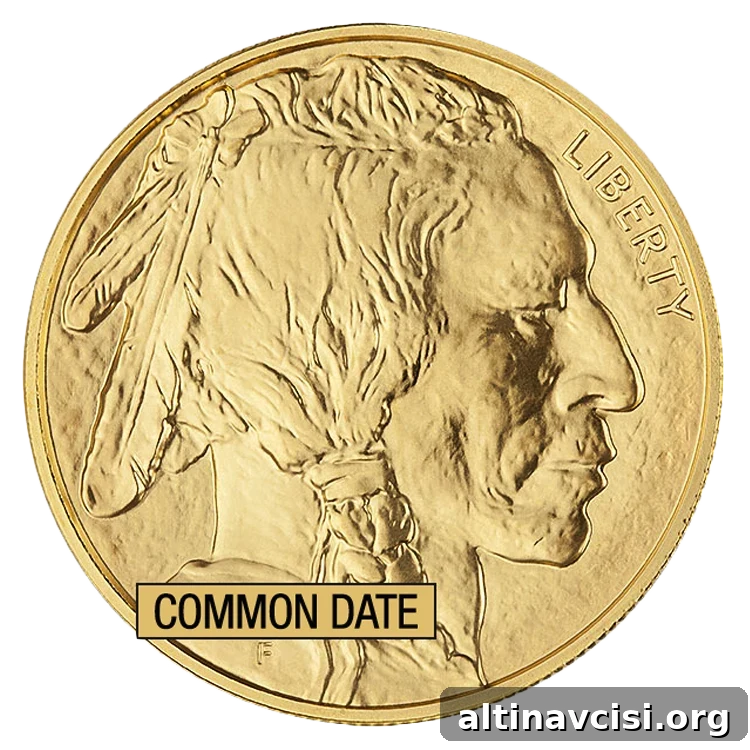
Introduced in 2006, the American Gold Buffalo is the U.S. Mint’s 24K offering. It contains one troy ounce of .9999 fine gold and uses the Buffalo nickel design. Investors who prioritize maximum purity often prefer this coin.
Canadian Gold Maple Leaf
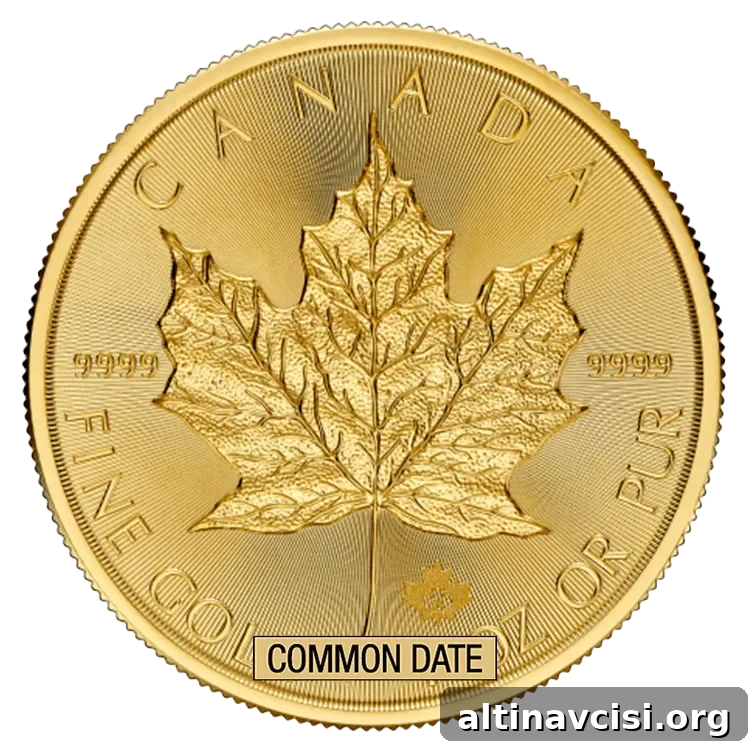
The Gold Maple Leaf, launched in 1979, was among the first major coins minted to .9999 fine gold. It is recognized globally and includes security features that support its market credibility.
Australian Gold Kangaroo

Produced by the Perth Mint, the Gold Kangaroo is minted to .9999 fine gold. Its annual design changes add collectibility while retaining status as a widely accepted bullion coin.
For investors who want maximum purity and broad recognition, 24K coins are a clear choice.
22K Gold Coins (91.67% Gold)
At first glance, 22K coins may appear inferior to 24K because they are 91.67% gold. But context matters.
Twenty-two karat coins include alloy metals — usually copper and sometimes silver — that boost durability. Historically, circulating gold coins were minted at 22K because pure gold was too soft for regular handling.
Crucially, a one-ounce 22K bullion coin still contains one full troy ounce of gold. The coin’s total weight is slightly higher to compensate for the alloys, so the stated gold content remains accurate.
Two well-known examples are:
American Gold Eagle

The American Gold Eagle is the most traded gold coin in the U.S., following the 22K standard of earlier American coinage. Its durability and strong recognition make it highly liquid domestically.
South African Krugerrand
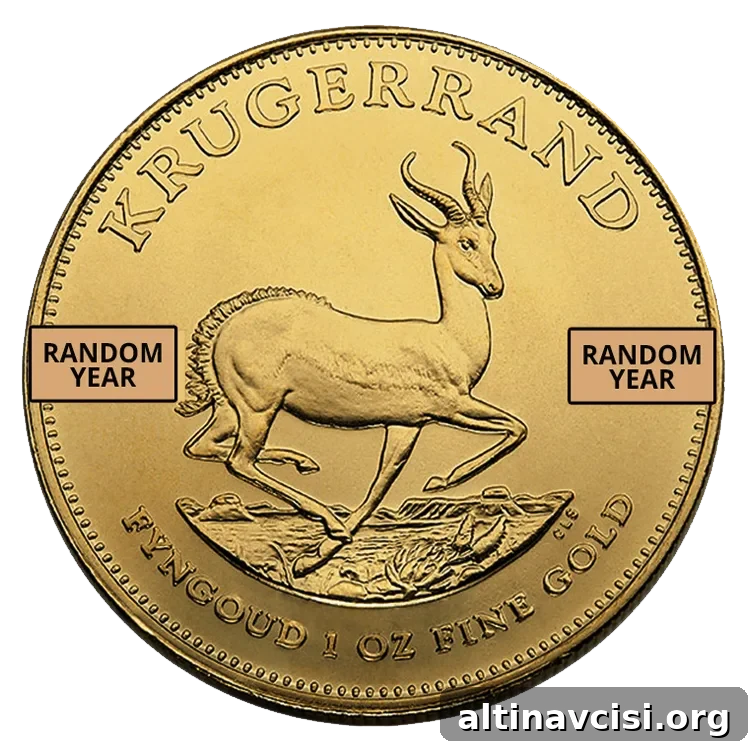
Launched in 1967, the Krugerrand was the first modern bullion coin aimed at private ownership and remains one of the most traded coins worldwide, helping to shape the international bullion market.
Many investors value 22K coins for their balance of tradition, durability, and recognition.
22K vs. 24K: Does It Affect Value?
Purely from a metal-content perspective, a one-ounce 22K coin and a one-ounce 24K coin that both contain the same stated gold weight are worth the same in relation to the spot price. Purity changes composition, not the underlying amount of gold in a standardized bullion coin.
Where differences appear is investor preference and use case. Some people choose 24K for maximum purity and simplicity. Others prefer 22K pieces like the Gold Eagle for their deep historical roots and strong domestic liquidity. Premiums can vary with supply, demand, and minting, but neither purity format has an inherent market advantage.
The right choice depends on your goals.
What About Gold Bars?
Refiners usually produce gold bars at .999 or .9999 purity. Bars often carry lower premiums than coins because they lack elaborate designs and legal-tender status, making them cost-effective for larger holdings. Many investors combine coins for recognizability and flexibility with bars for bulk cost efficiency.
Why Purity Matters in the Bigger Picture
Purity influences global recognition, liquidity, and buyer confidence. Central banks, institutions, and private investors trade standardized high-purity gold because it’s simple to measure, value, and verify.
Lower-purity jewelry may be attractive aesthetically, but it does not serve as a globally liquid monetary asset.
Investors usually seek gold that is:
- Tangible
- Recognized worldwide
- Easy to value
- Independent of financial intermediaries
High-purity bullion meets those criteria.
Not All Gold is Created Equal
Fourteen-karat jewelry and 24-karat bullion have different purposes: one is meant to be worn, the other to preserve wealth. Recognizing that distinction separates a casual buyer from an informed investor.
Whether evaluating a .9999 Gold Buffalo or a 22K American Gold Eagle, keep the same fundamentals in mind: know the gold content, understand the premium you’re paying, and choose products with broad recognition and resale ease.
Gold has been a store of value for millennia because its purity can be measured and trusted. That reliability remains central to physical gold investing.
People Also Ask
What is the best gold purity for investing?
Most investment-grade gold is either .9999 fine (24K) or 22K (91.67%). Both are broadly accepted. For maximum purity, 24K coins such as the Gold Buffalo or Canadian Maple Leaf are common choices. For durability and strong U.S. liquidity, the 22K Gold Eagle is popular.
Is 14K gold worth buying as an investment?
Generally not as a primary investment. Jewelry carries markups for design and retail, and it’s harder to sell at spot value. Bullion coins and bars are more efficient for building a gold position.
Does higher gold purity mean higher value?
Not automatically. A one-ounce 22K coin and a one-ounce 24K coin with the same gold weight track the same spot price. Purity affects composition and some investor preferences, but not the intrinsic value of the stated gold content.
What does .9999 fine gold mean?
It indicates 99.99% pure gold, the highest common commercial standard for bullion. Coins like the Canadian Maple Leaf and the American Gold Buffalo meet this specification.
Disclaimer: This article is for informational purposes only and does not constitute investment advice. Past performance is not indicative of future results. Consult a qualified financial advisor before making investment decisions.
You May Also Like:
Gold vs. Silver: Roles, Risks, and Portfolio Strategy
Gold Silver Prices: Short-Term Noise, Long-Term Signal
Silver Canadian Maple Leaf: Why It’s One of the World’s Top Bullion Coins
Gold Portfolio Allocation 2026: What J.P. Morgan’s Forecast Means for Investors
How Government Debt Affects Gold and Silver
Gold vs Silver: The Liquidity Difference That Matters