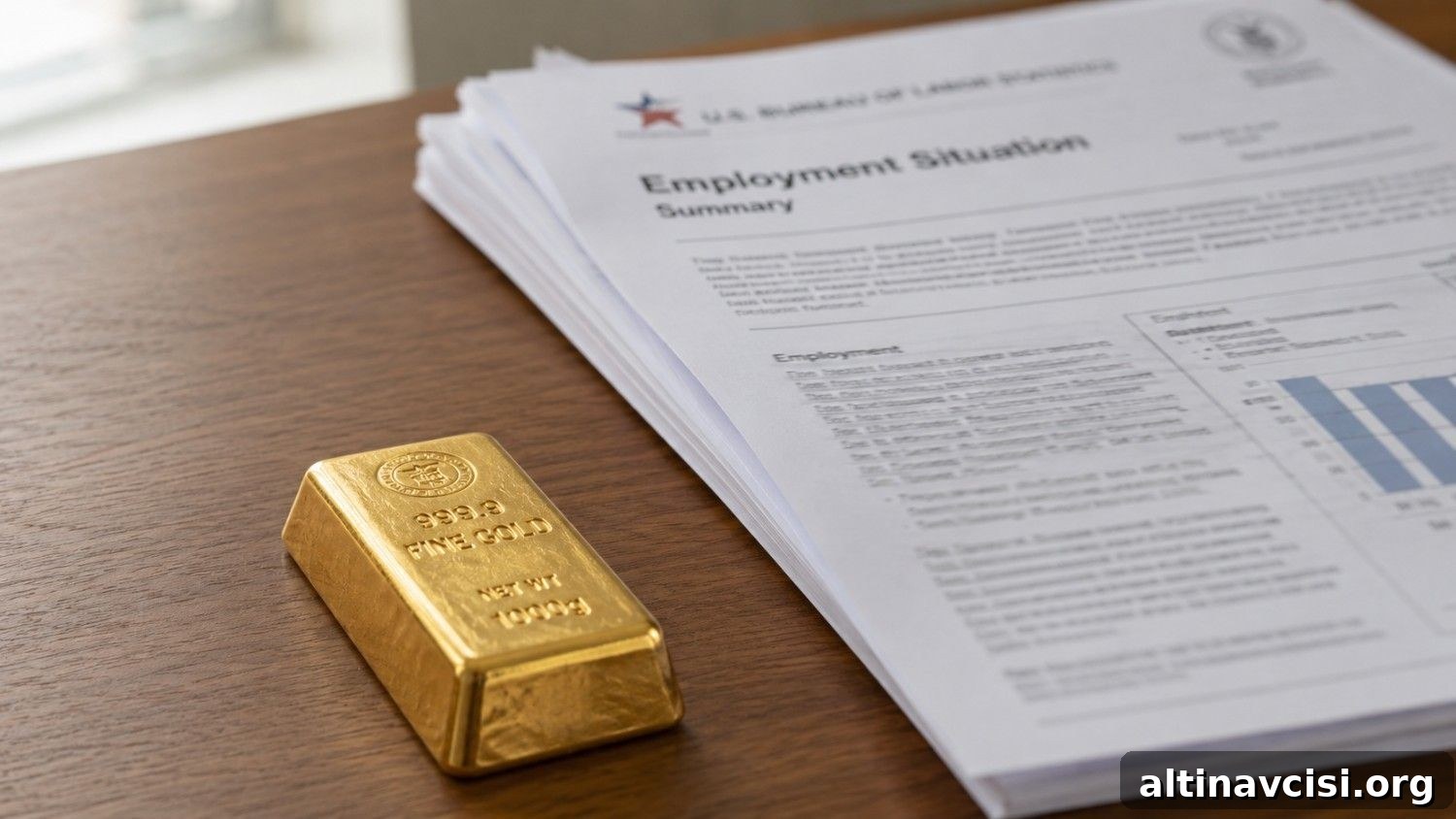
A stronger-than-expected jobs report is pushing gold’s paper price lower. The connection is straightforward: robust hiring reinforces the Federal Reserve’s hawkish stance, higher interest rates increase the opportunity cost of holding a non-yielding asset like gold, and leveraged futures traders often sell quickly in response. That dynamic is already underway — gold is down about $60 today, even before Thursday’s data is released.
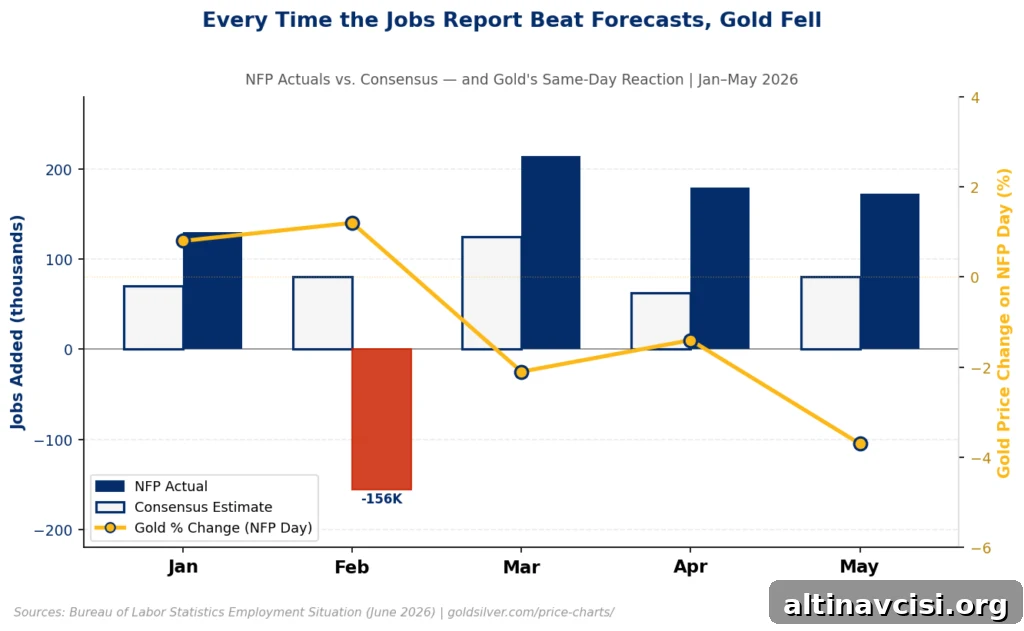
In May, the Bureau of Labor Statistics reported 172,000 jobs added, roughly double Wall Street’s estimate. Revisions to prior months strengthened the picture: March was revised to 214,000 and April to 179,000. Taken together, the three-month average rose to 188,000, the strongest multi-month stretch in over two years. Markets responded fast: Treasury yields climbed, the dollar gained, and the Nasdaq posted its worst single-session drop since April 2025. Gold fell as well — a predictable response given how rate expectations move asset prices.
Thursday’s release brings the June jobs report, scheduled a day early because of the Independence Day holiday. Consensus forecasts in week-ahead surveys expect around 115,000 jobs added. That is slower than May’s pace but still high enough that it would not necessarily prompt the Fed to shift policy. Below are the likely implications for gold under different outcomes.
What does each scenario mean for gold?
Scenario 1 — Strong beat (150K+). A large beat would likely push gold lower on the trading day as rate-hike expectations rise and the dollar strengthens. Markets would price in a greater chance of additional tightening at upcoming Fed meetings, which increases real yields and reduces the appeal of non-yielding bullion.
Scenario 2 — In-line (~100–130K). If payrolls land near consensus, gold is likely to show limited movement. Traders would remain attuned to other catalysts for direction, such as international developments or comments from central bank officials. In this environment, gold tends to trade in a relatively narrow range until fresh signals appear.
Scenario 3 — Soft miss (below 100K). A weak report would be the most bullish outcome for gold in this setup. Slower job growth would give the Fed more room to pause on further hikes, compress odds for September tightening, and soften the dollar. That combination typically allows gold to recover. Many market participants are not positioned for this scenario after three consecutive upside surprises in payrolls.
Why does average hourly earnings matter more than the headline number?
The headline jobs tally captures attention, but average hourly earnings carry outsized importance because they feed directly into inflation expectations and therefore real yields. When yields rise faster than inflation, the relative return on cash and short-term instruments becomes more attractive than holding gold, which pays no income.
Wage growth is the channel. In May, average hourly wages rose about 3.4% year over year, while the PCE price index — the Fed’s preferred inflation gauge — ran about 4.1% over the same period. That implies real average hourly earnings declined, meaning workers earned more nominal dollars but lost purchasing power. Persistent gaps between wages and inflation create economic stresses that monetary policy alone cannot easily fix.
Another structural factor is the size of U.S. public debt and the resulting interest burden. Higher rates increase debt-service costs on a very large base of outstanding obligations, adding fiscal pressure that interacts with monetary policy choices. Over time, these constraints can influence expectations for rates and currency strength — both important for gold.
What to watch Thursday at 8:30 AM ET
Three components of the jobs release will move gold’s price:
The headline payroll figure — the surprise versus consensus often matters more than the raw number. Markets react to deviations from expectations.
Average hourly earnings — a monthly print significantly above 0.3% would revive inflation concerns and push up rate expectations, pressuring gold.
The unemployment rate — any notable uptick would quickly soften rate-hike probabilities and can be more market-moving than the payrolls figure alone.
Gold’s paper price typically reacts within minutes of the 8:30 AM ET release, reflecting how quickly traders update rate and currency expectations. While traders focus on short-term moves, central banks and long-term holders of physical gold often position for different phases of the cycle, which helps explain why physical demand can rise even as paper prices fluctuate.
Stay On Top of Gold & Silver Prices
Get important market alerts sent straight to your inbox.
SOURCES
1. Bureau of Labor Statistics — The Employment Situation, May 2026
2. Bureau of Labor Statistics — Current Employment Statistics (June 2026 release schedule)
3. CME FedWatch — FOMC Rate Probabilities, June 29, 2026
4. Newsquawk — Week Ahead Highlights, June 29–July 3, 2026
5. IG Markets — Weekly Market Navigator, June 29, 2026
6. US Treasury Fiscal Data — Debt to the Penny
7. GoldSilver — Live Gold & Silver Price Charts
Disclaimer: This article is for informational purposes only and does not constitute financial or investment advice. Always consult a qualified financial adviser before making investment decisions.
You May Also Like:
- The Dot Plot Has 18 Dots. The Chair Withheld His.
- Gold’s Worst Week of 2026. Central Banks Just Filed a Record Buy Signal.
- Silver Looks Like It’s Losing. The Ratio Says It’s Loading.
- Q1 GDP Beat. Jobless Claims Beat. Gold Rose. Here’s Why.
- PCE Hit 4.1%. Gold Went Up. Here’s Why.
- 298 Tonnes of ETF Gold Is Underwater. Central Banks Aren’t.
- Hawkish Fed, Gold Below $4,000, Silver Below $60 — and a Market That Disagrees.