Why Gold Still Outshines Bitcoin as a Store of Value

Written by: The MacroButler
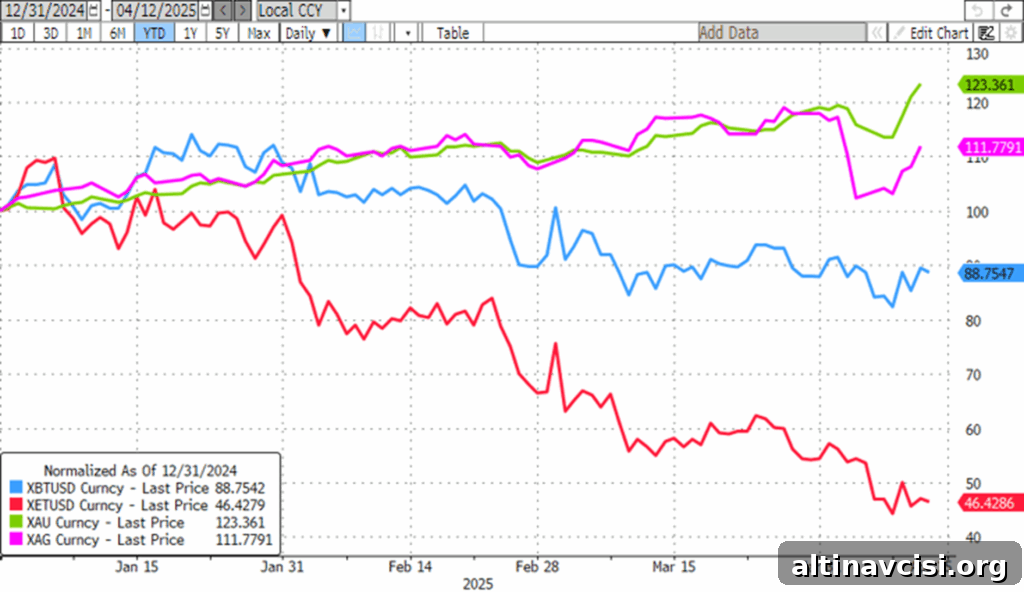
As the “Forward Confusion” campaign gains momentum under the current administration, one outcome is already clear: Bitcoin is failing to function as a reliable store of value. Despite political endorsements pitching it as “digital gold” or even a potential reserve asset, Bitcoin peaked shortly after the inauguration and has fallen since. Ether, often dubbed “digital silver” by speculative investors, has also plunged—while physical silver and gold have quietly posted steady gains. The promise of a decentralized, antifragile monetary salvation has not held up in practice.
Performance of Bitcoin (blue line); Ether (red line); Gold (green line); Silver (purple line) in USD since December 31st 2024.
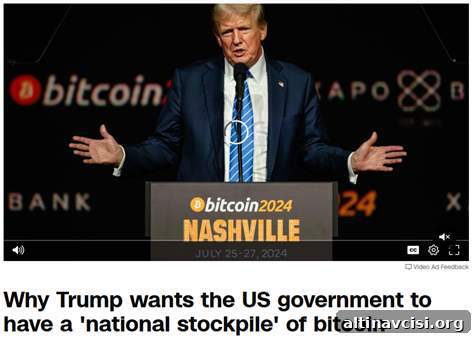
When the 47th U.S. president called “Bitcoin the new oil” during the campaign, the phrase echoed historical examples of strategic asset inflation. In the 1970s certain commodities were manipulated to support the dollar; today, Bitcoin can appear similarly elevated—creating speculative demand and concentrating gains among well-placed participants. What began as rhetoric about decentralization now looks in places like a politically useful bubble that soaks up liquidity and risk.
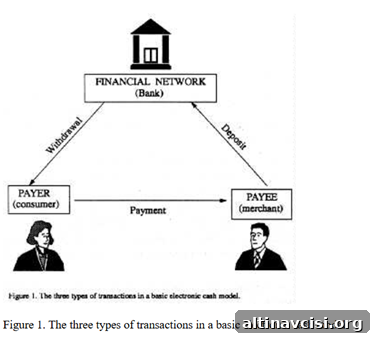
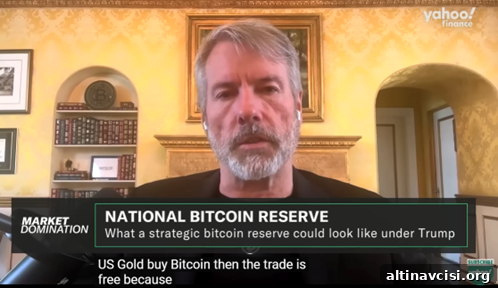
Viewed this way, a possible sequence emerges: inflate Bitcoin to generate speculative demand, link it to UST-backed stablecoins, and allow public speculation to absorb fiscal stress. If true, many retail and institutional Bitcoin investors end up monetizing government debt pressures indirectly. That would make the “decentralized revolution” substantially more centralized in political effect than its rhetoric suggests.
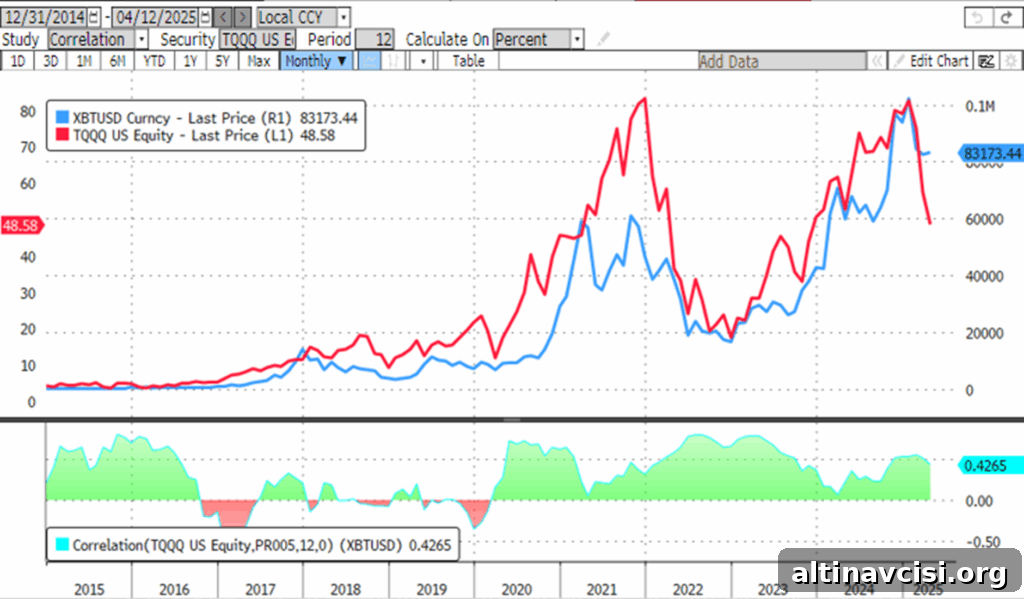
Beyond political narratives, Bitcoin’s market behavior has often tracked other high-beta, speculative instruments. Its correlation with leveraged equity products—such as the triple-leveraged Nasdaq ETF (TQQQ)—has frequently been strong, indicating Bitcoin tends to rise and fall with broader risk appetite rather than act as an independent safe-haven asset.
Price of Bitcoin in USD (blue line); Price of ProShares UltraPro QQQ Index (TQQQ US) (red line) & correlation.
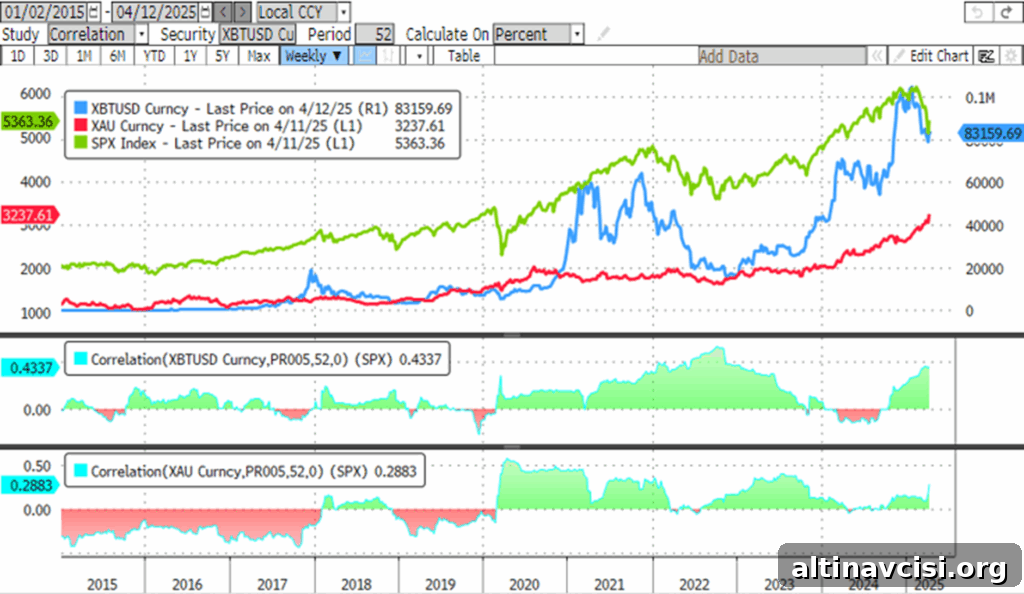
Since their peaks, the S&P 500 and Bitcoin have both pulled back—yet gold continues to set new highs. This divergence may signal a turning point: if equities fall further, historically correlated risk assets like Bitcoin could face larger declines. Indeed, Bitcoin’s 52-week correlation to the S&P 500 has been rising while gold’s correlation to beta has been falling, suggesting Bitcoin behaves increasingly like a risky growth asset rather than a risk-off refuge.
Bitcoin Price (blue line); Gold Price (red line); S&P 500 Index (green line) & Correlation.
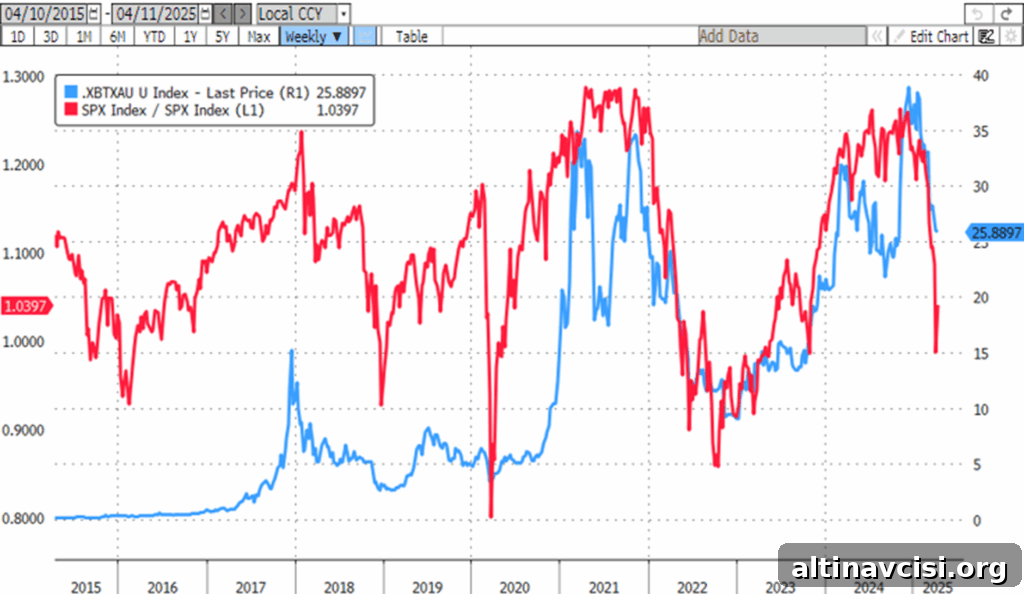
The Bitcoin-to-gold ratio remains elevated compared with prior cycles, implying substantial room for mean reversion if risk assets lose favor. The broader pattern is consistent with an environment in which heavy deficit spending and extraordinary monetary policy lifted many assets—only for those gains to prove fragile when the tide changes. Historically, certain ratio levels in the Bitcoin/gold relationship have acted as turning points; if history repeats, a return toward lower ratios would favor gold over crypto.
Bitcoin to Gold Ratio (blue line); Ratio of the S&P 500 Index to S&P 500 Index 100 day Moving Average (red line).
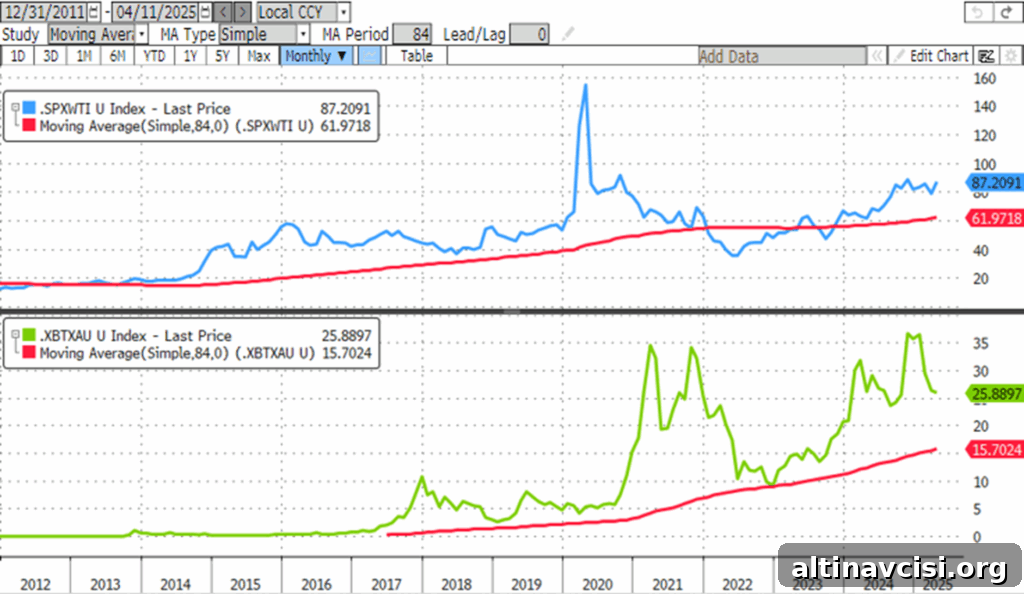
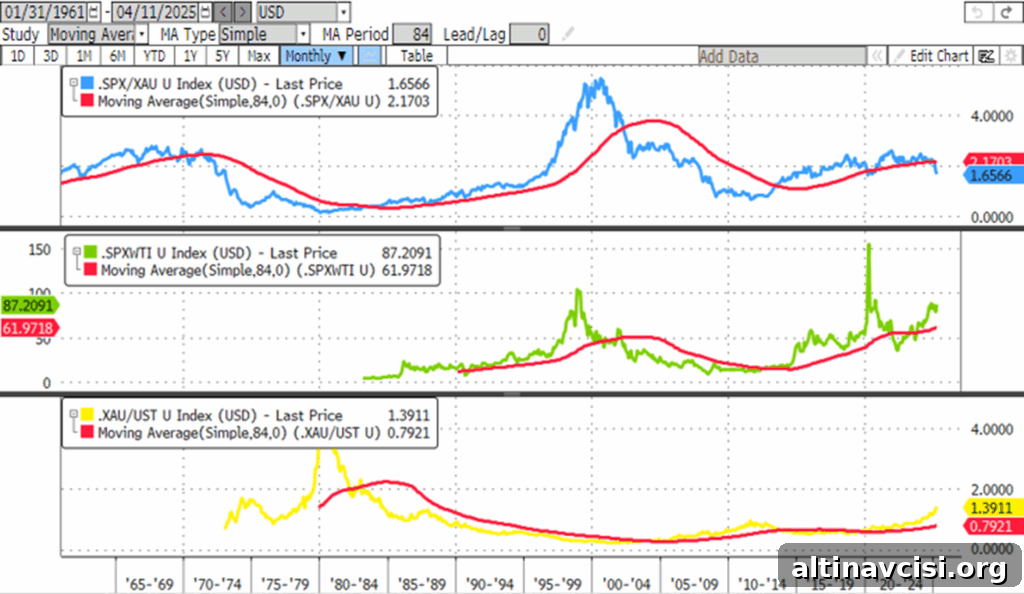
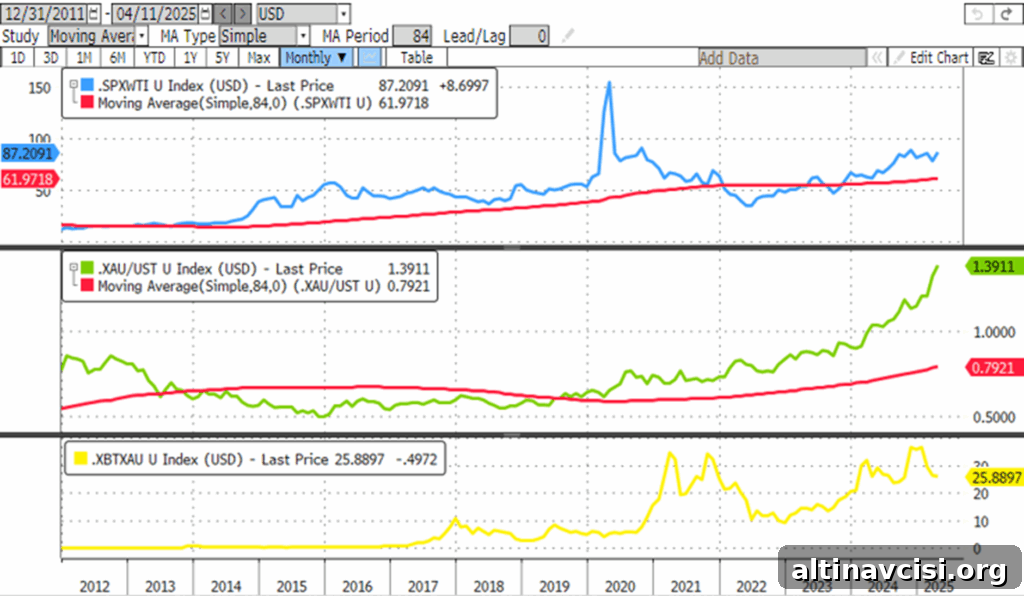
Market-driven ratios—such as Bitcoin-to-Gold, S&P 500-to-Oil and S&P 500-to-Gold—have historically offered useful signals about the business cycle. Peaks in the Bitcoin-to-Gold ratio have often coincided with peaks in equity-to-commodity ratios and have preceded declines in those ratios by only a few months in past episodes. These relationships can help investors anticipate shifts from inflationary booms to busts.
Upper Panel: S&P 500 to Oil Ratio (blue line); 7-year Moving Average of the S&P 500 to oil ratio (red line); Lower Panel: Bitcoin to Gold ratio (green line); 7-year Moving Average of Bitcoin to Gold Ratio (red line).
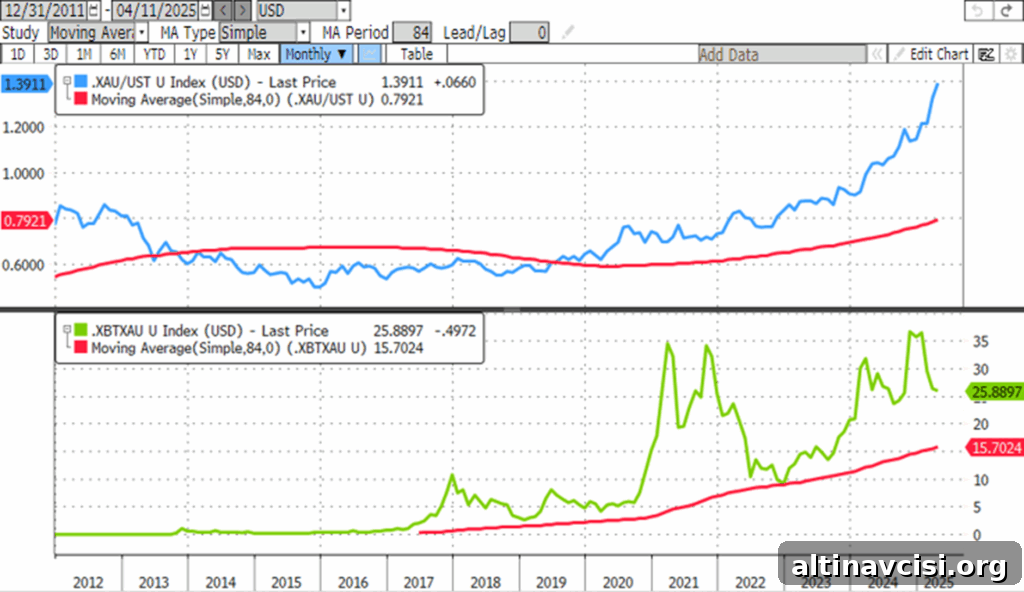
Other ratio comparisons, like Gold-to-Bond versus Bitcoin-to-Gold, have shown no stable trend that reliably signals an inflationary vs. deflationary regime for cryptocurrencies over the last decade. That ambiguity reinforces the point that Bitcoin’s market role remains speculative and sensitive to shifts in overall risk sentiment.
Upper Panel: Gold to Bond ratio (blue line); 7-year Moving Average of the Gold to Bond ratio (red line); Lower Panel: Bitcoin to Gold ratio (green line); 7-year Moving Average of Bitcoin to Gold Ratio (red line).
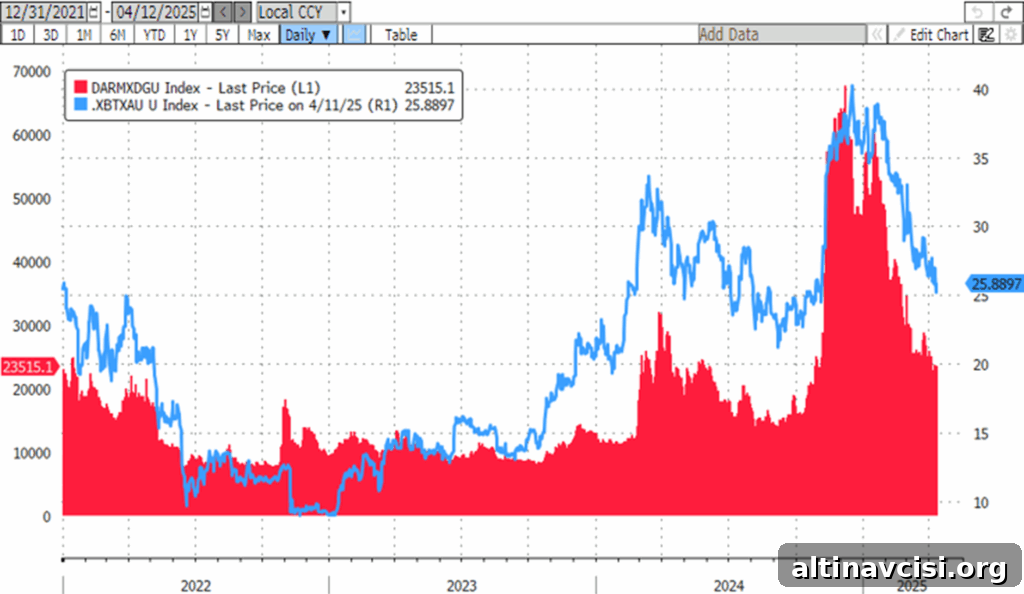
At an extreme, some metrics show Bitcoin’s movements tracking speculative meme assets, underscoring its speculative character rather than any intrinsic, non-correlated store of wealth. For investors focused on preservation, that distinction matters: physical gold and silver remain unique in offering zero counterparty risk and long historical resilience.
Bitcoin to Gold Ratio (blue line); DogeCoin Market Cap (red historgram).
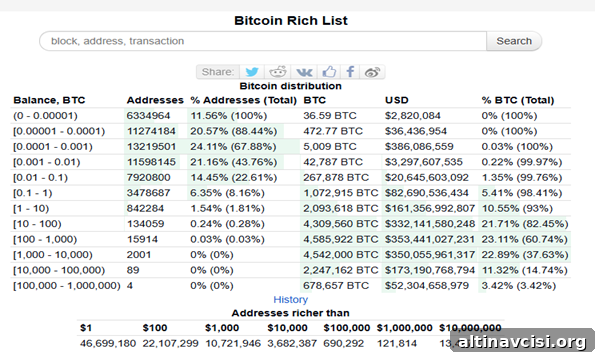
Critics who still claim Bitcoin will replace the dollar or supplant gold should separate ideological hopes from market reality. Bitcoin behaves like a high-volatility trading instrument—not like a stable currency or a reliable store of value. Questions remain about concentrated ownership and the long dormancy of large early wallets, and those structural features contribute to its unpredictability.
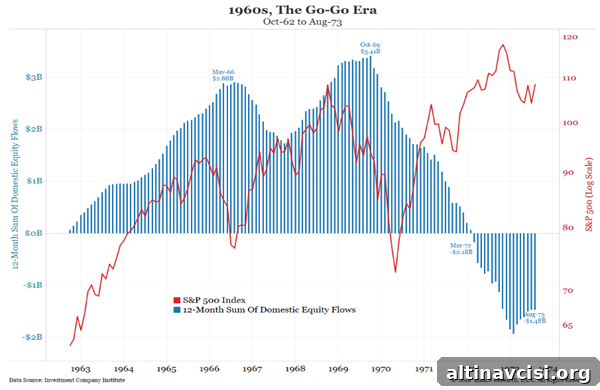
Historically comparable episodes—such as past asset bubbles where retail investors paid large premiums for listed funds—illustrate how participants can suffer outsized losses once speculation reverses. Bitcoin’s volatility and structural concentration mean it remains a speculative asset class rather than a dependable medium of exchange.
In short: Bitcoin functions as a tradable commodity—like agricultural or energy futures—rather than a stable store of wealth. Its value fluctuates widely, and it cannot presently serve as a safe parking place for capital in times of systemic stress.
When central banks and institutions move toward CBDCs and DLT-compliant stablecoins, credibility for those systems will likely depend on anchors and backing. Regardless of technological shifts, physical gold retains qualities that digital tokens do not: longevity, no counterparty risk, and broad acceptance across monetary systems.
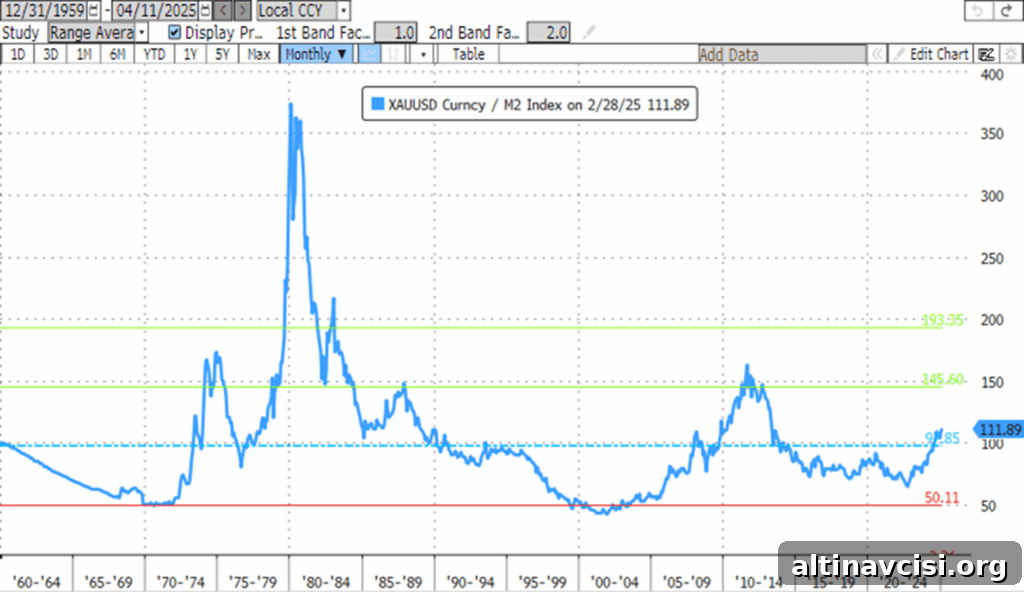
Fiat money faces mounting pressures. Expect continued policy experimentation—yield curve control, capital controls and financial repression remain possible responses to high public debt. In that environment, gold priced in nominal terms may still have room to rise: relative to broad measures of money supply, gold appears inexpensive by some long-run metrics.
Gold Price in terms of US Money Supply (M2) rebased at 100 as of December 1959.
Buy gold to protect purchasing power, not to chase quick riches. Early buyers may have profited handsomely, but the primary rationale for owning gold is preservation. If you want speculative upside, tech stocks and cryptocurrencies offer that—but if you want to protect capital against monetary deterioration, physical gold remains the reliable choice. Gold will never go to zero.

Prudent investors adapt to the business cycle rather than try to outrun it. Emphasize real assets—physical gold and silver—along with short-dated, investment-grade USD instruments and T-bills for liquidity. Favor low-leverage companies with strong earnings and free cash flow, and prioritize energy and commodity producers over discretionary, high-beta growth names. This approach focuses on return of capital and resilience through market stress.
KEY TAKEAWAYS.
As the global landscape evolves, the main takeaways are:
- Despite trade tensions, China’s core inflation dynamics and shifting CPI-PPI relationships remain important macro considerations.
- Under current political narratives, Bitcoin and Ether have not outperformed physical precious metals as stores of value.
- Bitcoin has behaved like a high-beta risk asset, correlating closely with speculative equity instruments.
- Market ratios—Bitcoin-to-Gold, S&P 500-to-Gold and S&P 500-to-Oil—provide useful signals for tracking the business cycle.
- Bitcoin is best viewed as a speculative asset, not a dependable store of value.
- As the economy shifts, investors should prioritize return of capital over aggressive return-seeking in fragile markets.
- Physical gold and silver remain among the most reliable hedges with no counterparty risk.
- Declining trust in public institutions will likely push more capital into non-confiscable, tangible assets.
- Long-dated government bonds have become less attractive; focus instead on short-duration, investment-grade fixed income for cash management.
- Expect higher volatility and muted real returns in the near term; position accordingly.
HOW TO TRADE IT?
As of April 11th, 2025, the U.S. remains in an inflationary environment, but market indicators—most notably the S&P 500-to-Gold ratio trading below its longer-term moving average—point to a potential transition toward an inflationary bust. Investors should remain disciplined: use ratio-based market signals to adjust exposure, maintain liquidity with short-dated investment-grade bonds and T-bills, and keep a core allocation to physical precious metals for protection.
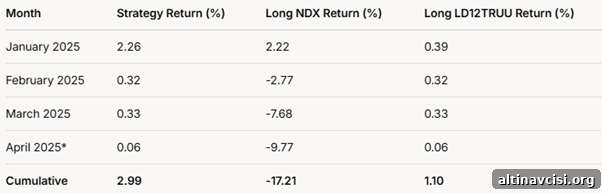
Ratio-based strategies—such as trading allocations informed by the Bitcoin-to-Gold ratio or the S&P 500-to-Oil ratio relative to their moving averages—have shown historical outperformance through volatile stretches. They can help allocate between stocks and cash or shift equity exposure from energy consumers to energy producers as the cycle evolves.
Holding physical gold outside centralized digital rails preserves autonomy: no digital IDs, no programmable controls, and no counterparty exposure. Unlike cryptocurrencies, gold has a multi-millennium track record of preserving purchasing power through diverse monetary regimes. That enduring quality is the core reason informed investors include it in portfolios designed to endure monetary and geopolitical stress.
In a world leaning toward centralized digital currencies and programmable money, gold’s simple, physical characteristics remain a powerful hedge. Gold matters—past, present, and likely future.
Popular Topics
Picked from the archive
-
01
 Topics
Reuters Poll: Gold Set to Extend Rally Through 2026
-
02
Topics
Gold’s 30% Post-Election Rally Consolidates as ETF Flows Slow
-
03
Topics
Kevin O’Leary Rejects Wall Street’s 2025 Recession Forecast
-
04
Topics
Zambia Readies Local Content Rules as Copper Output Surges 30%
-
05
Topics
Goldman Analyst: China’s Pre-Holiday Selloff Sends Gold Tumbling
-
06
Topics
Asian Gold Prices Split: India Discounts, China Premiums
-
07
Topics
India Proposes Targeted Zero-Tariff Offer to Speed US Trade Deal
-
08
Topics
China Opens New Hong Kong Gold Vault to Boost Trading