
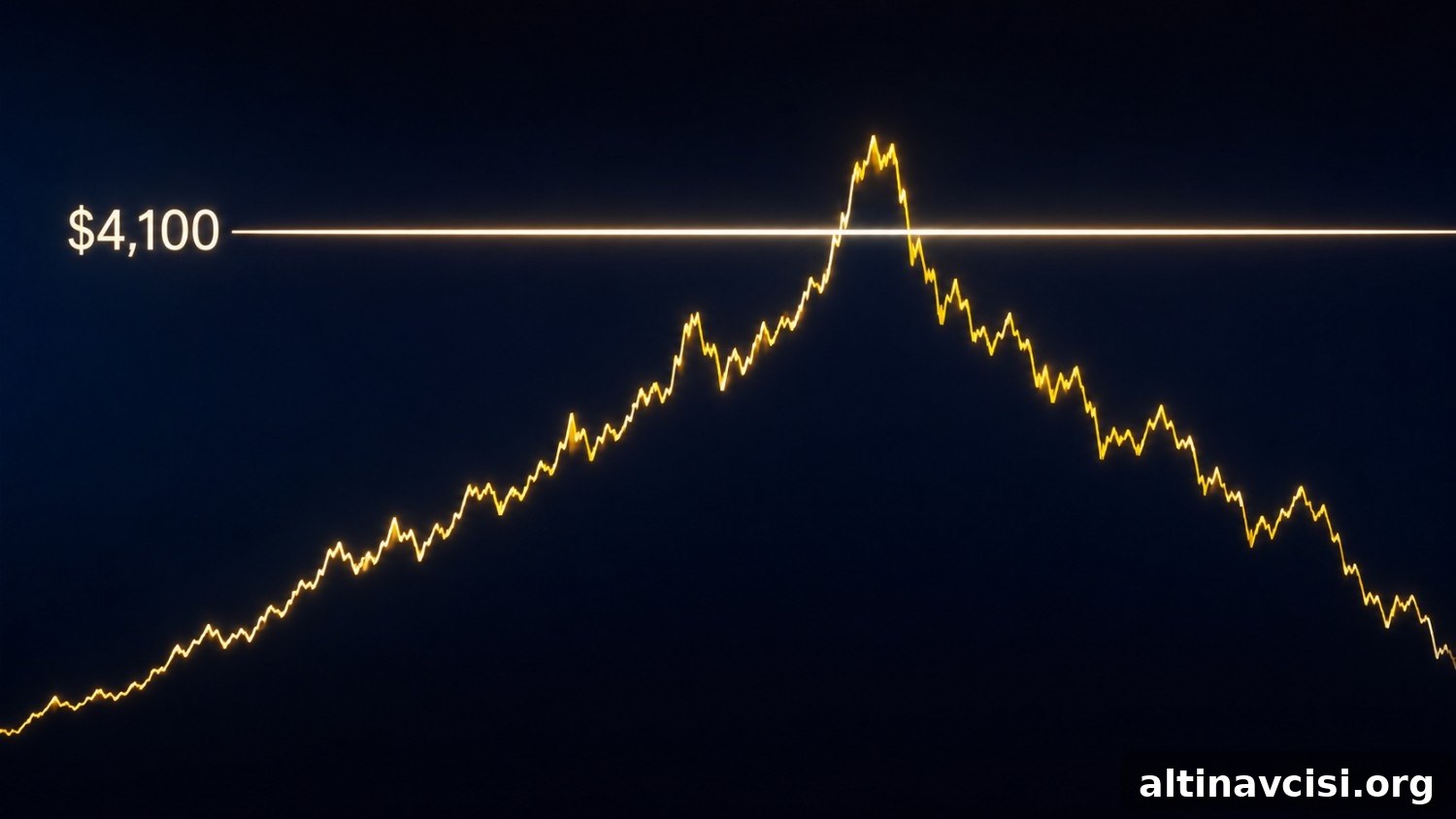
Gold briefly opened above $4,100 this morning for the first time in about a month, but by mid-morning it had fallen back below $4,030. That intraday swing sums up the market’s current dynamic: several major forces are acting simultaneously and in different directions. Institutional buying appears to be strengthening, while the odds of further rate hikes are limiting upside. Below are the key developments that moved prices this week and why they matter for precious metals.
Did Japan Just Intervene to Save the Yen?
On Friday the Bank of Japan kept its policy rate at 1.0% in an 8–1 vote, with board member Hajime Takata dissenting in favor of a 1.25% rate. The larger market signal came overnight when the yen, which had slid toward 163 per dollar — near a 40-year low — bounced to about 157.96, a move consistent with currency intervention. BOJ Governor Ueda also warned that core inflation is expected to accelerate above 2% from the second half of fiscal 2026.
If Tokyo cannot raise rates quickly enough to defend the yen and resorts to direct intervention, the carry-trade imbalance remains a live risk. A surprise BOJ tightening would unwind leveraged dollar positions, weaken the U.S. dollar and increase upward pressure on gold. That possibility keeps a material upside risk to precious metals on the table.
Note: The BOJ cited wage gains, higher crude prices and yen depreciation as drivers of rising inflation in its July 31, 2026 policy statement.

The Edge Every Investor Needs
Smarter precious metals investing starts here. The Nuggets Newsletter brings essential market insights, central bank updates, global trends, educational videos and more.
Gold Opened Above $4,100 on the Iran Pause. Why Did It Give Up the Gains?
A temporary pause in US-Iran airstrikes has now held for several days. Markets reacted quickly: gold opened Friday around $4,102, the first opening above $4,100 since late June, but retreated to roughly $4,026 later in the morning. This pattern has repeated multiple times in July: geopolitical tensions push prices higher at the open, but momentum fades as market focus shifts to interest-rate expectations.
The key dampening factor is the probability of a Fed rate increase in September. As of Friday morning, market-implied odds for a September hike were near 63% according to CME FedWatch data, and that figure can change quickly with each new economic release. Until the market materially lowers those expectations, geopolitical-driven rallies that breach $4,100 tend to be fleeting.
GDP Missed. PCE Dropped. Gold Still Could Not Hold $4,100. Here Is Why.
Thursday’s economic prints were, in isolation, supportive for gold. U.S. Q2 GDP expanded at a 1.5% annualized rate, below expectations of roughly 2.1%. The June personal consumption expenditures (PCE) inflation gauge slowed to 3.7% year-over-year from 4.1% in May, according to the Bureau of Economic Analysis. Even so, gold’s advance above $4,100 was short lived.
The explanation lies in the Federal Reserve’s internal stance. At the July 29 meeting three regional Fed presidents—Hammack, Kashkari and Logan—favored an immediate hike, resulting in a 9–3 decision to hold. While the chair’s comments sounded relatively dovish, the vote breakdown signaled continued hawkish leanings. Gold responds not to a single meeting but to the market’s view of future rate moves. With September hike odds still elevated, bullish data alone was insufficient to sustain the rally.
Central Banks Set a Q2 Record. Jewellery Demand Hit Its Lowest Since the Pandemic. Those Two Facts Tell One Story.
The World Gold Council’s Q2 2026 Gold Demand Trends report highlighted divergent behavior across segments. Global jewellery demand fell to 278 tonnes in the quarter, the lowest level since the pandemic, as sustained prices above $4,500 per ounce discouraged buyers in key markets such as India and parts of Southeast Asia.
At the same time, bar and coin investment remained relatively resilient at 307 tonnes, only a slight year-over-year decline. China’s first-half bar and coin purchases reached a record 314 tonnes. Jewellery demand is price-sensitive and tends to decline when bullion becomes expensive; physical investment is less elastic. Stable or rising physical investment at higher prices points to persistent conviction among investors and collectors, while central bank purchases add another structural bid beneath the market.
Silver Is Down 18% This Year. The Ratio Is Near 70. What Is the Two-Engine Explanation?
Silver declined about 3% on Friday to near $57.18, leaving it roughly 18% lower year-to-date. The gold-silver ratio stood close to 70, above its long-run average near 65. Two structural factors explain silver’s relative weakness.
First, roughly 58% of silver demand is industrial—applications include solar panels, semiconductors and electric vehicle components—so slowing economic growth and lower expectations for industrial activity weigh on the metal. Second, silver shares gold’s monetary sensitivity: rising real yields or higher rate-hike odds reduce the appeal of non-yielding assets. When both the industrial and monetary demand engines are under pressure, silver tends to underperform gold and the gold-silver ratio can remain elevated until a sharp mean reversion occurs.
Stay On Top of Gold & Silver Prices
Get important market alerts sent straight to your inbox.
SOURCES
1. The Japan Times — BOJ keeps rates unchanged amid speculation of yen intervention, July 31, 2026.
2. CNBC — BOJ holds rates at 1%, warns of core inflation exceeding 2% target, July 31, 2026.
3. Yahoo Finance — Gold prices today, Friday, July 31, 2026.
4. US News — Economy slows, inflation dips as markets digest Fed’s latest move, July 30, 2026.
5. FXStreet — Silver price today: falls on July 31 (gold-silver ratio 69.84), July 31, 2026.
6. World Gold Council — Gold Demand Trends Q2 2026, July 30, 2026.
7. ADM Investor Services — Gold finding relief in Fed hold and data, July 30, 2026.
8. TradingEconomics — Gold price and September hike probability data, July 31, 2026.
Disclaimer: This article is for informational purposes only and does not constitute financial or investment advice. Consult a qualified financial adviser before making investment decisions.
You May Also Like:
- Central Banks Bought 289 Tonnes of Gold Last Quarter. Prices Were Falling the Whole Time.
- Warsh Said the PCE Drop Was “Not Much” of a Consideration. Gold Agreed.
- Gold at $4,100. Silver Still Stuck Below $60. Five Signals Define the Next Six Weeks.
- Oil Spiked 8%. Gold Went Up Anyway. Here Is Why This Time Is Different.
- Gold Is Up $40. Here Is What the 9-3 Fed Vote Actually Means.
- Iran Fired Missiles. Oil Spiked 6%. Gold Fell. The Three-Step Chain Behind the Move.