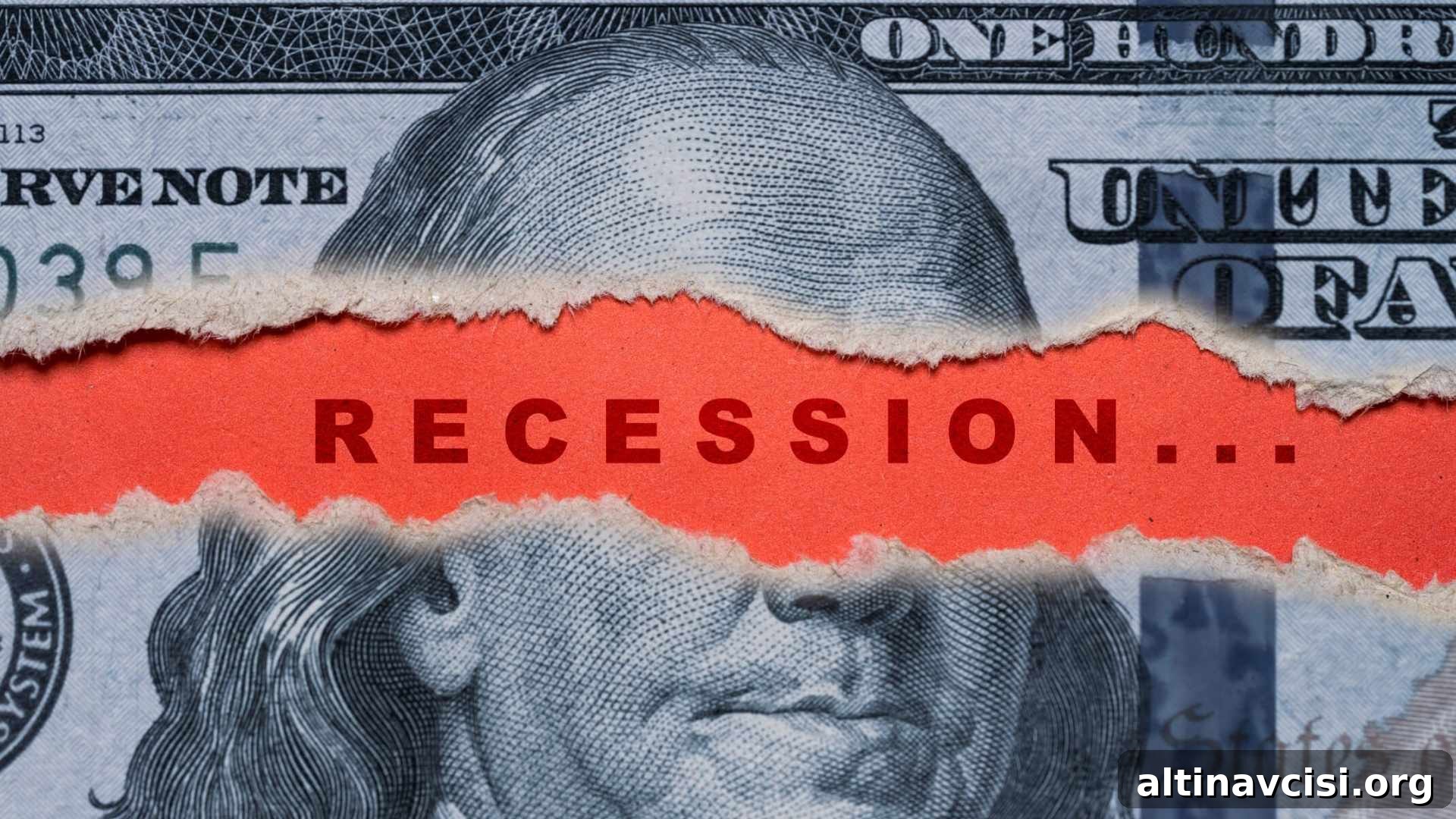
Economic experts are increasingly warning about recession risks in the U.S. economy two months into President Donald Trump’s term. Major financial institutions have raised their recession probability estimates: JPMorgan now forecasts a 40% chance (up from 30%), Moody’s Analytics projects 35% (up from 15%), and Goldman Sachs has increased its estimate to 20% (from 15%).
These revised assessments accompany a decline in the S&P 500 to its lowest level since September, a sign of rising investor concern. Market unease has been driven largely by the administration’s imposition of tariffs on imports from America’s three largest trading partners and the prospect of further trade restrictions. Even as inflation cooled to 2.8% in February (down from 3.0% in January), businesses are confronting heightened uncertainty that is weighing on investment and hiring decisions.
The White House has begun signaling that Americans should brace for economic challenges ahead, a shift from campaign promises of widespread prosperity and from the earlier tendency to point to stock-market gains as evidence of success. Analysts observe that what at first appeared to be negotiating tactics now looks more like a broader restructuring of the American economy, a development that has amplified market anxiety and prompted investors and corporate leaders to reassess their expectations.
Uncertainty over trade policy is affecting multiple sectors. Manufacturers and exporters face the immediate cost impact of tariffs and potential retaliatory measures, while companies that rely on global supply chains are evaluating how higher import costs and disrupted logistics will affect profit margins and production plans. Financial markets often react faster than the real economy, so the recent drop in equity indices may reflect concerns about future growth even if current economic indicators remain mixed.
Labor markets and hiring choices are also sensitive to policy-driven uncertainty. Firms that delay investments or expansion plans can slow job creation, while those facing higher input costs may trim payrolls or postpone new hires. At the same time, consumers may pull back on spending if they perceive heightened economic risk, which would further constrain growth.
Policymakers and market watchers are monitoring several key indicators for signs of a downturn: changes in business investment, shifts in hiring patterns, credit conditions for households and firms, and any escalation in trade tensions that could meaningfully disrupt global commerce. Economists differ on the timing and severity of a potential recession, but the consensus among several major forecasters is that the probability has risen notably since the start of the administration.
While forecasts and market moves do not guarantee a recession, the combination of rising recession probabilities, increased market volatility, and policy uncertainty has prompted companies and investors to reassess risk. The coming months will be important for observing whether trade policies stabilize, whether inflation and growth trends remain favorable, and whether businesses regain confidence to invest and hire. Until more clarity emerges, elevated caution in financial markets and among corporate decision-makers is likely to persist.