
Key Takeaways
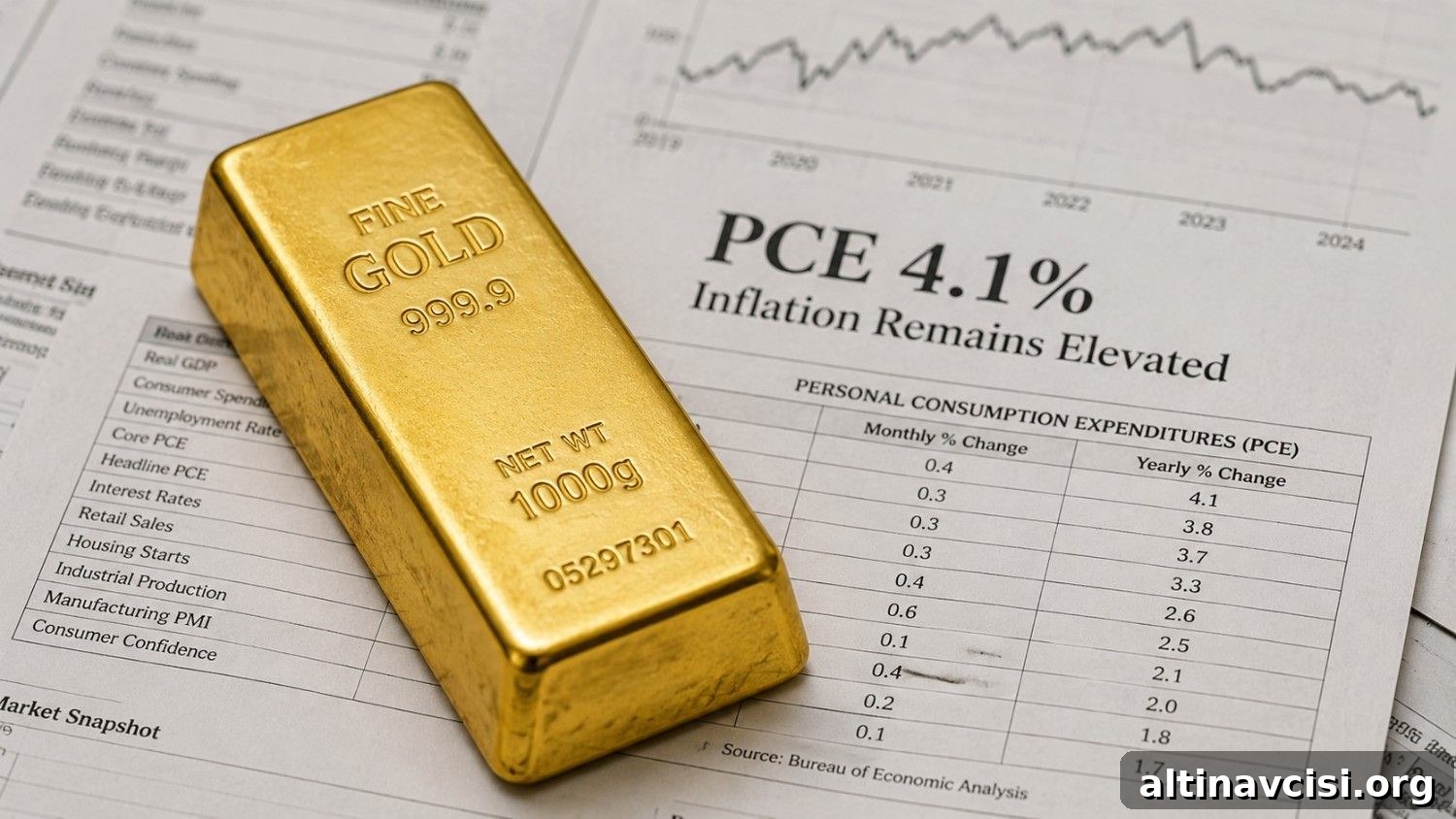
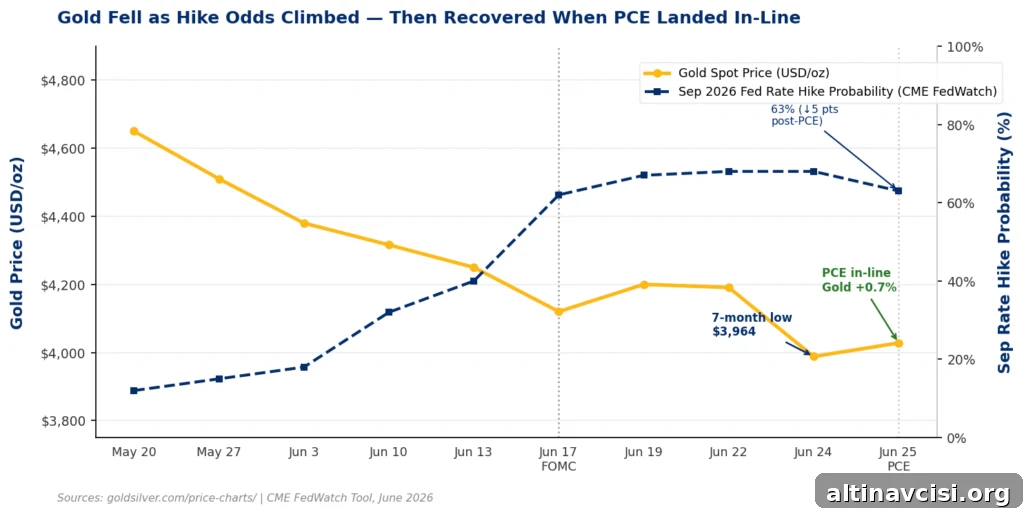
- May PCE showed 4.1% headline inflation and 3.4% core inflation, matching consensus — a result that allowed gold to recover above $4,000 after a midweek low of $3,964.
- Gold’s rebound on a relatively hot inflation print illustrates the “priced in” dynamic: when markets already reflect the risk of rate hikes, an expected data release removes selling pressure.
- The gold market functions as two overlapping markets: rate-sensitive paper traders with short horizons and long-term central bank physical buyers. Central banks bought 244 tonnes net in Q1 2026.
- Major institutional year-end targets — Goldman $4,900, JPMorgan $6,000, Wells Fargo $6,100–$6,300 — remain substantially above current spot despite the recent selloff.
- Holding physical gold did not change structurally this week. Margin calls, fund redemptions and counterparty risk are problems of paper markets; physical ounces remain outside those pressures.
Gold briefly slid to its lowest level since November 2025 before rebounding when the government confirmed inflation was still running at 4.1% year-over-year in May. That rebound highlights how market expectations shape price moves: a data print that matches forecasts often removes the marginal selling pressure created by traders who had already bet on higher rates.
By mid-morning on June 25, 2026, spot gold had climbed back above $4,000 per ounce, up roughly 0.7% from Wednesday’s close. The Bureau of Economic Analysis reported the Personal Consumption Expenditures price index rose 4.1% year-over-year in May, the highest pace since April 2023. Core PCE — which excludes food and energy — rose to 3.4%, in line with consensus estimates.
Why did gold rise when inflation is still well above the Federal Reserve’s 2% target? The answer lies in how traders had already priced the likelihood of further Fed tightening. When an expected outcome occurs, it often relieves the immediate selling pressure that accompanied the repricing.
What Does “Priced In” Actually Mean for Gold?
When analysts say a risk is “priced in,” they mean that market participants have already adjusted positions to reflect that possibility. For gold, much of that adjustment happened in the days following the Federal Reserve’s June 17 meeting.
At that meeting, the Fed signaled it might raise rates further in 2026, and futures markets quickly reflected the change. The U.S. Dollar strengthened and gold fell from above $4,100 to about $3,964 — a notable drop. By the following morning, futures markets and options had already factored in a high chance of a September rate hike, so the price near $3,980 already reflected that scenario.
When the May PCE released numbers in line with expectations — elevated, but not higher than feared — there was no new information to force additional selling. The dollar eased, Treasury yields dipped slightly, and gold attracted buyers, allowing the spot price to recover.
The Edge Every Investor Needs
Smarter precious metals investing starts here. The Nuggets newsletter delivers timely market insights, Fed updates, and practical analysis for long-term investors.
Why Are Two Separate Gold Markets Moving in Opposite Directions?
The market for gold now behaves like two overlapping but distinct markets: a fast-moving paper market dominated by traders and funds sensitive to interest-rate expectations, and a slow-moving physical market driven largely by central banks and long-term reserve managers.
Paper market participants — futures traders, ETF managers, and macro hedge funds — trade around the rate cycle. Their holding periods are short and responsive to Fed signals: when rate hikes look likely, they reduce exposure; when cuts seem imminent, they increase it. This creates quick price swings tied to expectations and headlines.
Physical buyers, especially central banks, operate on a very different timeline. They buy gold to diversify reserves and protect wealth over decades. World Gold Council data showed global central banks purchased a net 244 tonnes of gold in Q1 2026, up from 208 tonnes in Q4 2025. These buyers did not sell into the midweek dip; they continued accumulating, providing a structural floor beneath prices.
The result is that sharp drops driven by paper-market flows are often absorbed by steady physical demand. That dynamic has kept gold above key support levels even during volatile weeks.
Investor implication: When paper markets have already priced in a risk, a confirming data release tends to remove the marginal seller rather than attract new buyers. Central banks that buy hundreds of tonnes per quarter buy through cycles — they are not waiting for favorable headlines.
What Are the Major Banks Forecasting for Gold After Today’s PCE?
Major banks’ long-term gold targets remain higher than current spot prices despite the recent volatility. Goldman Sachs revised its year-end 2026 target to $4,900 per ounce on June 19 after removing expected rate cuts from its model. JPMorgan continues to see a $6,000 year-end target, emphasizing that central bank demand outweighs short-term rate moves. Wells Fargo maintains a $6,100–$6,300 range.
Even Goldman’s lowered target sits noticeably above the current market level around $4,028. While near-term paths are uncertain and price ranges wide, the long-term narrative from several large institutions still points to materially higher levels than today.
What Does Today’s PCE Mean If You Own Physical Gold?
If you own physical gold, the midweek drop to $3,964 was a market price change, not a structural loss tied to counterparty failure. Physical ounces are not subject to margin calls, cannot be redeemed by funds, and are not moved by contractual counterparties. That separates the experience of holding jewelry, bars, or allocated bullion from holding paper exposures.
Understanding the distinction between paper and physical markets helps investors remain calm during volatile periods. The underlying economic forces — persistent inflation and central bank reserve diversification — continue to support the long-term case for holding real assets that preserve purchasing power over time.
Stay On Top of Gold & Silver Prices
Get timely market alerts delivered to your inbox.
SOURCES
1. Bureau of Economic Analysis — Personal Income and Outlays, May 2026.
2. Federal Reserve — FOMC Statement and Summary of Economic Projections, June 17, 2026.
3. CME Group — FedWatch Tool, June 2026.
4. World Gold Council — Gold Demand Trends Q1 2026, April 2026.
5. GoldSilver — Gold & Silver Spot Prices, June 25, 2026.
6. CNBC — Core Inflation Rate Hit 3.4% in May, June 25, 2026.
7. J.P. Morgan Global Research — Gold Price Predictions for 2026 and 2027.
Disclaimer: This article is for informational purposes only and does not constitute financial or investment advice. Consult a qualified financial adviser before making investment decisions.
You May Also Like:
- 298 Tonnes of ETF Gold Is Underwater. Central Banks Aren’t.
- Hawkish Fed, Gold Below $4,000, Silver Below $60 — and a Market That Disagrees.
- Gold Just Broke $4,000. The Mainstream Called the Debasement Trade Dead. They’re Wrong.
- Two Things Are Hitting Gold Simultaneously. Only One Is About Gold.
- Why Is Silver Down 5%? The Gold-Silver Ratio Explains.
- BofA Says Three Rate Hikes. Silver Just Priced In the First One.
- Iran Deal. Oil Falling. A PM Out. Gold Still Above $4,100.