Key Takeaways
- A zero interest rate policy holds a central bank’s short-term target at or near zero. The Federal Reserve ran two such episodes: December 16, 2008 to December 16, 2015, and March 15, 2020 to March 16, 2022.
- ZIRP does not automatically lift gold. The primary driver for gold is the real policy rate, defined as the nominal policy rate minus inflation.
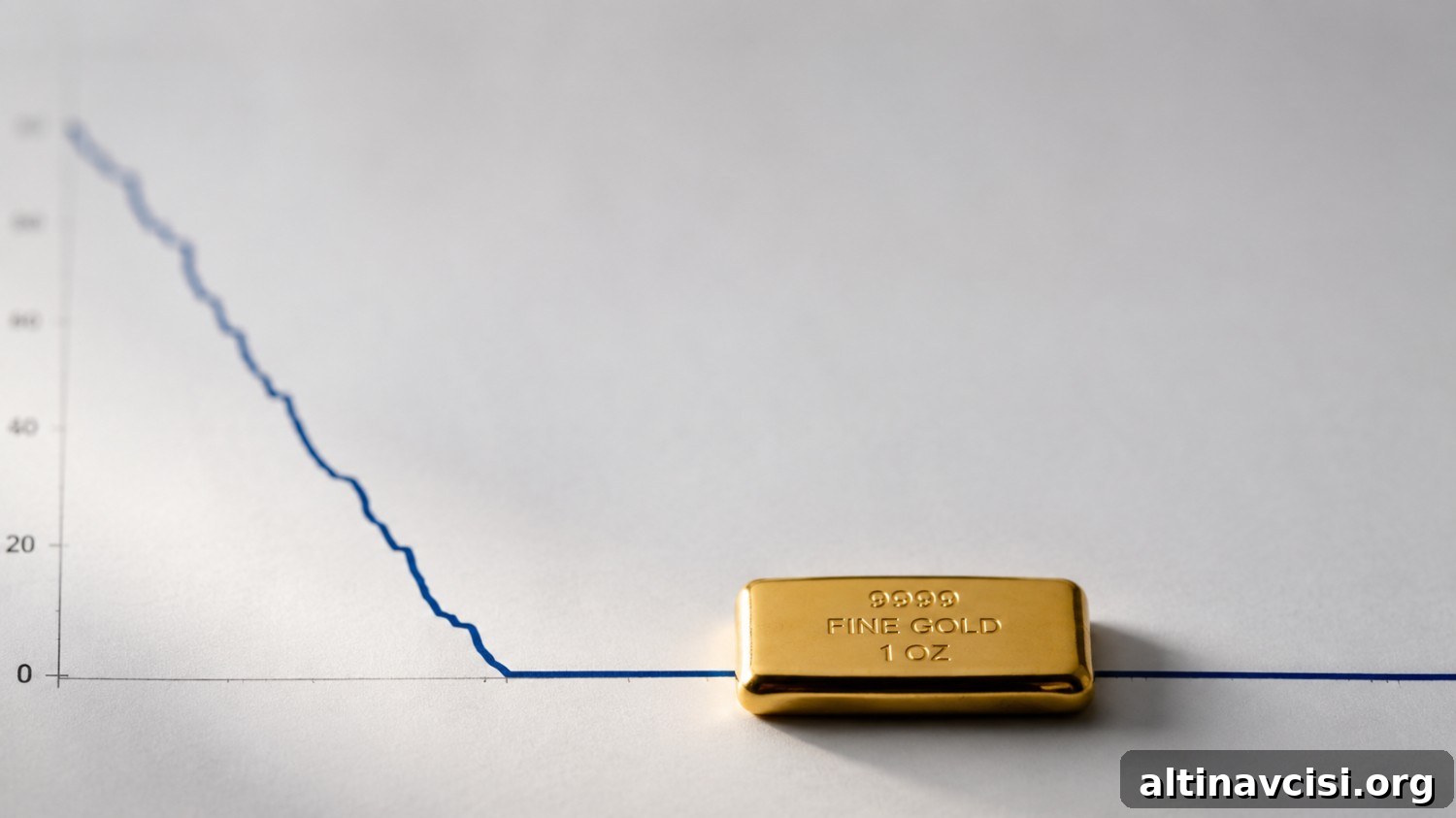
- During the first ZIRP episode, gold’s annual average rose 91.5% in the first four years, from $872 to $1,670 per troy ounce, then declined 30.5% over the next three years even though the nominal target stayed near zero.
- That reversal was driven by inflation. In 2011 inflation ran about 3.2%, producing a sharply negative real policy rate. By 2015 inflation had fallen near zero, bringing the real rate back toward neutral.
- Today, nominal policy rates are higher than in ZIRP, but with headline inflation elevated the real policy rate can be only slightly positive or near zero—an arithmetic that matters more to savers and gold owners than the nominal rate alone.
What Is a Zero Interest Rate Policy?
A zero interest rate policy (ZIRP) pins a central bank’s short-term policy rate at or just above zero to encourage borrowing, spending and risk-taking. For owners of non-yielding assets like gold, the important consequence of ZIRP is that it removes the interest income available on cash and short-term deposits, changing the opportunity cost of holding gold.
The U.S. Federal Reserve used ZIRP during two distinct periods in recent history. The first stretched from December 16, 2008 to December 16, 2015. The second began March 15, 2020 and lasted until March 16, 2022. In both instances the federal funds target sat at the effective lower bound near zero. But gold’s performance during and after those episodes depended much more on inflation than on the zero nominal rate itself.
That distinction is essential. Because gold produces no yield, its competitiveness versus cash depends on the real return on cash after inflation. ZIRP fixes the nominal policy rate at a very low level, but it does not fix inflation. When inflation rises, the real return on cash can become deeply negative, favoring gold; when inflation falls, the real return can recover, and gold’s relative attraction can fade.
The Knowledge That Changes Everything
Two essential guides — yours free. Learn why gold matters and the risks that surround fiat currencies.
What Does a Zero Interest Rate Policy Actually Do to Gold?
ZIRP changes the relative return on cash versus gold. Cash and short-term government debt normally deliver some nominal yield; gold delivers none. The meaningful comparison is the real return on cash after inflation. If interest on cash is near zero while inflation is positive, the real return is negative and savers lose purchasing power each year. In such a climate, holding gold can appear comparatively attractive because it is not a promise to deliver future cash flows that are being eroded by inflation.
ZIRP does not itself generate gold demand. Instead, by limiting the central bank’s ability to raise short-term nominal rates, ZIRP makes it far easier for inflation to push real rates negative. That negative real rate environment is historically the most reliable backdrop for extended gold gains.
When Did the Federal Reserve Use a Zero Interest Rate Policy?
The Federal Reserve established its effective lower bound at roughly 0 to 0.25 percent on December 16, 2008, and maintained that stance until December 16, 2015. The decision followed the financial crisis and was framed as an exceptional measure to support a weakened economy. The Fed returned to a similar setting on March 15, 2020, cutting the target back to the 0 to 0.25 percent range in response to the COVID shock; that second episode lasted until March 16, 2022, when the Committee began raising the policy rate again.
Both episodes illustrate how a central bank can use the effective lower bound as an intentional tool and how market participants must then watch inflation to understand real policy stance.
Why Did Gold Fall 30% While Interest Rates Were Still at Zero?
Gold’s price history during the first ZIRP period demonstrates why focusing on nominal rates alone is misleading. Gold’s annual average rose from $872 per troy ounce in 2008 to $1,670 in 2012, then declined to $1,161 by 2015. Throughout that decline the federal funds target remained at the effective lower bound.
The explanation is inflation. In 2011 consumer prices were rising by a few percent, producing a large negative real policy rate and supporting gold. By 2015 inflation had dropped close to zero, returning the real policy rate toward neutral despite the nominal rate still being near zero. With cash no longer losing purchasing power, gold’s relative advantage diminished and prices eased.
A similar mechanism operated during the 2020 episode but in a different phase. Gold rallied in 2020 as the economy and inflation dynamics shifted. When inflation accelerated in 2021–2022 while the nominal target remained near zero, the real rate became deeply negative, further influencing gold’s performance before the Committee began raising rates again.
How Do You Calculate the Real Interest Rate That Drives Gold?
The calculation is simple: take the midpoint of the central bank’s target policy range and subtract the latest year-over-year change in the Consumer Price Index (headline inflation). The result is the real policy rate, expressed in percentage points.
For example, when the target midpoint was near 0.125% and inflation was about 3.2%, the real rate was roughly negative 3.1 percentage points. More recently, if the midpoint is 3.625% and headline inflation is 3.4%, the real rate is roughly positive 0.2 percentage points. Small differences in real rates can matter far more to non-yielding assets than the nominal rates alone imply.
Who Actually Pays for a Zero Interest Rate Policy?
Savers and holders of cash and low-yield bonds bear the cost. When a central bank keeps nominal rates below inflation, it effectively transfers purchasing power away from savers to borrowers, including governments—the largest debtors in most economies. This transfer is deliberate and has been described by economists as a form of financial repression: real debt burdens are reduced while cash balances lose value in inflation-adjusted terms.
Over long periods, even modest negative real returns compound into substantial losses of purchasing power for those who keep large allocations to cash or short-term deposits.
Are We Still Living With the Effects of Zero Interest Rate Policy?
Nominally, ZIRP ended when policy rates were raised well above zero. Practically, however, some effects persist whenever real policy rates are near zero. If headline inflation remains elevated while nominal rates are only modestly higher, the real rate can be near neutral or only slightly positive, recreating conditions similar in opportunity cost to the end of the earlier ZIRP episode.
That similarity explains why investors and savers should look beyond the nominal policy rate and monitor the gap between that rate and inflation to understand the opportunity cost of holding gold and other non-yielding assets.
What Does This Mean for Gold and Silver Owners?
The key takeaway is to focus on the real policy rate rather than the headline nominal rate. Watching the federal funds rate on its own can mislead, as it did between 2012 and 2015. When the real rate is negative, gold and silver tend to have a stronger tailwind because cash alternatives are losing purchasing power. When the real rate returns to neutral or positive, that tailwind fades.
ZIRP’s lasting lessons are twofold: first, zero is an achievable and repeatable policy setting when conditions demand it; second, markets now price the real interest rate, not the nominal rate. For owners of gold and silver, that distinction matters because these metals do not pay yields and are valued primarily for their purchasing power and insurance properties.
This discussion is a framework for interpreting future policy decisions, not a prediction. Use the real rate calculation as a tool: own physical metal if it fits your objectives, and understand why you hold it.
Stay On Top of Gold & Silver Prices
Get important market alerts sent straight to your inbox.
People Also Ask
What does ZIRP stand for?
ZIRP stands for zero interest rate policy. It refers to a central bank stance that keeps the short-term policy rate at or very close to zero to stimulate a weak economy. Many central banks implement this by setting a narrow target range around zero rather than a single fixed point.
Is ZIRP good for gold?
Not automatically. ZIRP favors gold when it leads to negative real interest rates—when nominal policy rates are very low while inflation is positive. If inflation falls while the nominal rate remains at zero, the real rate can move back toward neutral and gold may lose its relative appeal.
How long did zero interest rates last in the United States?
The first ZIRP episode in the U.S. lasted seven years, from December 16, 2008 to December 16, 2015. The second lasted about two years, from March 15, 2020 to March 16, 2022. Altogether, the effective lower bound was in place for a substantial portion of the 2008–2022 period.
What is the real interest rate right now?
Calculate it yourself: take the midpoint of the central bank’s policy range and subtract the latest year-over-year headline CPI. This number changes with each inflation release and each policy decision, so recompute it regularly rather than relying on an outdated figure.
Why does gold have no yield?
Gold is a physical asset, not a financial claim on future income. It pays no interest, dividends or rent; its return comes entirely from price changes. That is why its relative attractiveness depends on the real return available on cash and bonds.
Could the Federal Reserve return to a zero interest rate policy?
The tools remain available, and past episodes establish a precedent for doing so when conditions are severe. Whether the Fed will use ZIRP again depends on future economic developments, which cannot be predicted with certainty. Historical experience shows the Committee will consider the effective lower bound in extreme downturns.
SOURCES
This article draws on public records from the Federal Reserve, inflation data from the U.S. Bureau of Labor Statistics, and historical gold price data compiled by international commodity series. Specific historical dates and averages referenced are taken from those public sources and compiled for context.
Disclaimer: This article is for informational purposes only and does not constitute investment advice. Past performance is not indicative of future results. Consult a qualified financial advisor before making investment decisions.
You May Also Like:
- How Much Is a Gold Bar Worth? Every Size, From 1 Gram to 400 Ounces
- What Happens to Your Gold If Your Storage Company Goes Bankrupt?
- Silver Price Prediction: Supply, Demand and Market Drivers
- Will Gold Fall Further? Institutional Target Revisions and Price Dynamics
- Allocated Silver vs. SLV: Institutional Redemption Risks
- What Are the IRS Rules for a Precious Metals IRA?
- Why Your Pension Can Own Gold and Your 401(k) Still Can’t
- Where Nations Store Gold: Central Bank Custody and Trends