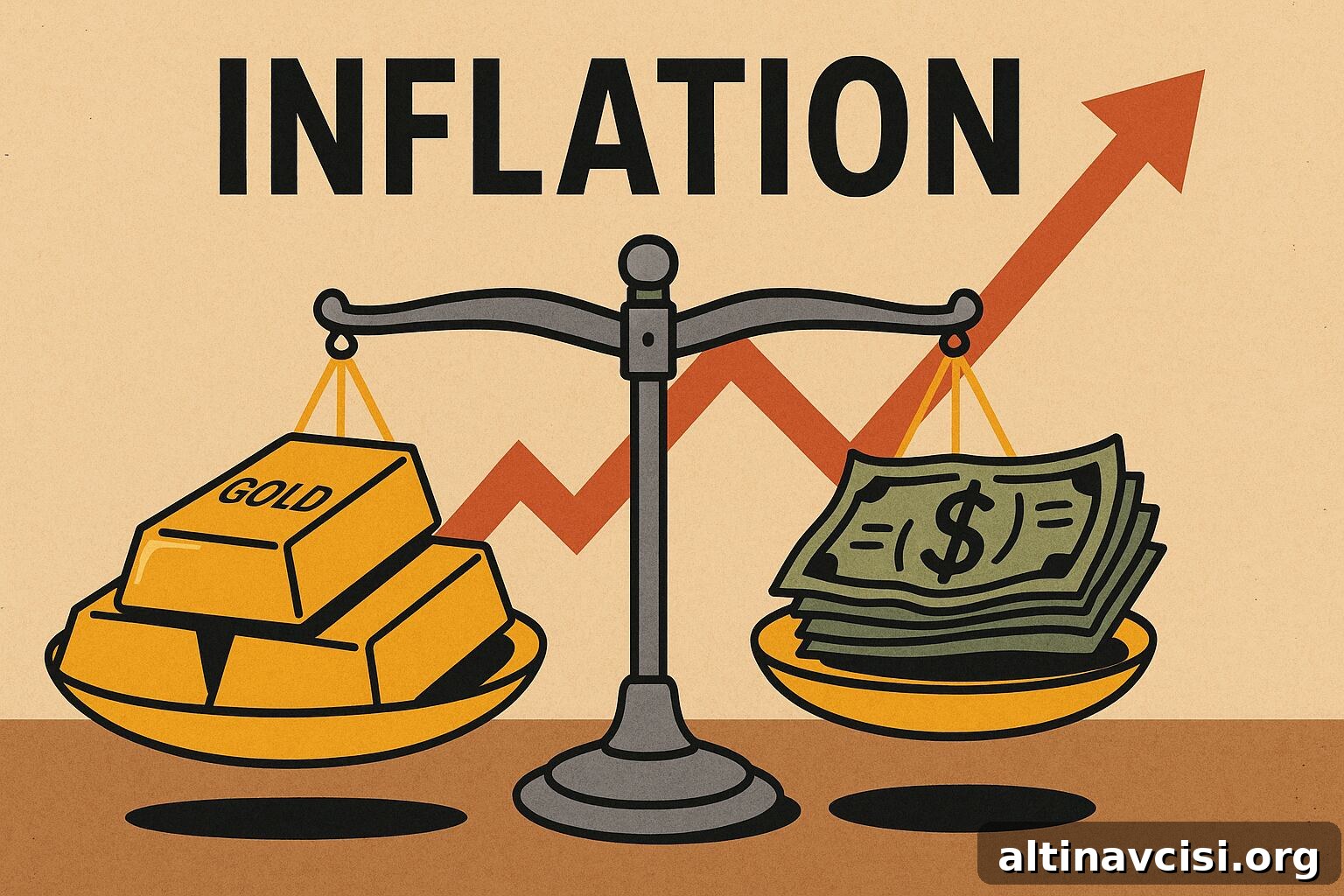
For many investors, comparing gold vs cash can seem like a straightforward choice between short-term safety and long-term opportunity. Cash is familiar, liquid, and useful for day-to-day needs. But in an inflationary environment — and given the economic backdrop many are expecting — holding large amounts of cash can quietly erode wealth over time.
Although cash may feel like the “safest” asset, its purchasing power can decline year after year.
This article explains why cash loses value, how inflation changes long-term returns, and why gold has historically been one of the more reliable tools for preserving real wealth.
The Illusion of Safety: Why Cash Isn’t What It Used to Be
Cash feels stable because the dollar amount in your account doesn’t move much. What does change is what that money can buy.
Inflation isn’t always dramatic; often it’s gradual and easy to ignore, but over time its effect is significant. Even moderate inflation compounds into substantial purchasing-power losses. For example, a steady 3% annual inflation rate roughly halves purchasing power in about 24 years.
To illustrate:
- $100,000 held in cash today can lose roughly $3,000 in real value each year at a 3% inflation rate.
- With 7% inflation — a level seen in some recent periods — purchasing power can be cut in half in about 10 years.
- A retiree who keeps a large cash reserve may see tens of thousands of dollars of purchasing power disappear over time even without spending.
The dollar’s decline typically occurs as slow erosion rather than an immediate collapse.
Gold, historically, tends to move in the opposite direction to the dollar.
A 50-Year View: Cash Down, Gold Up
Over long periods, the contrast between holding cash and holding gold becomes clear:
The U.S. dollar has lost a substantial share of its purchasing power since the early 1970s.
Meanwhile, gold has appreciated significantly over the same decades.
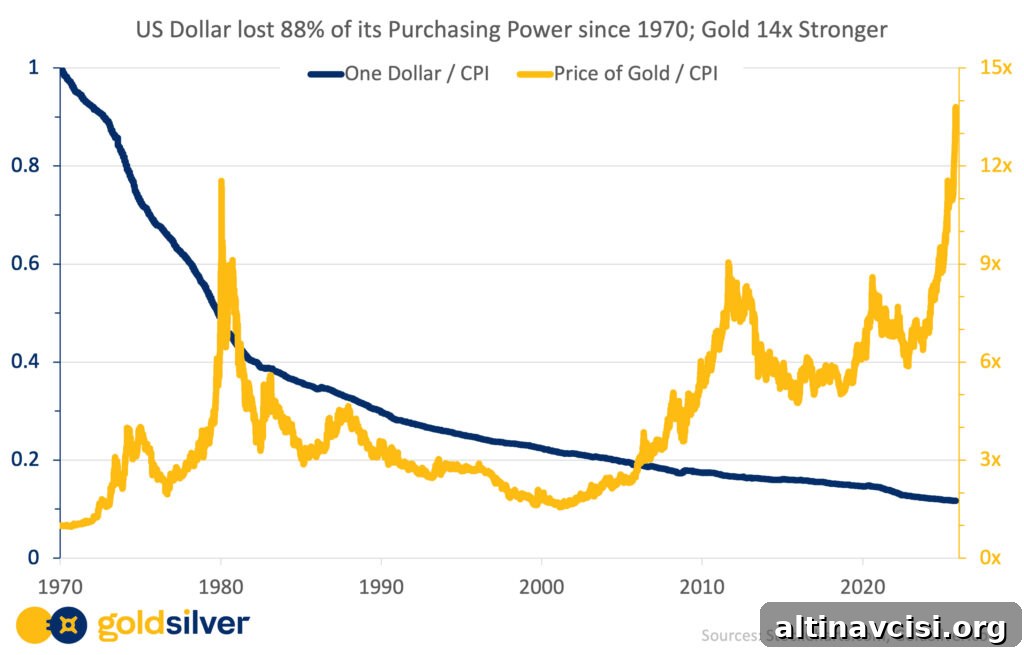
This does not mean gold is superior in every market, or that cash should be abandoned. It does highlight a key point:
Gold preserves value that inflation and currency weakness tend to destroy.
Periods of rising inflation have often seen gold outperform cash, not because gold magically gains intrinsic value every year, but because the currency used to price goods and services has weakened.
Why Cash Burns Value in an Inflationary Environment
Three main forces work against cash holders:
1. Inflation Reduces Real Returns
Even relatively high-yield savings or money market accounts often fail to outpace inflation over long periods. A nominal return of 5% with 6% inflation is still a negative real return.
2. Currency Dilution
When governments increase borrowing and expand the money supply, each unit of currency can lose value. That dilution reduces purchasing power for holders of cash.
3. No Hedge Against Systemic Risk
Geopolitical shocks, financial crises, and monetary instability generally undermine confidence in currencies and can reduce the real value of cash balances.
Because of these effects, long-term savers, retirees, and conservative investors may be disproportionately impacted by prolonged inflation and monetary expansion.
Why Gold Holds Its Value
Gold differs from cash because it is a tangible monetary asset with characteristics that support long-term value preservation:
- Scarcity: Supply is limited by nature and production.
- Global acceptance: Widely recognized and valued around the world.
- No counterparty risk: Its value does not depend on promises from banks or governments.
- Long historical record: Used as a store of value for millennia.
Gold does not rely on corporate performance or central-bank decisions to retain value. Historically it has shown:
- Low correlation with stocks and bonds
- Strong performance during inflationary periods
- Relative stability during systemic shocks
- Resilience when real interest rates fall
Put simply, gold often performs best when fiat currencies lose ground.
Real-World Example: A Cart Full of Groceries
Think back: $20 bought a lot more in 1990 than it does today. If you had converted that $20 into gold and held it, you would have maintained nearly the same purchasing power across decades.
That demonstrates gold’s role: it’s less about rapid wealth creation and more about protecting purchasing power over time.
Why More Investors Are Shifting Out of Cash Today
- Persistently high or rising inflation
- Growing government debt levels
- Uncertain monetary policy
- Heightened geopolitical volatility
- Signs of a weakening currency trend
These factors are prompting many investors, especially those nearing retirement, to reassess how much cash they keep. Cash remains important for emergencies and short-term flexibility, but as a long-term store of value it can be one of the weakest choices.
Gold functions as insurance for purchasing power, meant to maintain value across decades of economic change.
So What’s the Right Balance?
There isn’t a one-size-fits-all allocation. Most advisors recommend including gold as part of a diversified portfolio — not as a substitute for cash, but as a hedge against inflation and monetary risk.
Key distinctions to remember:
- Cash is for liquidity.
- Gold is for longevity and preservation of value.
If your aim is to keep your money useful 10, 20, or 30 years from now, history suggests relying solely on dollars is risky.
In an Inflationary World, Holding Only Cash Is the Real Risk
Over long horizons, inflation penalizes cash holders and rewards owners of assets that cannot be easily expanded or diluted. Gold has long been one of the proven answers to that challenge.
This is not a claim of speculation or hype; it is grounded in historical performance, arithmetic, and monetary dynamics.
For investors focused on preserving purchasing power for themselves and future generations, gold remains a relevant part of many portfolios.
Investing in Physical Metals Made Easy
People Also Ask
Is gold better than cash during inflation?
Historically, gold has maintained purchasing power during inflationary periods while cash typically loses value. That is why many investors consider gold a long-term inflation hedge.
Does cash lose value over time?
Yes. Even modest inflation slowly reduces the real value of cash, which is why many savers diversify into assets like gold that have preserved value historically.
Why do investors choose gold instead of holding dollars?
Investors choose gold because it is scarce, globally recognized, and free of counterparty risk. Historically, gold has acted as a protector of wealth when currencies weaken or markets experience stress.
Is it risky to keep too much cash in savings?
Holding cash isn’t volatile risk, but it is purchasing-power risk. Over long periods, inflation can significantly reduce what your savings can buy.
Should retirees hold gold instead of cash?
Retirees commonly keep some cash for short-term needs and emergency liquidity, while using gold to preserve long-term value and guard against inflation. Gold can help offset purchasing-power declines that hurt fixed-income retirees.
Get Gold & Silver Insights Direct to Your Inbox
Join thousands of investors who receive expert analysis, market updates, and exclusive offers every week.
Note: This article is for informational purposes only and is not investment advice. Past performance does not guarantee future results. Always research thoroughly or consult a qualified financial professional before making investment decisions.