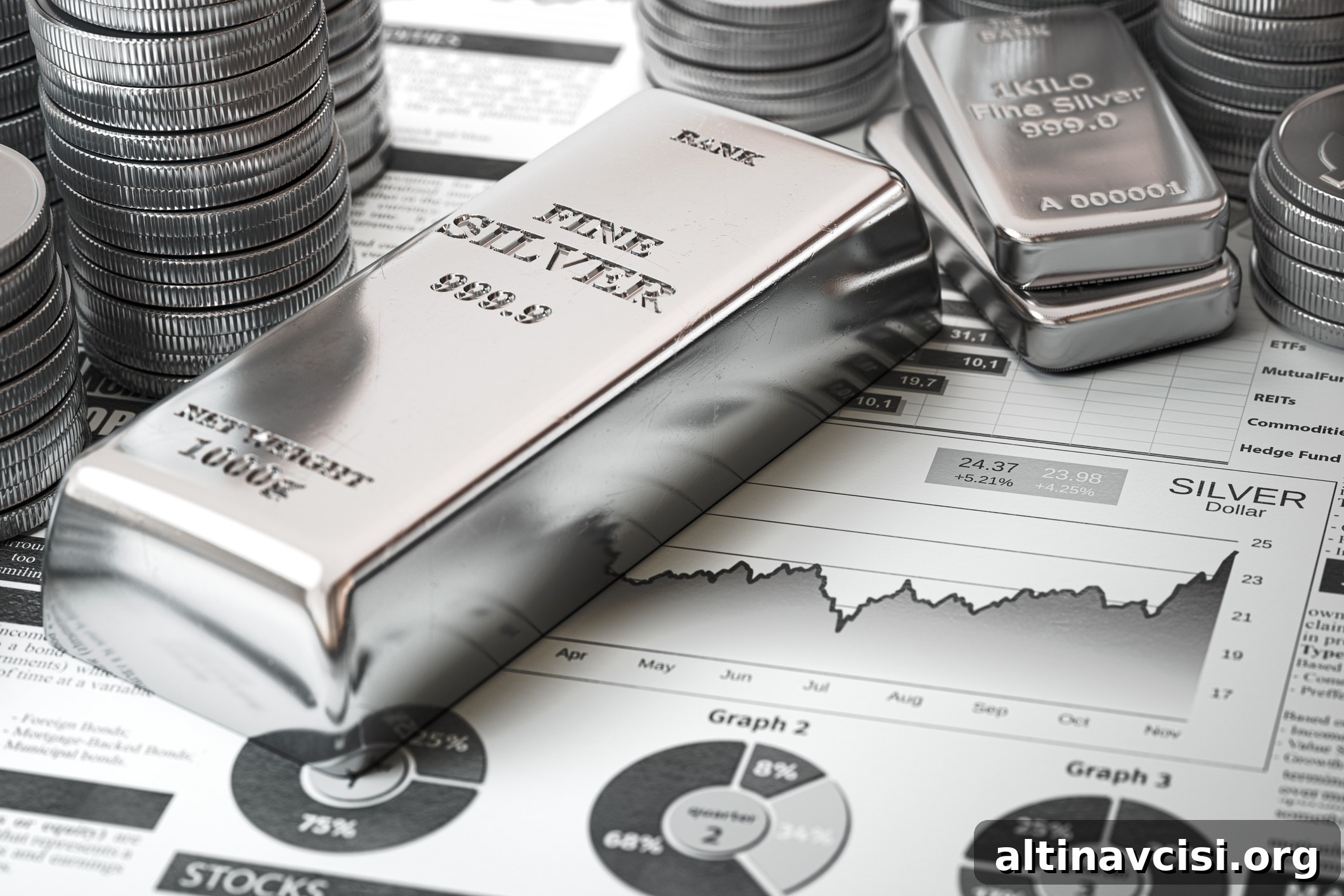
As gold climbs to a record $2,900 per ounce—defying conventional expectations about interest rates and a strong dollar—silver is gaining attention as a compelling alternative investment.
Whereas gold is prized mainly as a store of value and sees only about 6% of its demand tied to industry, more than half of global silver consumption is industrial. Silver plays a key role in expanding sectors such as renewable energy, artificial intelligence, electronics, and medical devices, which supports ongoing demand beyond investment demand alone.
Historically, silver and gold traded at roughly a 15:1 ratio based on their natural abundance. Today, the ratio is closer to 100:1, a divergence that many investors view as a sign that silver may be undervalued relative to gold. That gap reflects a mix of supply constraints, differing investor behavior, and the rising industrial use of silver.
Investment considerations for silver differ from gold. Silver’s higher industrial exposure means its price can be more sensitive to economic cycles and technological trends. At the same time, strong industrial demand can provide a durable floor beneath prices when specific sectors—like solar photovoltaic manufacturing or electronics—expand. Investors should weigh silver’s price volatility against its dual role as both an industrial commodity and a monetary metal.
Supply-side factors also influence silver’s outlook. Primary silver production comes from both dedicated silver mines and as a byproduct of copper, lead and zinc mining. Changes in mining economics, energy costs, and regulatory environments can affect output. Additionally, recycling contributes to supply but may not fully offset rising industrial demand.
For those evaluating portfolio allocation, silver offers diversification benefits due to its distinct demand drivers compared with gold. It can act as an inflation hedge and store of value like gold, while also participating in secular growth themes through industrial use. That hybrid profile can make silver a strategic complement to other precious metals and equities tied to technology and renewable sectors.
Any investment decision should consider liquidity, storage and trading costs, and tax implications. Silver markets tend to be more volatile and may have wider bid-ask spreads than gold, particularly for physical forms such as coins and bars. Exchange-traded products, mining equities, and futures each carry different risk-return characteristics and should be evaluated against an investor’s time horizon and risk tolerance.
In summary, as gold reaches unprecedented highs, silver stands out for its significant industrial demand and the large historical valuation gap with gold. These factors make silver worth examining for investors seeking exposure to both cyclical industrial growth and traditional precious-metal protection.