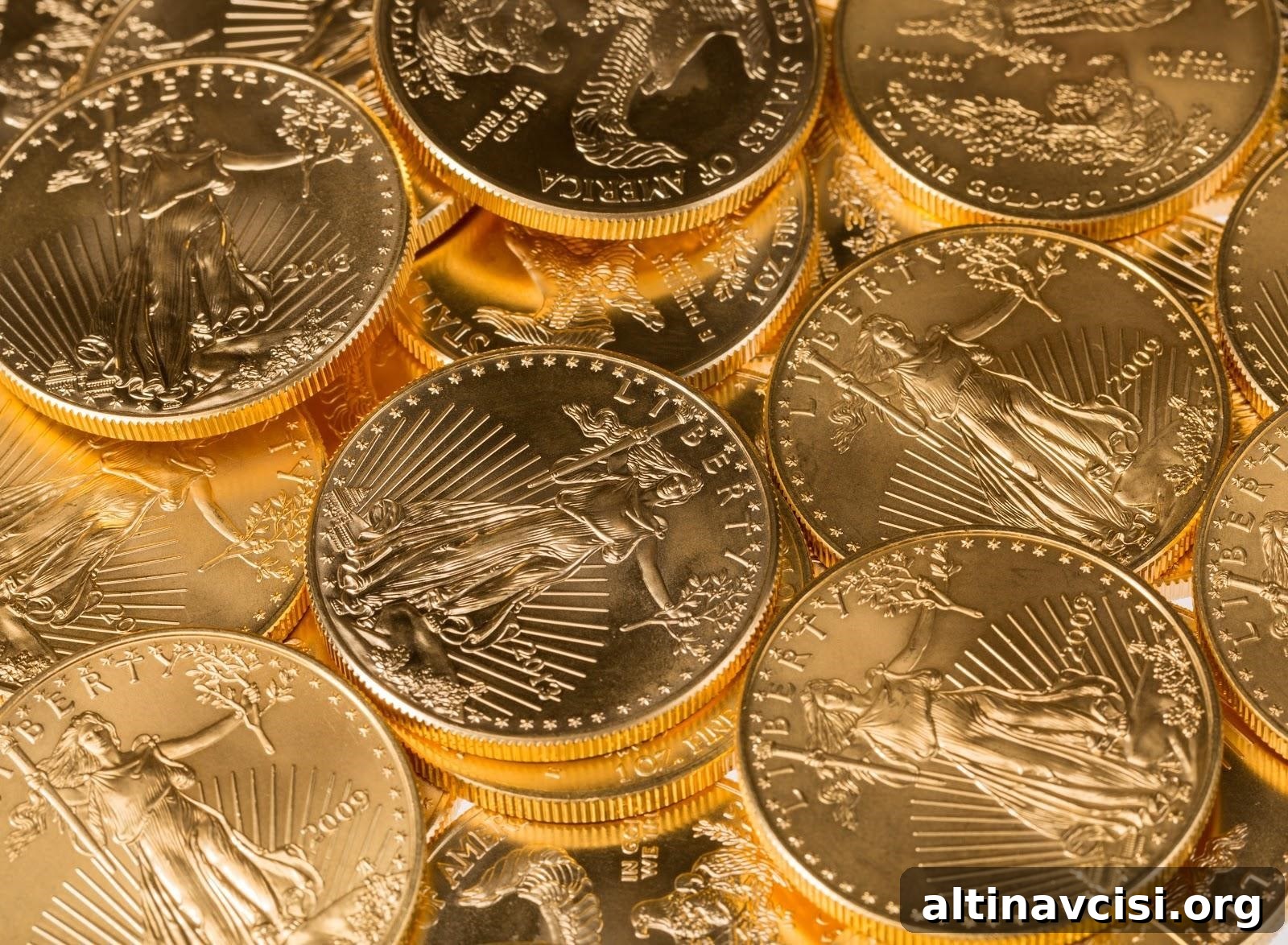
As a precious metals investor, it’s important to know the difference between bullion coins and rounds. Not all precious metals products are the same. Although bullion’s spot price changes constantly, the market price of a 1-ounce gold coin, bar, or round can vary even when their metal weight is identical.
Bullion coins and rounds are popular ways to invest in gold and silver because they’re relatively liquid, divisible, and carry intrinsic value that cannot be erased. Understanding the key distinctions between coins and rounds will help you make smarter decisions when allocating capital to precious metals.
Both sovereign coins and privately minted rounds can play a role in a diversified portfolio.
Sovereign (government-issued) coins typically carry higher upfront costs because of seigniorage — the premium added by the mint above the metal content to cover production and profit. That premium can often be recovered when you sell the coin, and in some cases you may even realize a profit beyond metal value. Government-issued coins are usually legal tender, incorporate strong anti-counterfeiting features, and often display refined artistic designs.
Rounds generally sell at lower premiums, letting investors acquire more metal for the same capital. However, rounds may be harder to sell at a fair price compared with widely recognized sovereign coins, which enjoy steady, global demand.
Bullion Coins
Bullion coins have a nominal face value assigned by a sovereign issuer, but their true worth comes from the metal they contain — the melt or intrinsic value. Familiar examples include:
- American Eagles (gold, silver, platinum, palladium)
- Canadian Maple Leafs (gold, silver, platinum, palladium)
- South African Krugerrands (gold)
- Austrian Philharmonics (gold, silver, platinum)
To be considered a bullion coin rather than a round, most common attributes include:
- Purity of at least .900
- Legal tender status (current or historical)
- Production by a sovereign mint
- An assigned face value
Even though face values are nominal compared to metal value — bullion coins routinely contain metal worth many times their currency denomination — legal tender status gives investors extra protection. Government-issued coins benefit from strict penalties for counterfeiting and rigorous minting standards.
Investors should distinguish bullion coins from numismatic or semi-numismatic pieces. Numismatic value depends on rarity, condition, and collector demand rather than strictly on metal content. Unless you are a knowledgeable collector, numismatics introduce extra complexity and pricing risk, so they are not typically recommended for metal investors seeking pure bullion exposure.
Bullion Rounds
Rounds are privately minted pieces made in various sizes and designs. By law and practice, no round may copy the exact specifications or official markings of a government coin, which would amount to counterfeiting.
Key differences between rounds and coins include:
- Rounds have no face value.
- Rounds are not legal currency.
Because private mints are not issuing legal tender, rounds tend to carry lower premiums and are priced primarily on metal content. Their freedom from strict government specifications allows for a wide variety of designs — commemorative motifs, artistic tributes to historic coins, and unique proprietary images. This variety can make rounds attractive for investors focused on maximizing metal content per dollar spent.
Choosing Between Coins and Rounds
When deciding between coins and rounds, consider your investment goals and the following factors:
- Lowest premium over spot: Rounds typically offer the smallest premium above spot price.
- Counterfeit risk: Government coins generally carry lower counterfeit risk due to legal protections and minting safeguards.
- Stackability: Some privately minted rounds are designed for easy stacking and storage.
- Hedge against inflation: Precious metals remain a common hedge as currencies may lose purchasing power over time.
- Liquidity for buying and selling: Sovereign coins are more widely recognized and therefore generally easier to sell quickly at fair prices.
Each investor should weigh these trade-offs in light of their portfolio objectives. If your priority is the lowest cost per ounce of metal, rounds may be preferable. If you value liquidity, recognition, and anti-counterfeiting protections, sovereign coins are often the better choice.
Carefully evaluate spot prices, premiums, and the reputation of the mint before purchasing. Choose the mix of coins and rounds that best aligns with your goals for liquidity, cost efficiency, and risk tolerance.