Gold fell more than 2% on Tuesday, September 1, while silver dropped even more. The move was straightforward: markets shifted from expecting the Federal Reserve to pause to expecting a rate increase. When interest rates rise, the opportunity cost of holding non-yielding assets like gold increases, so their market values are marked down. By Wednesday afternoon, however, gold had recovered into the low $4,300s and silver traded back near $65. A more revealing question than the initial sell-off is who was selling while central banks continued to add to their reserves. Five developments within 48 hours, each tied to specific actors, help explain that. Together they show two markets operating on different horizons: one trading short-term rate expectations and the other managing long-term reserve risk.
Why Did the Dutch Central Bank Move 86 Tonnes of Gold to London?
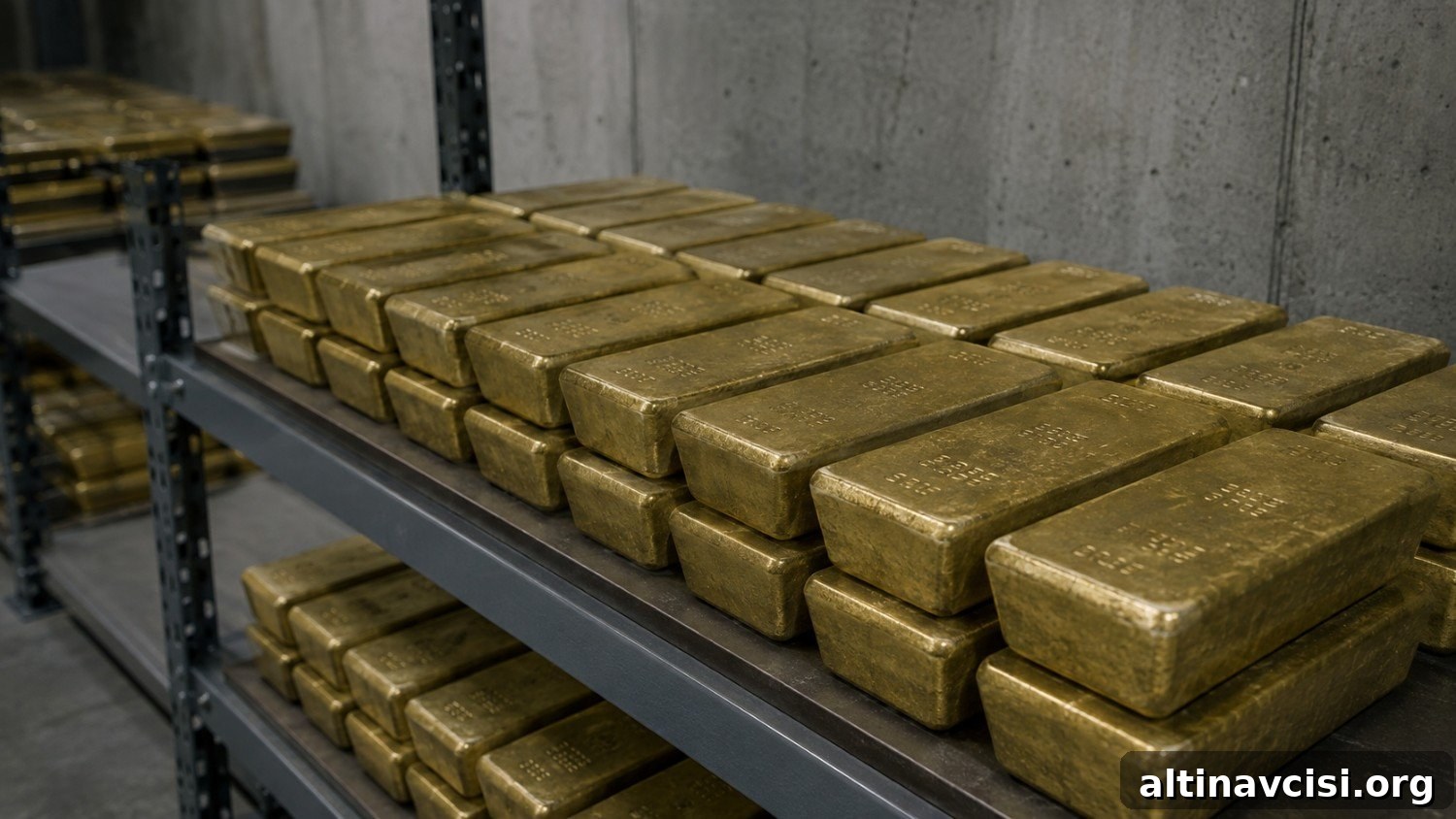
De Nederlandsche Bank transferred 86 tonnes of gold out of the United States and Canada between March and August. That represented more than a quarter of the roughly 313 tonnes it previously held in those two North American vaults. As a result, New York’s share of Dutch gold fell sharply and Ottawa’s share declined modestly, while London’s share rose substantially. Governor Olaf Sleijpen described the change as a move to improve tradability rather than a market-timing decision: storing a larger share in London makes those reserves more accessible and quicker to deploy. Execution details matter: a portion of the transfer was physical, while other movements were settled through buying and selling, which preserved the integrity of those specific bars and avoided remelting. Vault location is an intentional policy choice for central banks managing global reserves.

The Edge Every Investor Needs
Smarter precious metals investing starts with reliable information. The Nuggets newsletter highlights market trends, Fed developments, global shifts, and educational analysis to help readers make informed decisions.
Who Is Selling Gold, If Central Banks Keep Buying It?
Deutsche Bank’s analysis points to commercial and retail holders as the primary sellers during the recent pullback, rather than the trend-following funds that often receive the blame. Daniel Ghali, head of metals research, argued that spot selling had largely run its course and that commodity trading advisers (CTAs) were buyers into that selling rather than the originators of it. He identified a specific threshold: if gold falls below roughly $4,315 per ounce, another wave of systematic selling could be triggered. As long as prices stay above that level, ordinary weakness is less likely to cascade into forced liquidations. Separately, discretionary macro funds that missed the late-summer rally remain plausible buyers, not sellers, given their limited participation during the upswing. For context, the settlements on Tuesday and the session low on Wednesday were both within roughly half a percent of the $4,315 level.
Do Wall Street’s Positioning Desks Actually Agree With Each Other?
No — different desks can reach different tactical conclusions even from the same datasets. Within hours of Deutsche Bank’s note, TD Securities published an alternative assessment, suggesting CTAs could start selling around $4,300 and that a fall toward $4,200–$4,100 could flatten systematic positioning entirely. Both teams agree on the underlying data but diverge on the likely path. TD’s analysts also noted that markets have repriced to reflect multiple hikes in later years, yet they do not see meaningful longer-term downside because the narrative of currency debasement and central bank accumulation remains intact. Interestingly, the two analysts share professional lineage: Deutsche Bank’s metals research lead previously ran the metals desk at TD Securities. The same history, same data, different interpretations.
What Happens to Gold If the Sellers’ Rate Forecast Is Wrong?
That scenario gained traction during the week as new economic signals emerged. ADP reported private payrolls rose by only 38,000 in August, below expectations and the smallest monthly gain since January; manufacturing lost jobs in the month. Gold responded quickly, turning positive within the same session. Separately, the U.S. Treasury publicly urged the Bank of Japan to take decisive steps to address yen weakness, signaling diplomatic pressure for monetary tightening abroad. Markets now expect a stronger chance of policy moves from Japan ahead of its September meeting, and Japan’s 10-year government bond yield recently rose to levels not seen in decades. Both softer U.S. jobs data and tighter global monetary action would undercut the rate-driven selling narrative and support gold prices.
How Did Gold Have Its Best Month Since January While Hike Odds Doubled?
The answer lies in the two-cohort dynamic. Short-term traders and systematic funds reacted to rising rate odds, while slower-moving buyers—chiefly central banks and long-term holders—continued to accumulate. In August, gold finished the month up about 9.6%, its strongest monthly gain since January, with silver rising roughly 15%. Over the same period, market odds of a September rate increase climbed sharply after public comments from influential Fed speakers. Real yields, however, provide a clearer signal: the 10-year inflation-protected Treasury yield troughed late in August before reversing, a move that coincided with gold’s intramonth peak and partial retracement. Long-term forecasts from some banks continue to favor higher prices into year-end, supported by steady central bank buying, a steepening Treasury curve, and renewed ETF inflows.
So What Should a Long-Term Holder Take From This Week?
Short-term and long-term market participants ask different questions. A trend-following fund focuses on where gold will trade in the next few weeks and may sell when real yields rise. A reserve manager considers whether gold will preserve value over decades and whether the systems that support those holdings remain reliable. De Nederlandsche Bank’s relocation of 86 tonnes to London was not a forecast about an upcoming Fed meeting; it was a practical decision to make reserves more accessible on uncertain timelines. Central banks set a record for quarterly purchases in the second quarter, underlining steady demand. Two near-term events will test the sellers’ rate-driven thesis: the August U.S. payrolls release on Friday, September 4, and the Federal Reserve’s policy decision on Wednesday, September 16. This week’s positioning shifts were notable, but they did not overturn the longer-term case for gold.
SOURCES
1. De Nederlandsche Bank, “DNB relocates part of its gold stock to London,” September 2, 2026
2. Bloomberg, “Dutch Central Bank Transfers 86 Tons of Gold From US, Canada to UK,” September 2, 2026
3. Associated Press, “Dutch central bank shifts billions in gold to London in ‘crisis preparedness’ move,” September 2, 2026
4. Deutsche Bank Research, metals note, Daniel Ghali, September 1, 2026
5. TD Securities, commodity strategy note, Ryan McKay and Bart Melek, September 2, 2026
6. ADP Research, ADP National Employment Report, August 2026, released September 2, 2026
7. CNBC coverage of private payrolls and ADP report, September 2026
8. Reuters reporting on U.S. Treasury discussions with the Bank of Japan, September 1, 2026
9. Reuters coverage of BOJ policy debate and market reaction, September 1, 2026
10. CNBC coverage of gold price moves on Fed rate expectations, August 31, 2026
11. Federal Reserve Economic Data, 10-Year Treasury Inflation-Indexed Security series through August 31, 2026
12. UniCredit Research, gold forecast update, September 2, 2026
13. World Gold Council, Gold Demand Trends Q2 2026, July 30, 2026
14. CME Group, FedWatch Tool, September rate-hike probability, accessed September 2, 2026
Disclaimer: This article is for informational purposes only and does not constitute investment advice. Past performance is not indicative of future results. Always consult a qualified financial advisor before making investment decisions.
You May Also Like:
- The Iran War Just Got Worse. Gold Barely Noticed.
- Silver Is Falling Faster Than Gold Today. Its Deficit Didn’t Change.
- Wall Street Keeps Buying Gold. Washington Keeps Sending Mixed Signals.
- Iran’s Gold Sector Just Got Named in U.S. Sanctions. Gold Is Selling Off Anyway.
- Hike Odds Doubled This Week. Real Yields Didn’t.
- COMEX Registered Gold Just Fell Below 15 Million Ounces. It’s Still Refilling.
- Gold Isn’t Falling on a Hawkish Fed. Here’s Why.