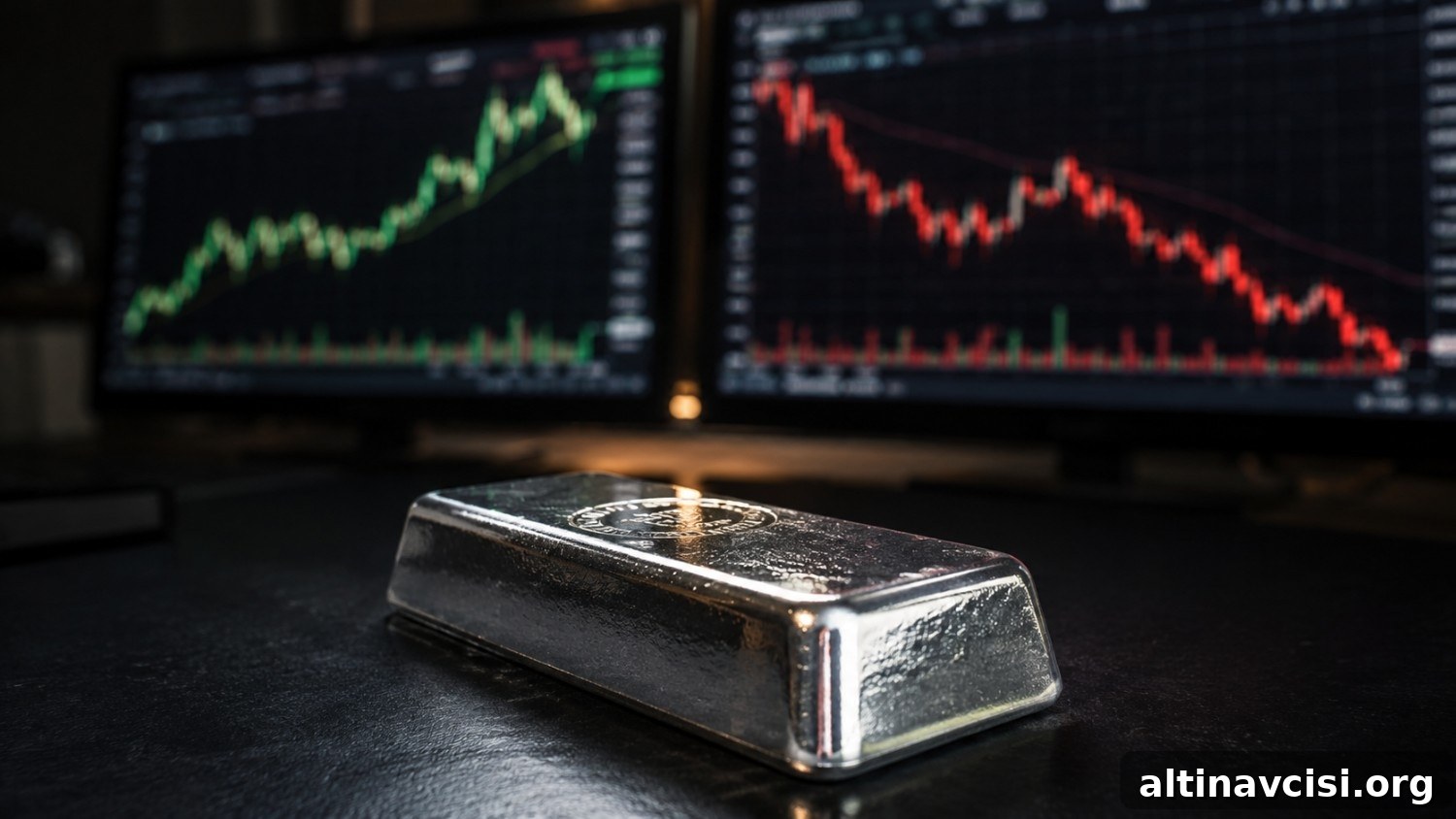
Silver opened the New York session at $67.94 and climbed to an intraday high of $69.85, a gain of roughly 2.8%, as markets digested news of the Iran peace agreement. That development lowered oil prices and pushed down near-term inflation expectations — which, in turn, reduced the probability of aggressive Fed tightening. For a time both of silver’s demand drivers pushed the market higher.
By mid-session, however, the Federal Open Market Committee (FOMC) projections reasserted their influence.
Silver surrendered the entire advance during the trading day, dropping to a low near $66.05 and settling around $66.31. Gold barely budged, down roughly 0.22% and holding near $4,248, while the gold-silver ratio widened to about 64.05. One session captured the two forces that have governed silver’s performance all year — and which force is currently dominant.
The Edge Every Investor Needs
Smarter precious metals investing starts here. The Nuggets Newsletter delivers timely market context, Fed updates, macro trends, and concise educational insights.
What Happened to the Silver Price Today?
Silver’s price is driven by two distinct but interconnected engines. The monetary engine reacts to real interest rates, the U.S. dollar’s direction, and expectations for Fed policy — the same macro factors that dominate gold. The industrial engine reflects real-world demand from solar panels, electric vehicles, data center components, and consumer electronics. Those two dynamics can reinforce each other, but they can also push in opposite directions when macro signals change.
The Iran peace agreement initially triggered both engines. Relief on the geopolitical front pushed oil prices lower, easing inflation fears and reducing the short-term odds of further Fed hikes. That environment lowers real yields, which is bullish for silver’s monetary component. At the same time, cheaper energy reduces manufacturing costs and strengthens the industrial demand argument. Those combined forces drove silver up to $69.85 early in the session.
Later in the day the FOMC’s projections shifted the tone. Several Fed officials still expect at least one more rate increase this year, and the median policy-rate projection rose from March’s estimate. The updated PCE inflation outlook also remained elevated relative to the Fed’s 2% goal. In short, the Fed did not signal that it was finished with inflation risk; the committee removed the implication of a clear path forward, leaving markets less certain about the eventual rate trajectory. That uncertainty favors higher rate-hike odds and kept real yields relatively restrictive — a headwind for silver’s monetary demand.
Why Did Silver Fall More Than Gold Today?
Gold slipped only modestly while silver declined much more deeply. That difference is structural. Gold’s demand base is heavily institutional and monetary: central banks, large sovereign buyers, and long-term investors who treat gold as a store of value. Those buyers create a structural floor under gold that is less reactive to short-term rate signals.
Silver’s monetary demand is shallower. A larger share of silver’s price action comes from speculative and ETF-driven flows, which respond quickly to changes in yield expectations. When rate-hike odds rise, silver ETF outflows tend to accelerate more than gold ETF outflows because silver lacks an equivalent institutional buyer base.
At the same time, silver’s industrial demand — normally a stabilizer — is also sensitive to macro conditions. Higher rates can slow growth expectations and weaken industrial consumption forecasts, so the industrial engine weakens when the monetary engine does. That double sensitivity makes silver more volatile in a tightening or tightening-likely environment, which explains today’s steeper pullback relative to gold.
What Does This Mean for Physical Silver Holders?
Not all silver is the same on a trading day. COMEX contracts and other exchange-traded instruments are claims that respond to leverage, margining, and short-term macro positioning. That paper silver moved sharply lower today. Physical silver stored in a vault is different: it is not subject to margin calls or algorithmic liquidation and does not change its weight because futures traders shift risk.
The structural supply-and-demand picture did not alter between the session high and low. The annual market balance projections cited in industry research point to a meaningful deficit for the year, and cumulative draws on above-ground inventories since 2021 have been substantial. COMEX registered inventories have also declined significantly from their earlier peaks. Those structural facts did not disappear during today’s intra-day volatility.
What changed was the macro narrative tied to the monetary engine. Geopolitical easing and lower oil support the case for renewed downward pressure on inflation expectations — a shift that would favor silver if it sustains. The day’s price action offered a clear preview: when the monetary narrative switches back toward lower yields, silver’s two engines can resume working together to push the price higher.
Physical holders who watched today saw silver’s dual character in real time: an asset with both monetary and industrial reasons to appreciate over time, temporarily restrained by interest-rate signals that are responsive to geopolitical developments. The peace deal reduced one source of pressure; supply-side tightness remains. The long-term structural drivers remain intact.
SOURCES
1. Federal Reserve — Summary of Economic Projections (Dot Plot), June 2026
2. World Gold Council — Gold Demand Trends Q1 2026
3. Silver Institute / Metals Focus — World Silver Survey 2026
4. CME Group — COMEX silver registered stocks and warehouse data
5. GoldSilver — Spot price and intraday charts, June 18, 2026
Disclaimer: This article is for informational purposes only and does not constitute financial or investment advice. Consult a qualified financial adviser before making investment decisions.
You May Also Like:
- The Fed Went Silent. Gold Holders Don’t Need It to Speak.
- Five Signals That Say Gold’s Correction Is a Reset, Not a Reversal
- The Fed Just Killed Its Rate Roadmap. Here’s What That Means for Gold.
- Gold Holds While Stocks Hit All-Time Highs: What It Means
- Why Is Silver Up Today? The Iran Deal Changed the Fed Math
- Gold Up 3%, Silver Up 4.7%: Five Forces Driving Metals Higher Today
- Iran Peace Deal Sends Oil Down, Metals React
- Gold & Silver Surge on Iran Peace Deal — Then Pull Back
- Silver Fell Sharply Over Recent Weeks. Gold-Silver Ratio Expanded.