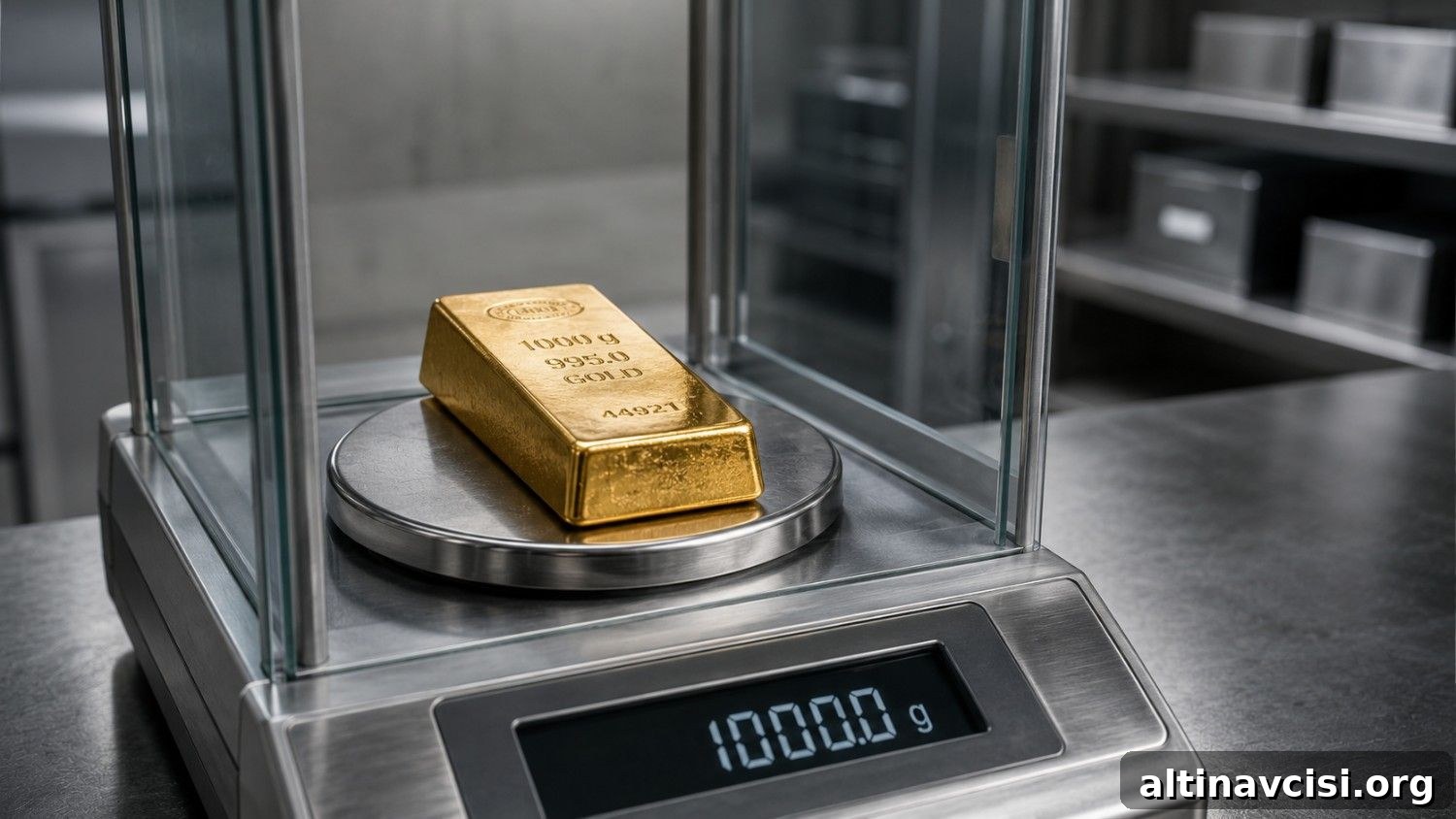
Seventy-six central banks responded to the World Gold Council’s 2026 survey, explaining why they hold gold and how they set their allocations.
The World Gold Council’s Central Bank Gold Reserves Survey 2026 collected answers from 76 institutions, a 51% response rate. A record 45% of respondents say they plan to raise their gold allocation over the next year, and 89% expect global official gold holdings to keep rising [World Gold Council, Central Bank Gold Reserves Survey 2026].
The approach these reserve managers use is instructive for any long-term investor: prioritize safety, then liquidity, and finally return.
WORLD GOLD COUNCIL — CENTRAL BANK GOLD RESERVES SURVEY 2026
Gold as “Strategic Asset” vs “Legacy Hold”
How central banks describe why they manage gold separately (% citing each reason, 2021–2026)
In 2021 most central banks described gold as a legacy holding. By 2026, three in four call it a deliberate strategic allocation. Source: World Gold Council CBGR Survey 2026, Q19.
What Are the Three Objectives That Drive Every Reserve Management Decision?
The World Gold Council identifies three primary objectives for central-bank reserve management: safety, liquidity and return [World Gold Council, Central Bank Gold Reserves Survey 2026]. These objectives are applied in order of priority.
Safety is paramount: reserves must preserve capital. They should not be subject to default, seizure, or devaluation by a counterparty. Gold has no counterparty and cannot be created by a sovereign, which makes it unique among reserve assets. The 2022 freezing of a major economy’s dollar reserves highlighted this counterparty risk in practical terms.
Liquidity is second. Reserve assets must be convertible to cash quickly and at scale without moving prices against the seller. Gold trades in a deep, global over-the-counter market centered on London, and it is accepted as collateral by international institutions such as the Bank for International Settlements.
Return is third—reserve managers aim to protect purchasing power over generations, not to chase yield. Recent strong price gains for gold are outcomes of macro conditions rather than primary objectives. Still, 37% of surveyed central banks now actively manage gold to enhance returns, and 42% cited risk management as an active goal, both increases from previous years [World Gold Council, Central Bank Gold Reserves Survey 2026].
The Knowledge That Changes Everything

Two concise guides—free. Learn why gold matters and the risks tied to fiat currencies.
How Do Central Banks Determine How Much Gold to Buy?
The survey asked how central banks set their gold allocations. Three approaches dominate: board-level decisions, formal strategic asset allocation (SAA) models, and legacy positions [World Gold Council, Central Bank Gold Reserves Survey 2026].
Fifty-nine percent leave the decision to the central bank’s board or executive team, establishing a top-down mandate. Forty-six percent use a formal SAA process that quantifies risk-adjusted returns and correlations versus other reserve assets. Despite these methods, 37% still cite legacy or historical holdings as their primary reason for holding gold.
That legacy share has fallen steadily: in 2021, 58% described gold as a legacy hold. By 2025, 64% described it as a strategic asset, and in 2026 that rose to 75%—a clear reframing from “we inherited this” to “we chose this” [World Gold Council, Central Bank Gold Reserves Survey 2026].
Calling gold a strategic asset means active sizing, regular review, and deliberate management. Today, 37% of central banks manage gold with the same analytical framework used for bond portfolios.
Why Do Central Banks Hold Gold?
Surveyed reserve managers ranked their reasons for owning gold. Three factors consistently top the list: resilience in stress, long-term store of value, and diversification.
Ninety percent of respondents highlight gold’s resilience in market stress as highly or somewhat relevant—a record high. Eighty-four percent cite gold as a long-term store of value and hedge against inflation, and 83% point to portfolio diversification [World Gold Council, Central Bank Gold Reserves Survey 2026].
These are conclusions reached through institutional due diligence. Gold’s typical low correlation with stocks and bonds can invert during crises, when gold often appreciates as other assets fall.
Geopolitical risk is increasingly important, especially for emerging-market and developing-economy (EMDE) central banks. Eighty-five percent of EMDE respondents view gold as a hedge against geopolitical risk versus 56% of advanced-economy central banks. EMDE respondents also rate geopolitical instability as a top reserve-management concern more often than advanced economies (95% vs 67%) [World Gold Council, Central Bank Gold Reserves Survey 2026].
That concern translates into action: 53% of EMDE central banks expect to increase their gold holdings in the coming year. Over the past four years, central banks have averaged about 1,000 tonnes of annual purchases—roughly double the pace of the prior decade [World Gold Council, Central Bank Gold Reserves Survey 2026].
What Percentage of Reserves Do Central Banks Keep in Gold?
Gold now represents around 27% of global official reserves by market value, surpassing US Treasuries at 22% for the first time since the mid‑1990s, according to the European Central Bank’s June 2026 report. The IMF reported gold at roughly 26% of total reported reserves as of Q3 2025 [ECB; IMF].
Part of this change reflects valuation: gold’s price rose about 60% in 2025, which mechanically increased its share of reserves. The dollar’s share has declined both because some countries are deliberately diversifying and because some dollar holdings have fallen in value; dollar‑denominated assets still account for about 42% of global reserves [ECB, June 2026].
Looking ahead, 84% of survey respondents expect gold’s share to be higher in five years, and 74% expect the dollar’s share to be lower [World Gold Council, Central Bank Gold Reserves Survey 2026].
Central banks plan to finance purchases in different ways: 50% will use domestic programmes in local currency, 38% will sell existing reserve assets, and 32% will draw from newly accumulated reserves. Domestic purchases paid in local currency allow central banks to add non‑dollar assets without using the dollar settlement system—an increasingly important route for some countries.
How Do Central Banks Buy and Store Gold?
Most purchases use London Good Delivery bars (400 troy ounces) and transact in the global over‑the‑counter market centered on London; 62% of respondents prefer these bars. Seventy‑six percent of central banks manage gold separately from other reserves, reflecting its treatment as a distinct strategic class [World Gold Council, Central Bank Gold Reserves Survey 2026].
For storage, the Bank of England is the most common vault at 57%, followed by domestic storage at 49%. The Bank for International Settlements and the Federal Reserve Bank of New York register at lower shares (16% and 14% respectively). The Swiss National Bank’s share fell from 12% in 2025 to 6% in 2026 [World Gold Council, Central Bank Gold Reserves Survey 2026].
Vault diversification is rising: while only 2% diversified overseas vault locations in 2025, 10% had done so by 2026 and another 9% plan to within twelve months. The same diversification logic applied to reserve composition is increasingly applied to storage.
What Does This Mean for Individual Investors?
The safety–liquidity–return framework used by central banks scales down for individuals. You do not need a formal SAA to apply the same logic: choose assets that cannot default, keep enough liquidity to avoid forced sales, and focus on preserving purchasing power over time.
A 55‑year‑old protecting two decades of savings follows the same priorities as a central bank, albeit with fewer resources. The survey’s results—compiled by 76 reserve managers with large research teams and long horizons—reflect due diligence rather than sentiment.
Perhaps the most meaningful takeaway is the shift in mindset: 75% of central banks now treat gold as a strategic choice rather than a legacy holding. When institutions with the expertise and mandate to analyze reserves change how they view gold, that shift merits attention [World Gold Council, Central Bank Gold Reserves Survey 2026].
Stay On Top of Gold & Silver Prices
Get important market alerts sent to your inbox.
People Also Ask
Why do central banks hold gold instead of other assets?
Gold meets the three core reserve objectives: it carries no counterparty risk, trades in a deep global market, and has a long history of preserving purchasing power. In the 2026 survey, 90% of central banks cited gold’s resilience in market stress and 84% cited its role as a long-term store of value [World Gold Council, Central Bank Gold Reserves Survey 2026].
How do central banks decide how much gold to hold?
Allocation decisions come from three sources: board or executive mandates (59%), formal SAA analysis (46%), and legacy positions (37%). The trend is toward strategic allocation: 75% now describe gold as a strategic asset, up from 64% in 2025 [World Gold Council, Central Bank Gold Reserves Survey 2026].
Is gold replacing the US dollar in central bank reserves?
Gold is not replacing the dollar but it has increased its share. The ECB reported gold at 27% of global official reserves at end‑2025, with Treasuries at 22% [ECB, June 2026]. Dollar assets still compose a large share of reserves—about 42% overall—but 74% of survey respondents expect the dollar’s share to decline over the next five years [World Gold Council, Central Bank Gold Reserves Survey 2026].
Which countries are buying the most gold?
Emerging-market central banks have led accumulation. China, Poland, India and Turkey are frequently mentioned among active buyers, with policies driven by exposure to dollar‑system risk and a desire to diversify reserve composition [ECB, June 2026].
Should individual investors use the same framework as central banks?
Yes, on a smaller scale. Prioritize capital preservation, maintain sufficient liquidity, and view return as a secondary goal. Holding physical gold outright and ensuring access to liquidity are practical ways to apply the same logic that guides reserve managers.
SOURCES
1. World Gold Council — Central Bank Gold Reserves Survey 2026
2. World Gold Council — Central Banks Set to Step Up Gold Buying Over the Next Year
3. European Central Bank — The International Role of the Euro, June 2026
4. International Monetary Fund — Currency Composition of Official Foreign Exchange Reserves (COFER)
Disclaimer: This article is for informational purposes only and does not constitute financial or investment advice. Always consult a qualified financial adviser before making investment decisions.
You may also like:
- How Much Does Gold Storage Cost? The $72-a-Year Answer
- Silver Price Outlook June 2026: The Correction Was the Setup
- Wall Street’s $6,000 gold call rests on data most investors never see
- Silver Eagle vs. Maple Leaf vs. Britannia: Which Gives You More Silver?
- Gold Price Outlook June 2026: What CPI and the Fed Mean
- How Gold Price Is Set: The East-West Tide Explained
- Does Physical Gold Have Counterparty Risk? The Facts
- Why Is Gold Still a Safe Haven? Switzerland’s Biggest Refiner Just Answered.
- Rate Hike Odds Just Hit 85%. Gold Is Up. Here’s Why.