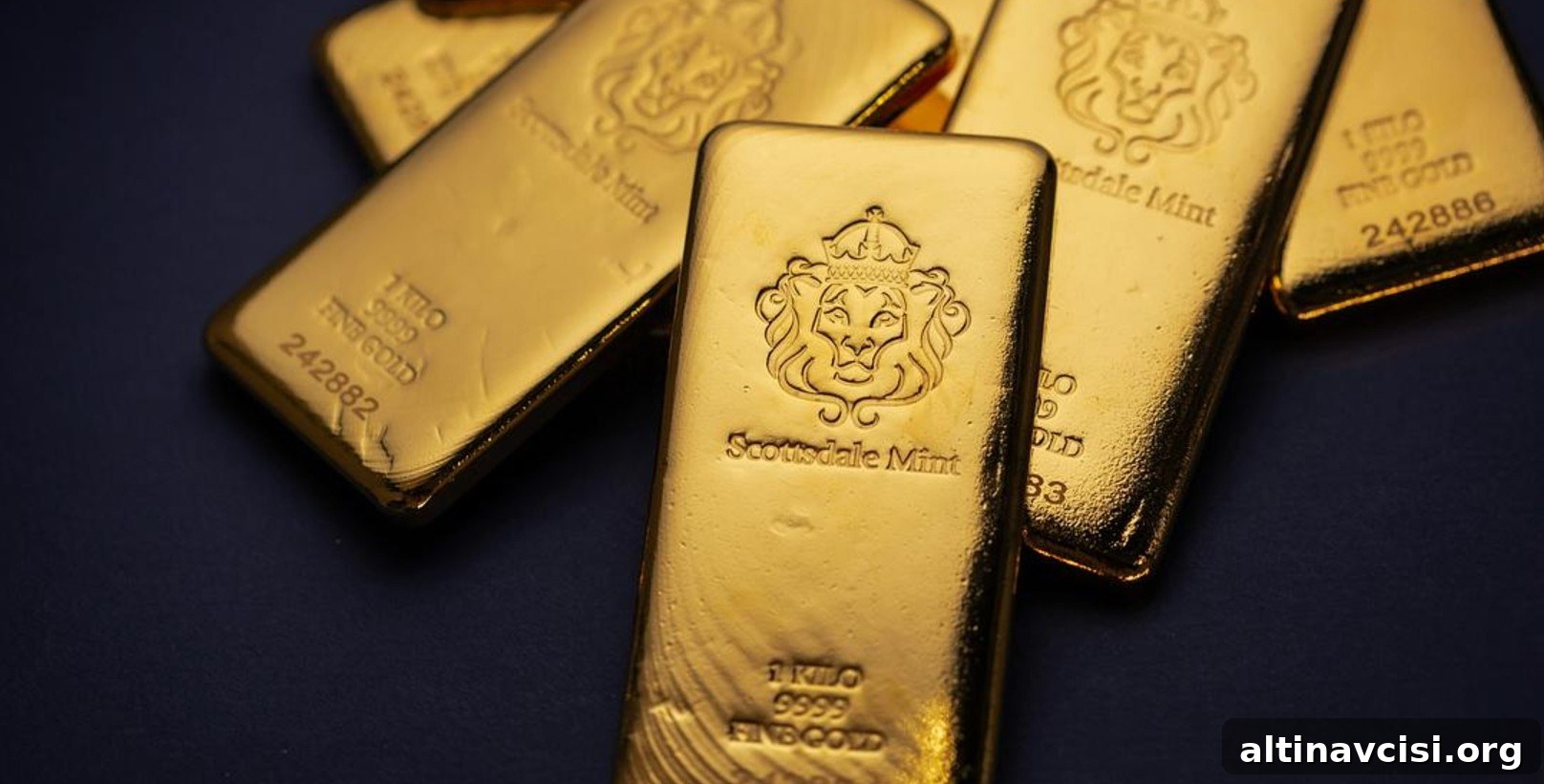
Gold prices pared earlier losses after President Trump announced a 25% tariff on goods from Japan and South Korea, scheduled to take effect on August 1.
Initially, the metal slipped as the dollar strengthened on speculation about wider tariffs targeting BRICS-aligned countries. However, investors quickly returned to gold as a safe-haven asset amid renewed trade uncertainty, reversing much of the early decline.
Year to date, bullion has climbed more than 25%, driven by continued central bank purchases and robust inflows into exchange-traded funds. As markets prepare for the possibility of additional tariff measures and geopolitical tensions, gold’s role as a portfolio hedge remains a central consideration for investors.
Analysts note that while short-term price movements can be influenced by shifts in the dollar and interest-rate expectations, sustained demand from official sector buyers and ETF investors has helped support higher levels. Economic data and policy signals will likely dictate near-term volatility, but the underlying narrative of gold as protection against geopolitical and trade risks persists.
Investors weighing exposure to gold should consider how it fits within their broader asset allocation, taking into account risk tolerance, investment horizon, and the potential for further market shocks. For many, the recent tariff announcement reinforces the case for holding some allocation to precious metals as insurance against political and economic uncertainty.