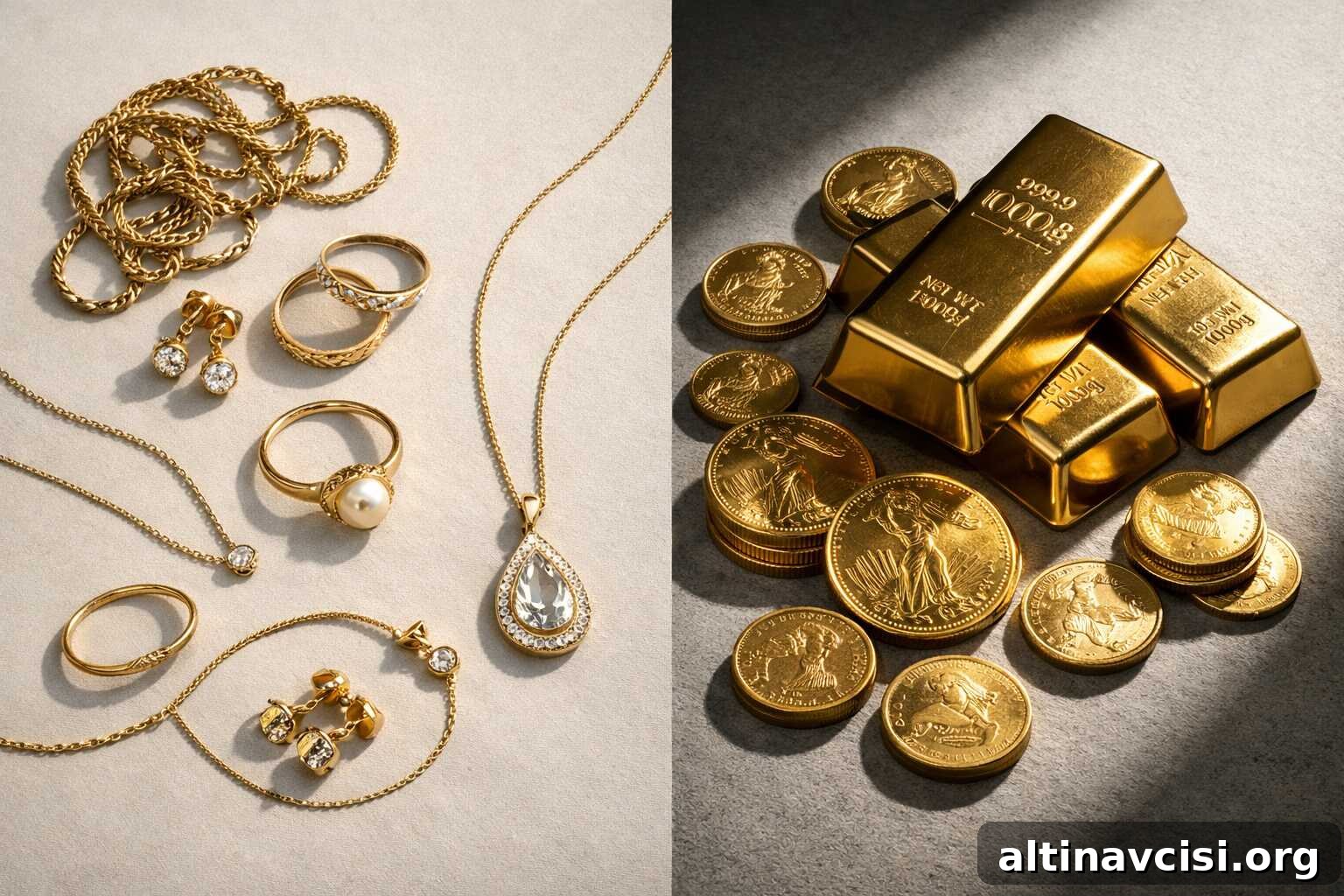
There’s a common question among new gold buyers: Does my jewelry count as a gold investment?
It’s reasonable to ask. After all, gold is gold — isn’t it?
Not quite. Gold jewelry and investment-grade gold are fundamentally different. Jewelry is a consumer product whose price reflects design, craftsmanship, brand and retail markup. Investment-grade gold—bars and coins—is a financial asset priced close to the global spot market for the metal, with only a modest premium over spot.
What Is Investment-Grade Gold?
Investment-grade gold refers to physical gold products—mainly bars and coins—manufactured to a high standard of purity (.999 or .9999 fine, meaning 99.9% to 99.99% gold). These products are priced in relation to the live spot price, with a small dealer premium that covers minting, distribution and margin. When you buy bullion, you are essentially buying metal, not a finished consumer product.
Gold jewelry is a finished, manufactured item. Its price includes the value of the metal (often at lower purity), plus design costs, labor, retail overhead and brand markup. The gold content is usually only part of the total price.
Gold Purity: The First and Most Important Difference
Gold products differ widely in actual gold content. In the United States, most retail jewelry is 10K to 18K, with 14K the most common standard for items like engagement and wedding rings. Fourteen-karat gold is 58.3% pure; the remainder is alloy metals added for strength and durability.
Investment-grade bullion is typically .999 or .9999 fine, so you are buying nearly pure gold. That difference in purity has a direct effect on value and resale.
Common purities compared:
| Karat | Fineness | Gold Content | Typical Use |
| 24K | .999 / .9999 | 99.9%+ | Investment bars, some coins |
| 22K | .916 | 91.7% | American Gold Eagle, some jewelry |
| 18K | .750 | 75.0% | Fine jewelry (European/Asian standard) |
| 14K | .585 | 58.3% | Most U.S. jewelry |
| 10K | .417 | 41.7% | Entry-level U.S. jewelry |
Some widely traded coins are exceptions: for example, the American Gold Eagle is struck in 22K (91.67%) to improve durability, yet it remains an accepted investment‑grade coin because of its mint backing and liquidity. Other popular investment coins, like the Canadian Gold Maple Leaf, the American Gold Buffalo and the Austrian Philharmonic, are struck in .9999 fine gold.
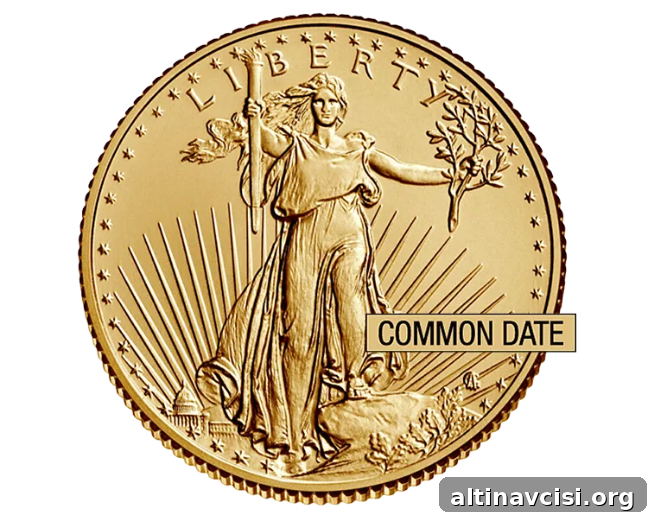
The American Gold Eagle — minted in 22K gold and widely traded in the United States.
You’re Paying for More Than Gold When You Buy Jewelry
Retail jewelry prices include metal content plus design, manufacturing, retail overhead and brand premium. Traditional retailers often mark up finished pieces substantially—commonly 100% to 300% or more above wholesale. Luxury brands can command even larger markups. That premium sits on top of gold that may only be a minority of the piece by weight.
By contrast, investment gold is priced around the spot price of gold. Typical premiums for common bullion products range from roughly 3% to 10% above spot under normal market conditions, with lower premiums for larger bars and slightly higher for sovereign coins. Fractional coins carry higher per-ounce premiums because production costs are proportionally greater.
The Resale Reality: Where Jewelry Loses Its Luster
Investment-grade coins and bars from reputable mints and refiners are globally liquid and commonly bought and sold close to spot by dealers worldwide. That liquidity keeps round-trip buying and selling costs relatively low for standard bullion.
Gold jewelry follows different economics. When you sell jewelry, buyers determine its melt value—the dollar value of the actual gold content based on purity and weight—and offer a percentage of that amount. Pawn shops often pay between 40% and 70% of melt value. Specialist buyers and online platforms may offer between 60% and 90% of melt value depending on purity, condition and the buyer. Craftsmanship, brand name and retail markup are not recovered in resale; those premiums vanish after purchase.
So a $2,000 bracelet with only a portion of that worth in gold could yield only a few hundred dollars when sold for melt value.
Emotional Value vs. Financial Value
This doesn’t mean jewelry has no value. Jewelry carries emotional, cultural and aesthetic significance that bullion does not. In many cultures—particularly in India, the Middle East and parts of East Asia—high-karat jewelry is purchased and held as wealth and is often priced closely to spot by weight. In those markets the line between jewelry and investment can be blurred.
For the average U.S. consumer buying 14K jewelry at a mall retailer, however, the purchase is primarily a retail transaction: a significant premium for design and brand on top of metal that is often only around 58% gold. If your goal is financial, bullion is the appropriate choice. If your goal is sentiment, culture or beauty, jewelry can be the right purchase—just be realistic about resale expectations.
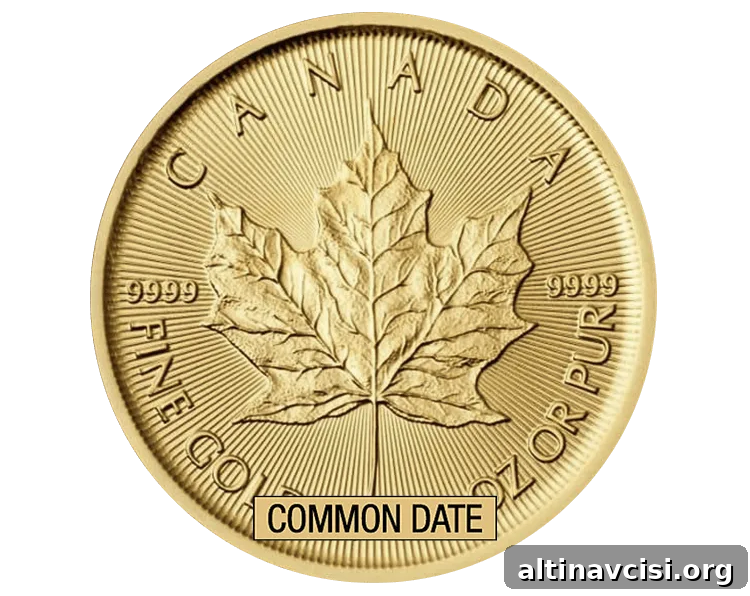
The Canadian Gold Maple Leaf — struck in .9999 fine gold and widely recognized as bullion.
What Investment Gold Actually Looks Like
For those building a physical gold position, the most practical options are sovereign coins, bars and, for investors who prefer not to hold metal directly, gold-backed funds or ETFs.
Gold coins from sovereign mints (American Gold Eagle, Canadian Maple Leaf, South African Krugerrand, Austrian Philharmonic) are highly liquid and widely accepted by reputable dealers. Fractional sizes make entry affordable but come with higher per-ounce premiums.
Gold bars from accredited refiners (PAMP Suisse, Valcambi, Perth Mint, and others) typically offer lower premiums per ounce at larger sizes, though they may be slightly less immediately liquid for casual retail buyers.
Gold ETFs and digital gold provide price exposure without physical storage and can be efficient for trading, but they do not give direct physical possession of metal—an important distinction for those who want gold as a hedge outside the banking system.
For most new investors, sovereign coins are a practical starting point: recognized, easy to buy and sell, and available in sizes for many budgets.
Beauty vs. Wealth: Know What You’re Buying
The difference between gold jewelry and investment gold is structural, not just a matter of degree.
Gold jewelry is a retail product: you pay for design, craftsmanship and brand on top of gold that is often below 60% purity. On resale, you will typically receive melt value—commonly between 40% and 90% of the metal’s worth depending on buyer and condition—not a return on the retail price.
Investment gold—coins and bars from recognized mints and refiners—is designed to store and transfer value. Transparent premiums, deep buy-and-sell markets and convenient sizes make bullion a practical financial asset in ways jewelry is not.
Buy jewelry for beauty and meaning. Buy bullion for financial goals such as wealth preservation, inflation protection and holding value outside the banking system. Knowing which you own matters for meeting your objectives.
People Also Ask
Is gold jewelry a good investment?
For financial return, generally no. Most U.S. gold jewelry is lower-purity metal with substantial retail markup. When resold, buyers pay based on melt value and typically offer a fraction of the original retail price. If your aim is financial, investment-grade bullion is the better choice.
What is the difference between jewelry gold and investment gold?
Investment gold is high-purity (.999 or .9999) and priced relative to spot with a modest premium. Jewelry is lower purity, priced with manufacturing and retail markup, and typically resells only at melt value. The recovery gap between purchase and resale is much wider for jewelry.
What purity is investment-grade gold?
Investment-grade gold is usually .999 (99.9%) or .9999 (99.99%) fine. Common U.S. jewelry ranges from 41.7% (10K) to 75% (18K). The American Gold Eagle is a notable exception at 22K (91.67%) but remains investment-grade thanks to its mint backing and liquidity.
Can I sell gold jewelry at spot price?
Rarely. Jewelry is evaluated by melt value and buyers pay a percentage of that figure rather than spot price or the original retail price. Offers vary by buyer type and the condition and purity of the piece.
What’s the best way to start investing in physical gold?
Sovereign coins such as the American Gold Eagle, Canadian Maple Leaf and Austrian Philharmonic are practical entry points due to global recognition and resale liquidity. Gold bars offer better per-ounce value at larger sizes. Choose based on liquidity needs, budget and whether you want physical possession.
How much of a gold jewelry purchase is actual gold?
That depends on karat and retailer. Fourteen-karat gold is 58.3% pure by weight, but the retail price includes manufacturing and markup, so the metal content often represents a much smaller portion of what you paid. Retail markups on finished jewelry commonly range from 100% to 300% or more above wholesale.
SOURCES
1. The Diamond Pro — Full Comparison of 10K, 14K, 18K and 24K Gold
2. MetalCharts — 14K Gold Price Today & Per Gram
3. Investopedia — Bullion: Definition, How It’s Used to Invest, and Example
4. GoldSilver — Bullion Premiums Explained: How to Spot Reasonable Prices
5. World Gold Council — How to Invest in Gold
6. Fidelity — How to Buy Gold: 2 Ways to Invest in Gold
7. Maxferd Jewelry & Loan — How Much Do Pawn Shops Pay for Gold?
8. The Alloy Market — Is Now a Good Time to Sell Gold Jewelry?
9. Abercrombie Jewelry — What Is the Markup on Gold Jewelry?
10. Kuvera Jewelry — Understanding Gold Pricing: What You’re Actually Paying For
11. World Gold Council — Gold Demand Trends
12. U.S. Mint — American Gold Eagle
This article is for informational purposes only and does not constitute financial or investment advice. Consult a qualified financial advisor before making investment decisions.
You May Also Like:
- How to Spot Fake Gold and Silver
- Numismatic vs. Bullion Coins: Know What You’re Buying
- Silver in AI Infrastructure: The Hidden Metal Behind Every AI Model
- Gold Price Forecasts for 2026, Revisited After Q1
- Gold ETFs Are Booming. But Do You Actually Own Gold?