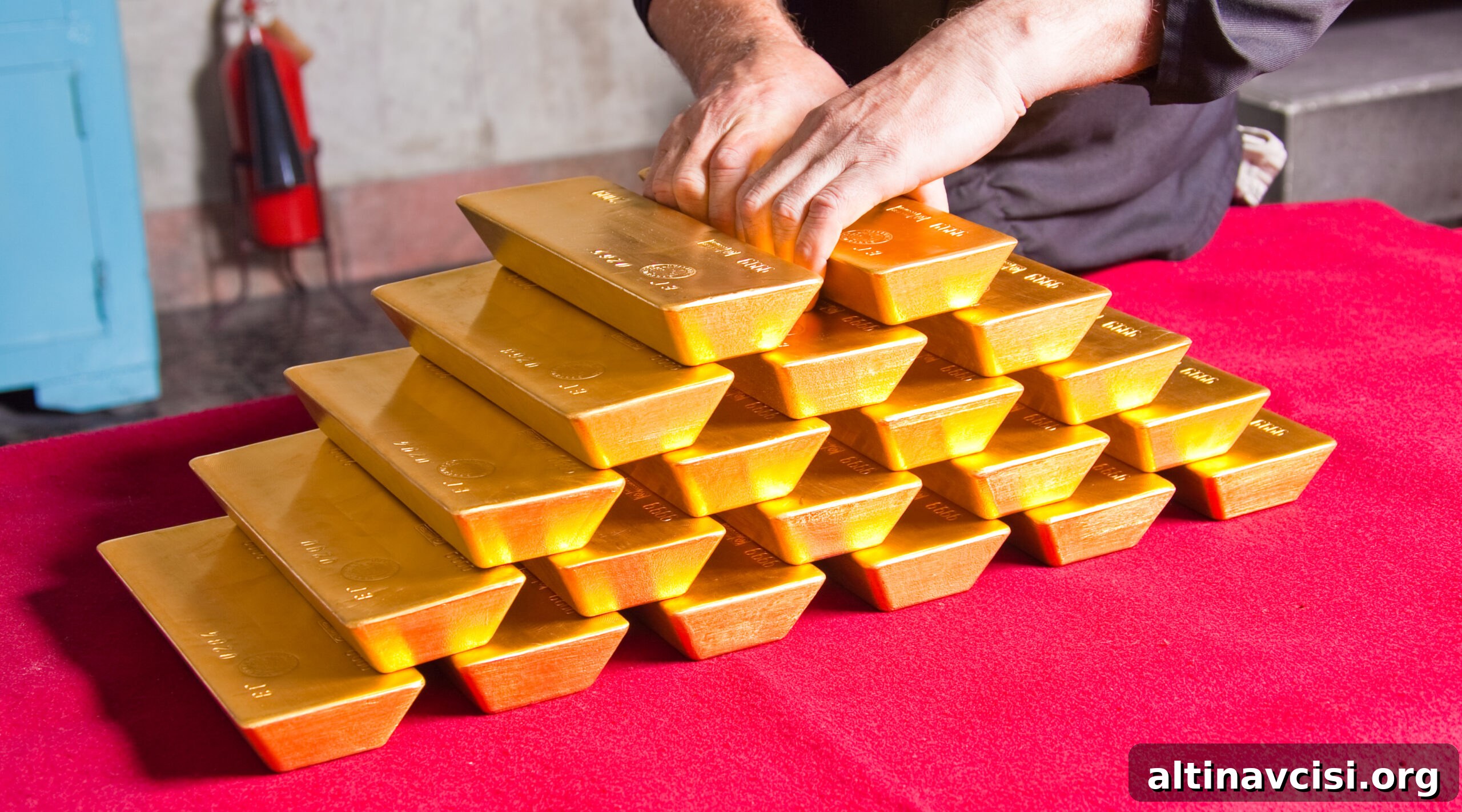
Russian banks saw their gold reserves decline sharply in 2024, falling 46.4% to 38.1 metric tons, the lowest level recorded since July 2022. The value of these holdings is approximately $3.4 billion. This reduction in official reserves highlights a shift in how gold is being held and used within the Russian economy.
Several factors help explain this dramatic decrease. Russia is grappling with high inflation — around 9.5% — and extraordinarily tight monetary policy, with benchmark interest rates near 21%. These conditions, combined with international sanctions, have constrained traditional financial channels and altered both institutional and private behavior toward precious metals and other stores of value.
At the same time, demand for physical gold among households has increased markedly. Faced with a weakening ruble and fewer opportunities to invest abroad, Russian consumers purchased significantly more gold in 2024. Retail demand rose by 75.6 metric tons, an increase of roughly 62% compared with pre-war levels. This surge in private buying suggests that many citizens view gold as a safer hedge against inflation and currency depreciation when other options are limited.
Despite the drop in bank-held reserves, Russia continues to be one of the world’s leading gold producers. The country remains the second-largest producer globally, and forecasts at the time pointed to continued production growth through at least 2027. That sustained output indicates that the decline in official reserves is not due to falling mine production, but instead reflects changes in holdings and distribution between state, institutional, and private sectors.
The divergence between shrinking institutional reserves and rising household demand underscores the complexity of Russia’s current economic landscape. Banks and official institutions appear to be reducing their gold holdings, whether for liquidity management, balance-sheet adjustments, or other policy reasons, while individuals accumulate physical metal as a protective asset. The net effect is smaller central or bank-controlled gold stockpiles alongside a larger share of the country’s gold being held privately.
This redistribution of gold has implications for financial stability and monetary policy. Reduced central and bank reserves may limit official capacity to use gold as a policy tool in times of acute stress, while elevated retail holdings can complicate efforts to mobilize domestic assets quickly. Additionally, high interest rates and persistent inflation are likely to keep private demand for gold elevated unless macroeconomic conditions improve and alternative investment channels reopen.
In summary, 2024 saw a pronounced decline in Russian banks’ gold reserves to a near two-year low, driven by a combination of domestic monetary conditions and the broader geopolitical environment. Meanwhile, retail purchases surged, and domestic mine output remained robust, reinforcing Russia’s role as a major global gold producer even as the distribution of ownership shifted significantly toward private hands.