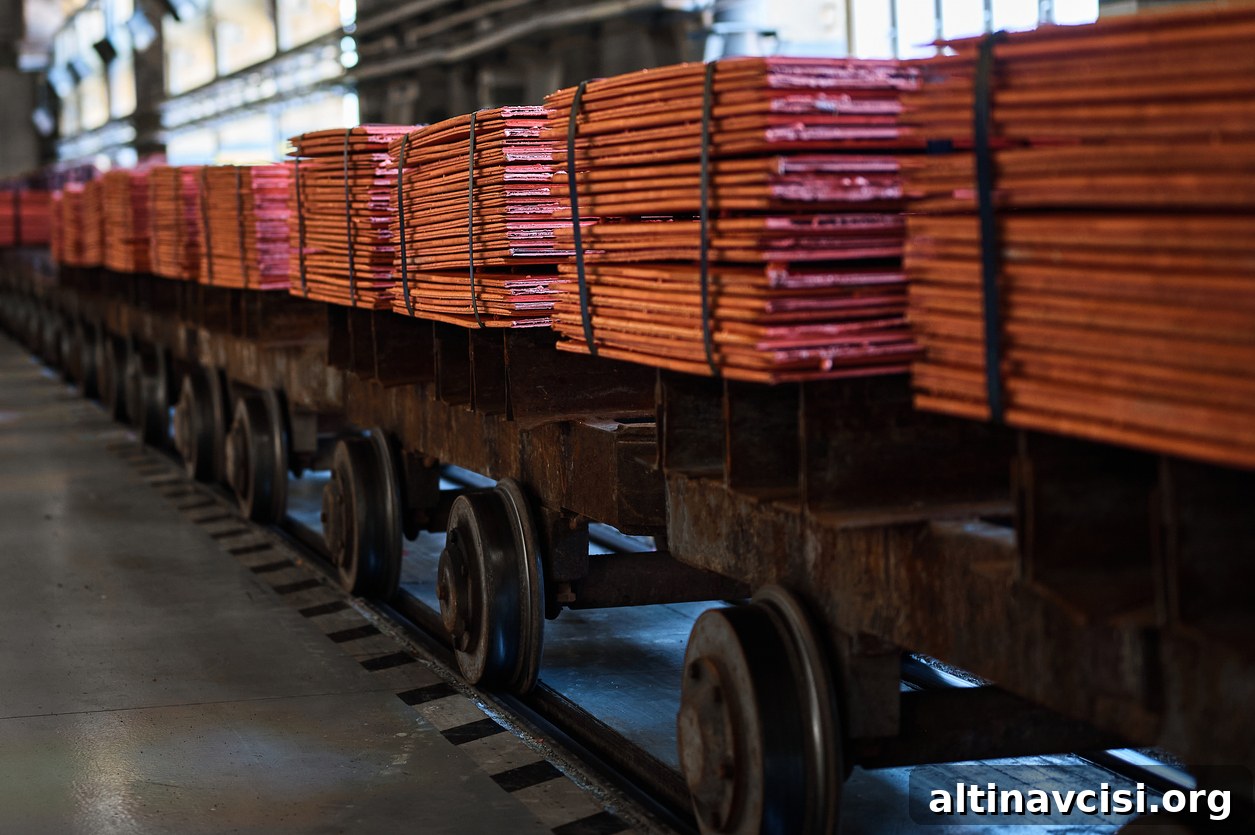
Copper prices are surging as traders rush to move metal into the United States ahead of possible import tariffs.
The rapid buildup of shipments has depleted global inventories by roughly 80% this year, producing acute shortages that are pushing prices higher for consumers and manufacturers alike.
Analysts at Goldman Sachs caution the market may tighten further before September, when policymakers are expected to announce any tariff decisions that could reshape trade flows.
These supply constraints have triggered sharp price increases: several copper contracts are now trading at premiums not seen in four years, reflecting heightened demand for immediate delivery and limited available stock.
Market participants report a flurry of activity at major ports and storage hubs as sellers accelerate deliveries to avoid potential tariff exposure. That rush is intensifying competition for remaining metal, reducing visible inventories and encouraging buyers to pay higher prices to secure supply.
Manufacturers that rely on copper — including those in construction, electronics and renewable energy — are feeling the impact through higher input costs and longer lead times. In some cases, buyers are turning to alternative suppliers or adopting hedging strategies to manage price risk during the period of uncertainty.
Traders and analysts are watching several indicators closely: on-warrant stock levels at exchange warehouses, freight and insurance costs, and the cadence of shipments arriving into US storage. Any further disruption or delay could exacerbate shortages and sustain price pressures through the summer.
While tariffs remain only a potential policy change, their prospect has already altered trade behavior. If tariffs are implemented, the market could see more prolonged distortions as supply chains adapt, potentially leading to a reallocation of flows to other markets and further volatility in spot and forward prices.
For now, the combination of low inventory levels, accelerated shipments and speculative buying has tightened the physical copper market. Market participants are preparing for the possibility that conditions will remain strained until policy clarity arrives in September, keeping premiums and price volatility elevated in the near term.