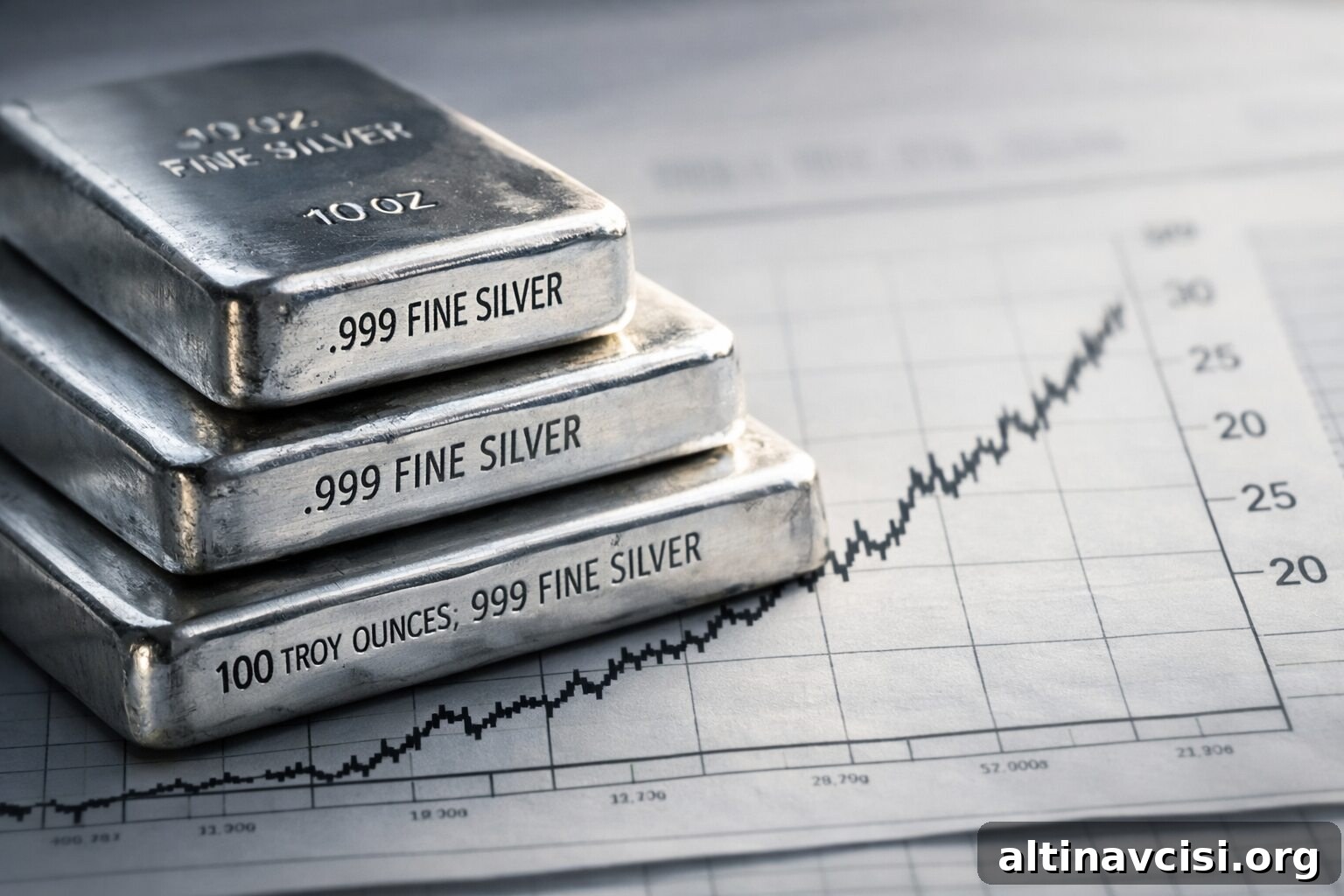
Silver has already experienced an extraordinary run. It rallied more than 147% in 2025, reached a nominal peak near $121 per ounce in January 2026, and as of April 2026 trades around $80/oz—well above most 2025 forecasts.
So what comes next?
That is the central question investors are grappling with today. The original bull and bear narratives have shifted materially, and understanding the current balance of risks and opportunities is essential before making decisions.
Below is a clear, balanced look at the arguments on both sides of the 2026–2027 silver debate.
Where Silver Stands Heading Into the Rest of 2026
Silver is no longer a deeply undervalued metal waiting to be rediscovered—it already had that moment. That doesn’t mean the opportunity is exhausted, but the risk profile has changed.
One useful lens is the gold-to-silver ratio, which measures how many ounces of silver are required to buy one ounce of gold. In April 2025 the ratio reached roughly 105:1, an extreme that signaled deep undervaluation for silver. By early 2026 the ratio compressed into the high 50s and low 60s, reflecting silver’s substantial outperformance.
As of April 2026 the ratio sits near 59–61:1, below the modern long-term average near 70:1. In other words, silver has repriced versus gold and is no longer historically cheap. Future direction depends on which of two scenarios—bull or bear—dominates over the coming quarters.
The Bull Case for Silver in 2026–2027
Q: What factors could push silver prices significantly higher from current levels?
Several institutional forecasters remain constructive even at today’s elevated prices. Key bullish drivers include:
1. Industrial Demand Has Structural Momentum
Silver is a crucial industrial metal as well as a monetary asset. Solar-panel manufacturing currently accounts for a material portion of annual silver demand—roughly 15–20% depending on the year—and that share is rising. Electric vehicles, 5G infrastructure, semiconductors, and medical devices also rely on silver’s conductivity and reliability.
Major banks project elevated averages: J.P. Morgan’s 2026 average sits around $81/oz, while Commerzbank’s year-end target is near $90/oz, with some forecasts extending higher into 2027. If industrial demand accelerates beyond expectations, those targets become more attainable.
2. Multiple Years of Supply Deficits
Industry data show multiple consecutive years of global silver supply deficits, with many analysts expecting another shortfall in 2026. When supply repeatedly trails demand, sustained upward pressure on prices can accumulate even amid short-term volatility. Mining output faces constraints, and new production takes years to bring online.
3. A Potential Fed Policy Tailwind
If the Federal Reserve begins cutting rates in the second half of 2026, real yields could decline, supporting non-yielding assets like silver. A weaker dollar would further amplify silver’s appeal to international buyers. Both outcomes remain plausible catalysts for an extension of the rally.
4. Elevated Institutional Bull Targets
Some institutions have raised their upside scenarios substantially. LBMA survey responses for 2026 show a broad range, with averages near $79–$80/oz and outliers far above. Bank of America has noted a bull scenario exceeding $135/oz if physical shortages intensify. These are not base-case predictions, but they reflect genuine conviction about structural supply-demand imbalance.
The bull case, in short: Persistent supply deficits, rising industrial demand and a potential Fed pivot could push silver toward $100/oz and beyond, even from current elevated levels.
The Bear Case for Silver in 2026–2027
Q: What risks could cause silver prices to decline or disappoint in 2026–2027?
The downside risks are tangible and deserve attention. Key bearish considerations include:
1. Much of the Major Move May Be Behind Us
Silver’s 147% gain in 2025 and the January 2026 spike to roughly $121 included a significant speculative component. When speculative positions unwind, prices can correct quickly. Now that the gold-to-silver ratio no longer signals extreme undervaluation, one of the stronger structural buying arguments is less compelling.
2. A Stronger Dollar and Elevated Rates
If the Fed keeps rates higher for longer and inflation remains sticky, real rates could stay elevated. A strong dollar makes commodities priced in dollars costlier for foreign buyers, reducing demand. Some bearish institutional forecasts place 2026 averages well below current levels—TD Securities, for example, projects a lower average in certain scenarios.
3. Thrifting and Slower Industrial Growth
Improvements in manufacturing efficiency—especially in solar-panel production—mean less silver is used per unit, a phenomenon known as “thrifting.” If global growth softens, particularly in China, silver’s industrial demand could weaken, amplifying price pressure compared with gold.
4. Geopolitical Risks Can Work Both Ways
Geopolitical tensions have supported precious metals in 2026, but they can also trigger outcomes that hurt silver: rising oil prices that slow growth, or central bank tightening that pushes rates higher. Those combinations would create headwinds for silver.
The bear case, in short: A speculative overhang, resilient real rates and industrial demand headwinds could pull silver back toward $60–$65/oz before stabilization—a meaningful correction from current levels.
Is 2026–2027 Still a Good Time to Invest in Silver?
There is no one-size-fits-all answer. The decision depends on your entry point, time horizon and risk tolerance.
Investors who entered during the extreme gold-to-silver ratio above 100:1 in 2025 enjoyed an exceptional trade. At today’s ratio near 59–61:1 that clear asymmetry has faded. Still, the structural arguments—supply deficits, industrial demand and inflation protection—remain valid for those with a long-term horizon.
For long-term investors comfortable with volatility, silver’s fundamentals continue to offer a case for holding or gradually building positions. For those expecting a rapid repeat of 2025-style gains, the risk profile is meaningfully different. Practical approaches such as dollar-cost averaging and disciplined position sizing are preferable to trying to time a single entry.
Silver in 2026–2027: Tension, Not a Verdict
Silver has already surprised skeptics once. Structural bullish drivers—green-energy demand, persistent supply deficits and inflation hedging—are real and ongoing. At the same time, the metal is no longer historically cheap by ratio measures, speculative positioning is elevated, and macro uncertainties remain.
A prudent approach is to understand both bullish and bearish scenarios, size positions according to risk tolerance, and avoid extremes of blind optimism or reflexive avoidance. Continued monitoring of macro conditions, industrial demand trends and supply data is essential.
People Also Ask
What are the bull and bear case scenarios for silver prices in 2026–2027?
The bull case targets roughly $90–$150+/oz, driven by ongoing supply deficits, accelerating industrial demand from solar and EVs, and potential Fed rate cuts. The bear case envisions a correction toward $60–$65/oz if the dollar remains strong, rates stay elevated, or industrial demand softens. Institutional forecasts range widely, reflecting silver’s volatility.
What factors could drive silver prices to $300 or higher by 2026?
A $300 silver price would require an extreme combination of events—severe physical supply shortages, a very rapid decline in the dollar, and a broad institutional rush into tangible assets—occurring simultaneously. Most mainstream analysts view this as an outlier scenario rather than a base case.
What risks or economic conditions could cause silver prices to decline in 2026–2027?
Primary downside risks include a persistently strong dollar, Fed rate hikes or delays to cuts, a slowdown in China reducing industrial demand, and an unwinding of speculative positions that built during the 2025 rally. Silver’s early-2026 correction from the $121 peak to the mid-$70s underscores the potential for sharp pullbacks.
How do expert predictions for silver in 2026 compare to historical trends?
After a very strong 2025, institutional forecasts for 2026 cluster around the high $70s to low $80s per ounce on average, which aligns with a pattern of consolidation following a major breakout. The wide range of forecasts reflects silver’s historically higher volatility compared with many other commodities.
This article is for informational purposes only and does not constitute investment advice. Precious metals investing involves risk, including possible loss of principal. Price data referenced as of April 2026. Consult a qualified financial advisor before making investment decisions.
You May Also Like:
- How to Buy Silver Bars: The Investor’s Guide
- Why Silver Falls While Gold Rises: What It Means for You
- Gold Price Forecast 2026–2027: Key Predictions from Top Analysts
- Is Now a Good Time to Buy Gold? Here’s the Macro Case
- Is Gold a Better Investment Than Bitcoin Right Now?
- What the Silver-to-CPI Ratio Reveals That Spot Price Hides
- Gold & Silver Supply and Demand: What Really Drives Prices Over Time
- Dow to Gold Ratio: 100 Years of History Decoded
- How the 50 Day SMA Helps You Understand Gold & Silver